The Spirit Tree’s Secrets: Why Science Fiction Environmentalism is the Future of Adventure
Meta Description: Explore why science fiction environmentalism is the core of modern adventure. Discover how The Rainsavers series uses the Amazon rainforest and the mysterious Spirit Tree to redefine the stakes of 2026 storytelling.
Welcome to June 2026. If you’ve stepped outside lately or scrolled through your newsfeed, you know the world is buzzing about one thing: the planet. But we’re not just talking about data points and carbon credits anymore. In 2026, the way we talk about the Earth has changed. We’ve moved past the era of dry lectures and moved straight into the heart of the adventure.
At The Rainsavers, we’ve always believed that the best way to save the world is to fall in love with it first. And what better way to fall in love than through a high-stakes, six-book journey into the deepest secrets of the Amazon?
Today, we’re peeling back the canopy to look at why "Science Fiction Environmentalism": often called Cli-Fi: is no longer just a niche genre. It’s the future of how we tell stories, and the Spirit Tree is right at the center of it all.
The Shift: From "Saving the Planet" to "Saving Our Home"
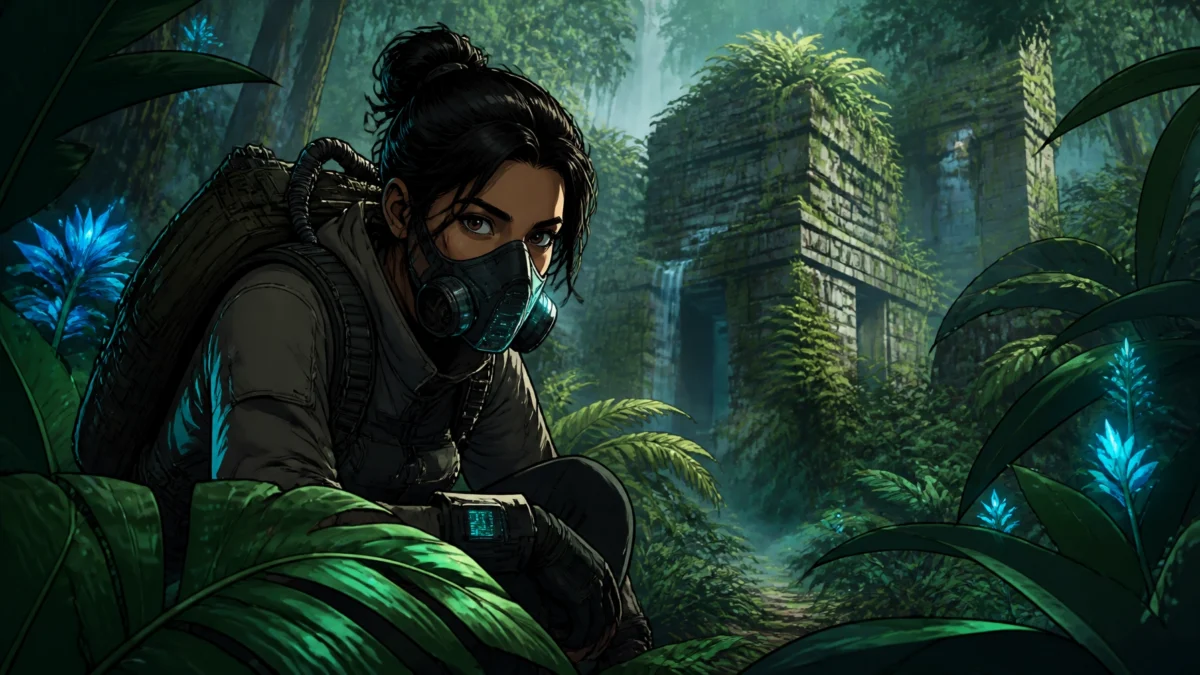
In the early 2020s, environmental stories were often synonymous with "gloom and doom." You’d open a book and expect a lecture on why the world was ending. Fast forward to 2026, and the narrative has flipped. Today’s readers don’t want to be told the world is in trouble; they want to be given a tactical vest, a high-tech respirator, and a mission to do something about it.
This is the core of Science Fiction Environmentalism. It’s about taking the very real threats: like Amazon rainforest protection: and wrapping them in the pulse-pounding excitement of a global thriller.
When Tom "Primal" Swift is granted superhuman strength in Book One: Primal Awakening, he isn’t just punching bad guys for the sake of it. He’s fighting the industrial machine of Bossman, a corporate titan who sees the Amazon as nothing more than a balance sheet. The stakes aren’t just local; they’re planetary. By framing environmentalism through the lens of a sci-fi adventure, the message becomes active rather than passive. You’re not just reading about deforestation: you’re helping the team stop it.
The Spirit Tree: A Character, Not a Landmark
In many stories, the "environment" is just a backdrop: a pretty setting for a chase scene. But in The Rainsavers saga, particularly as we move into Book Three: Tempest of the Crimson Skies and beyond, the Amazon is a character in its own right. And its heart is the Spirit Tree.

The Spirit Tree isn't just a big plant. It’s an ancient biological nexus that connects the life force of the entire rainforest. In our 2026 world, we’re seeing a massive trend toward "nonhuman perspectives" in fiction. Readers are fascinated by the idea that forests are sentient networks (something science is actually starting to prove!).
In Book Five: Curse of the Spirit Tree, the villain Mortalis: formerly the rogue agent Leonard West: actually gains control of the Spirit Tree. The result isn't just "some dead leaves." It’s absolute environmental chaos. This forces our hero, Primal, to make an impossible choice: destroy the very thing he’s sworn to protect, or let the entire world fall to Mortalis’s whims.
That’s the beauty of sci-fi environmentalism. It raises the philosophical stakes. Is the Spirit Tree worth more than a single forest? Is it a weapon, a god, or a global lung?
Field Notes: The Tech of the Rainsavers
One of the most fun parts of writing a series set in the near future is the gadgets. Our fans love the "Tech Leaks" we’ve been dropping lately. Here’s a look at what the team is currently carrying into the field to protect the Amazon.
📂 [DECRYPTED FIELD NOTE]
FROM: Dr. Mubari
TO: Team Rainsaver
SUBJECT: Spirit Tree Bio-Resonance Scan
"Listen up, team. We’ve managed to bypass the encryption on Leonard West’s old servers. It turns out the German tech he recovered wasn't just for weapons: it was designed to interface with the Spirit Tree's specific red mercury resonance. This explains why the Giza Pyramid reactor was so critical in Shadow of the Moon. We aren't just fighting a man anymore; we’re fighting a bio-mechanical takeover of the Earth’s nervous system. Keep your respirators tight. The air near the Tree is… changing."

Why the Adventure Format Works
Let’s be honest: learning about global supply chain transparency is boring. But chasing a rogue agent to an abandoned German moonbase to stop him from activating a red mercury fusion reactor? That’s something you can get behind.
By using high-octane plots involving ancient mysteries, space exploration, and superhuman abilities, we can talk about real issues without it feeling like a chore.
- The Amazon is the battlefield: It reminds us that this place is worth fighting for.
- The Villains are realistic (mostly): While Mortalis is a sci-fi monster, his origins are rooted in corporate greed and a thirst for power: real-world problems.
- The Team is diverse: From the brawn of Tom Swift to the tech brilliance of Sunbyte and the animal intelligence of Alpha the orangutan, it shows that saving the planet requires every kind of mind.
The 2026 Perspective: Hope Over Despair
The reason The Rainsavers has resonated so much this year is because it offers something rare: a path to victory. So much of the "eco-fiction" of the past decade was about how we’ve already lost. But sci-fi environmentalism is about the fight.
In Book Six: Wrath of Mortalis, the final confrontation isn’t just a fistfight. It’s a battle for the soul of the Earth. It’s a reminder that even when the odds are stacked against us: even when the villain has literal ancient power and a moonbase: a dedicated team with a mission can change the outcome.

Adventure stories have always been a way for us to process our fears. In the mid-20th century, it was the Cold War. In the early 21st, it was technology. Now, in 2026, our greatest adventure is the one we’re living right now: the quest to protect our home.
The Spirit Tree is calling. Are you ready to answer?
Ready to join the mission? Read Book One now.
