
Meta description: Discover five easy, hopeful eco-actions you can start today, from cold-washing laundry to planting native species and cutting food waste.
Saving the planet can sound like a job for people with laboratories, helicopters, and an extremely dramatic soundtrack.
But real environmental progress also happens in much smaller moments: when you skip a disposable cup, rescue leftovers from the back of the fridge, walk instead of drive, or give a native plant a place to grow.
These actions may be tiny, but they are practical, repeatable, and surprisingly powerful when lots of people do them together. The United Nations, NOAA, Stanford University, and conservation organizations all recommend everyday changes like reducing waste, cutting energy use, choosing lower-emission transportation, and supporting local biodiversity.
So here are five tiny wins you can start today. No cape required. Comfortable shoes are optional but encouraged.
1. Give your laundry a cooler adventure
Laundry is not usually considered an epic quest. There are no ancient mysteries in the sock drawer: although the missing-sock situation remains unresolved.
Still, your laundry routine can be an easy place to reduce energy use.
Try this today:
- Wash one load with cold water.
- Run full loads instead of half-empty ones.
- Air-dry a few items on a rack or clothesline.
- Switch one old light bulb to an LED bulb.
- Turn off lights and devices when you leave a room.
Heating water takes energy, and dryers can use a lot of it. Cold-water washing and air-drying when practical can reduce the energy connected to ordinary household chores. Efficient lighting and switching off unused electronics are small habits that add up over time.
The goal is not to create a perfectly optimized home overnight. Start with one load. If it works, make it your new normal.

2. Turn leftovers into tomorrow’s plot twist
Food waste is one of those problems that often begins with good intentions.
You buy fresh ingredients. You plan to cook. Then life happens, the week gets busy, and three perfectly decent vegetables begin developing mysterious personalities in the refrigerator.
A little planning can help.
Try this today:
- Check your refrigerator before shopping.
- Plan one meal around ingredients you already have.
- Freeze food you will not eat soon.
- Store produce properly so it lasts longer.
- Start a small compost container if local services are available.
When food is wasted, all the water, land, energy, packaging, and transportation used to produce it are wasted too. The United Nations notes that reducing food waste is an important climate and resource-saving action.
You do not need to become a professional meal-prepper with seventeen labeled containers. Just choose one “use-it-up” meal this week. Soup, stir-fry, pasta, sandwiches, and smoothies are excellent places for rescued ingredients to make a comeback.
And if one carrot rolls off the counter during the process? That is not failure. That is a vegetable escape attempt.
3. Make one short trip without a car
Not every journey can become a bicycle montage. Sometimes you have groceries, bad weather, a long commute, or a toddler who has declared war on public transportation.
But many short trips can be adjusted occasionally.
Try this today:
- Walk to a nearby shop or appointment.
- Bike for one local errand.
- Take public transportation if it is convenient.
- Carpool for a shared destination.
- Combine several errands into one trip.
Transportation choices affect fuel use, air pollution, and climate-warming emissions. Even replacing one short solo car trip can be a useful first step.
A helpful trick is “trip chaining”: combine errands that are near each other instead of making several separate drives. You might pick up groceries on the way home, visit the library while you are already downtown, or handle two nearby tasks in a single outing.
Think of it as turning one mission into a mini-mission bundle. Fewer trips, less fuss, and possibly a better playlist.
4. Choose one reusable item and make it automatic
Reusable products work best when they are easy to remember.
If your reusable bottle is hidden behind a stack of books, three jackets, and an old takeout menu, it is technically reusable: but not especially useful.
Try this today:
- Put a reusable bottle by the door.
- Keep shopping bags in your car or near your keys.
- Carry a reusable coffee cup if you already have one.
- Pack food in a durable container.
- Decline unnecessary disposable items when possible.
The basic order of operations is simple: reduce what you do not need, reuse what you can, and recycle according to local rules. Reducing and reusing come first because they avoid the need to produce and dispose of another item in the first place.
The best reusable item is usually the one you already own and will actually use. You do not need to buy an entire matching collection in five shades of forest green. One dependable bottle can do excellent work.

5. Make a tiny welcome sign for wildlife
You do not need a huge garden: or even a garden at all: to support local biodiversity.
A balcony pot, windowsill planter, community garden plot, or small patch of yard can provide food and shelter for insects and birds. Native plants are especially helpful because they are adapted to local conditions and often support species that evolved alongside them.
Try this today:
- Plant one native flower, herb, shrub, or tree.
- Add a container of native plants to a balcony.
- Leave a small area of grass or garden a little less tidy.
- Avoid unnecessary chemical treatments.
- Learn the name of one local bird, insect, or plant.
A slightly wild patch is not a gardening failure. It can be a habitat. Fallen leaves, stems, flowers, and ground cover may provide food or shelter for small creatures.
Before planting, check recommendations from a local native-plant society, botanical garden, extension office, or conservation group. The right choices depend on your region, soil, sunlight, and water conditions.
This is one of the most satisfying tiny wins because you can watch it unfold. A seedling becomes a plant. A plant attracts pollinators. A small space becomes part of a larger living network.

The five-minute eco-hope challenge
Want to turn these ideas into action without overthinking them?
Set a timer for five minutes and choose one:
- Put reusable bags by the door.
- Move one load of laundry to cold water.
- Check the fridge for ingredients to use first.
- Look up a walking or public-transit option for a nearby trip.
- Find one native plant recommended for your area.
That is enough for today.
Environmental action does not have to feel like a test you can fail. It is more like building a team: one useful habit, one thoughtful choice, and one small improvement at a time.
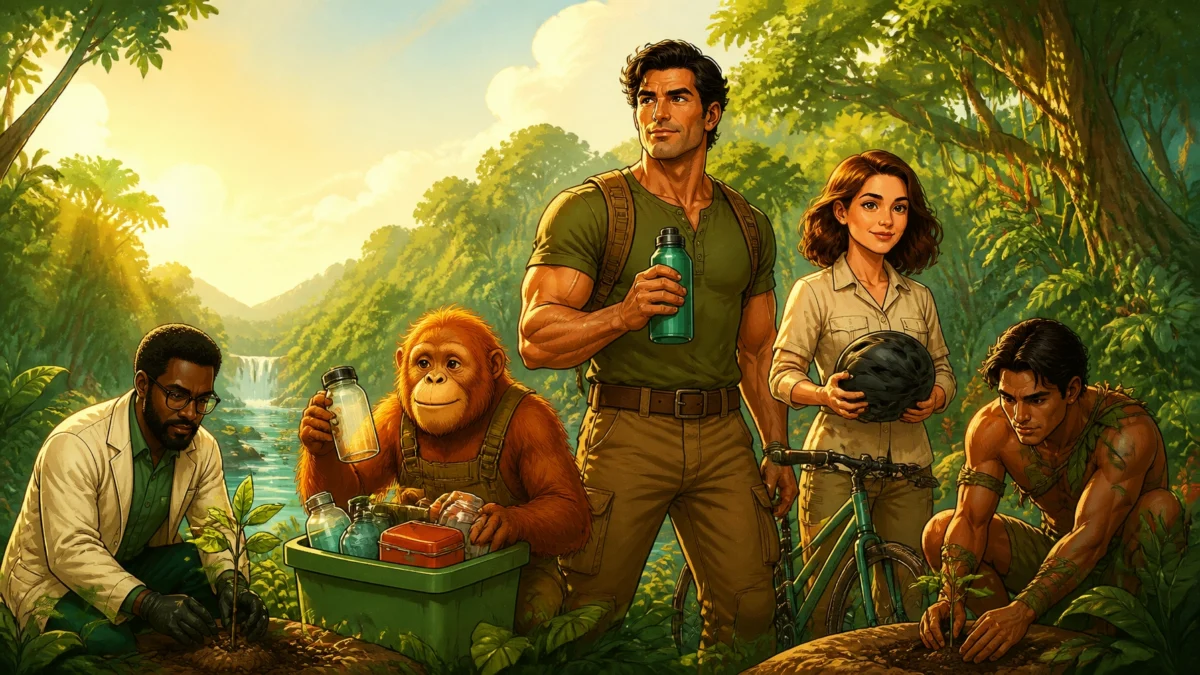
In The Rainsavers, Primal, Alpha, Dr. Manaus, Sunbyte, and Jungle Dart face enormous threats to the rainforest. But their strength comes from working together, using different skills, and protecting the living world around them.
The same idea applies outside the page. Your tiny win joins someone else’s tiny win. Together, they become a pattern: and patterns can change what feels possible.
Start with one win
Pick the action that feels easiest, most useful, or least annoying. Do that one today. Then repeat it when you can.
For more rainforest-minded adventure, meet the team on The Rainsavers characters page, explore the six-book saga, or visit the shop.
The planet does not need you to be perfect. It needs more people willing to begin.
