Meta Description: Can a thriller change your moral compass? Dive into how high-stakes adventure books like The Rainsavers tackle 2026’s biggest global ethical dilemmas, from corporate greed to ancient environmental secrets.
Hey everyone, Steven G. Samuels here.
As we move further into 2026, I’ve noticed a shift in how we consume stories. It’s no longer enough to just have a hero who punches a bad guy and saves the day. We want more. We want to know why the bad guy thinks he’s the hero. We want to see the "good guys" sweat over decisions that don’t have a right answer.
High-stakes adventure books are no longer just "beach reads." They’ve become a playground for exploring global ethics in a way that feels urgent, real, and, honestly: a little bit scary. When you’re reading about a team deep in the jungle, cut off from the world and facing down a corporate army, the ethical questions aren’t abstract anymore. They’re life or death.
The 2026 Reality: Why Fiction Matters Now
In today’s world, we’re bombarded with headlines about climate shifts, corporate data mining, and resource wars. It’s easy to get "empathy fatigue." But fiction: specifically high-stakes adventure: breaks through that wall. It puts a human face on the data.
In The Rainsavers, we don’t just talk about "deforestation" as a statistic. We talk about it as a tactical battleground. We look at the people on the ground: the ones wearing high-tech respirators and carrying field gear: who have to decide if protecting a single ancient grove is worth starting a localized war.
That’s where global ethics get messy. And that’s exactly where the best stories live.

ALT: A character in a high-tech respirator looking down from a high cliff over a vast, protected Amazon canopy.
The "Lesser of Two Evils" Dilemma
One of the core themes we explore at The Rainsavers is the clash between corporate power and environmental preservation. It seems like a simple "good vs. evil" setup, right? Not in 2026.
Imagine this: A massive corporation has the technology to provide clean energy to millions, but the rare minerals they need are buried under a vital, untouched ecosystem. If you stop the corporation, millions stay in the dark. If you let them dig, the planet loses another lung.
High-stakes fiction forces us to live in that gray area. In our books, characters like Leonard West don't just have to fight; they have to choose. These books change how you think about global ethics because they remove the "easy" button. They remind us that every choice has a cost, and sometimes, the ethical path is the one that leaves you with the most scars.
Ancient Secrets vs. Modern Greed
There’s something about finding an ancient secret that triggers a primal ethical response. In The Rainsavers, our team often stumbles upon technology or locations that date back centuries: sometimes involving old German research or forgotten civilizations.
The ethical question then becomes: Who does history belong to?
Does a discovery that could change medicine or energy belong to the corporation that funded the expedition? Does it belong to the indigenous people who have guarded the land for generations? Or does it belong to "science"?
When a character is holding a prototype device in a collapsing cave, they don’t have time to consult an ethics board. They make a call. As a reader, you’re right there with them, questioning what you would do if you held that kind of power in your hands. It makes you realize that global ethics aren't just for politicians in suits; they’re for anyone with the power to make a difference.
Why the "High-Stakes" Part is Essential
You might ask, "Why do we need the explosions and the high-tech gear to talk about ethics?"
Because stakes create clarity.
When things are calm, everyone is an ethicist. Everyone knows the "right" thing to do. But when the oxygen is running low in your tactical respirator and a drone swarm is closing in on your position, your true values come out.
In high-stakes fiction, we strip away the fluff. We see what humans are actually willing to sacrifice. Do they sacrifice their teammates for the mission? Do they sacrifice the mission for a stranger? These stories provide a "stress test" for our own moral compasses. By the time you finish Book One, you aren’t just thinking about the plot: you’re thinking about your own line in the sand.

ALT: Close-up of a rugged adventurer checking a high-tech wrist-mounted scanner in a dark, humid cave setting.
The Team Dynamic: A Microcosm of Global Cooperation
One of the things I love most about writing and publishing The Rainsavers is the team aspect. Global ethics aren't handled by individuals; they’re handled by groups with conflicting interests.
Our team isn't a monolith. You’ve got the tech expert, the survivalist, the historian: all coming at a problem from different angles. This mirrors how the world works (or should work).
- The tech expert sees the potential for progress.
- The survivalist sees the immediate danger to the environment.
- The historian sees the long-term consequences of repeating past mistakes.
Watching these characters argue and eventually find a middle ground is a masterclass in how we might solve real-world problems in 2026. It moves the needle from "I want to win" to "How do we survive together?"
The Shift from "Superhero" to "Eco-Hero"
We’ve moved past the era of the untouchable superhero. In 2026, the heroes we care about are the ones who are vulnerable. They don't have capes; they have field kits. They don't have super-strength; they have conviction and a well-calibrated respirator.
This shift is vital for global ethics because it makes the hero's journey attainable. If a normal (albeit highly trained) person can stand up to a global conglomerate to save a forest, then maybe the reader can make a more ethical choice in their own life. It democratizes the idea of being a "guardian of the planet."
High-stakes adventure books remind us that the world is worth saving, even if the process is messy, dangerous, and legally questionable.
It’s Time to Question Everything
If you pick up a book and you aren't questioning your stance on corporate responsibility or environmental stewardship by the end of it, we haven't done our job.
Fiction is the ultimate empathy machine. It allows us to step into the boots of a Rainsaver and see the world through a lens of urgency. It forces us to acknowledge that the "status quo" is often just a comfortable way of ignoring an ethical crisis.
So, the next time you’re reading about a high-speed chase through a protected biosphere or a tense standoff over an ancient relic, take a second to ask yourself: What would I do?
You might be surprised by the answer. And that surprise is the first step toward changing the way you think about the world around you.

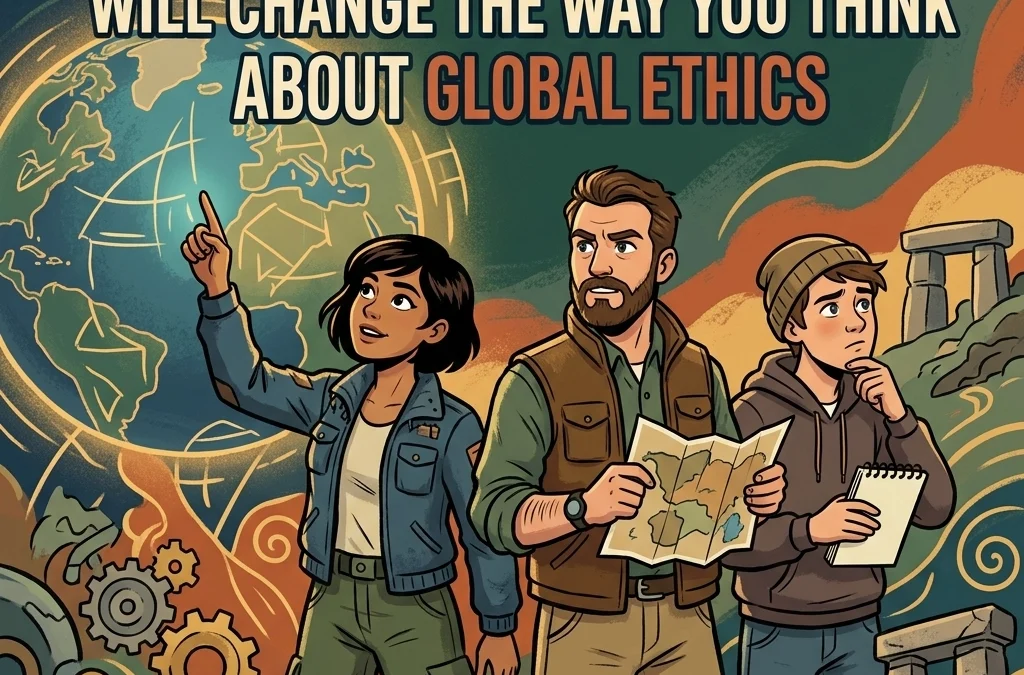
ALT: A group of three adventurers standing around a holographic map in a makeshift jungle base camp, looking determined.
Join the Adventure
We aren't just telling stories; we’re building a world where ethics and action collide. The Rainsavers series is designed to keep your heart racing while your brain is working overtime on the big questions.
Are you ready to see where you stand? The jungle is waiting, the tech is primed, and the stakes couldn't be higher.
Explore the high-stakes world: Read Book One now.
