Meta Description: Ditch the doom! It’s 2026, and climate fiction has shifted from "the end of the world" to "the work of saving it." Learn why action-packed, tactical storytelling beats despair every time and discover how The Rainsavers are leading the charge.
Welcome to July 2026. If you’re reading this, you’ve likely survived the "Great Doomscroll" of the early 20s. For a while there, every book, movie, and news cycle felt like a competition to see who could describe the end of the world in the most depressing way possible.
We get it. The climate is changing. The stakes are high. But at The Rainsavers, we’ve always believed that staring at a wildfire doesn't put it out. You need a shovel, a plan, and a team that doesn't quit.
That’s why 2026 is officially the year we trade "Climate Despair" for "Climate Action." In the world of fiction: and specifically in the stories we tell: we’re moving away from the gray, ash-covered landscapes of the past and stepping into the tactical, muddy, high-stakes reality of the fix.
The Problem with "The End"
For decades, climate fiction (or "Cli-Fi") was synonymous with the apocalypse. You know the tropes: the lone survivor wandering a desert, the crumbling skyscrapers, the sad violin music playing over a montage of melting ice.
The problem? Despair is exhausting. It’s a "shut-down" emotion. When a story tells you that everything is already broken beyond repair, the only logical response is to sit on the couch and wait for the credits to roll.
In 2026, we’re seeing a massive shift. Readers don’t want to be told the world is ending; they want to see how we’re going to keep it spinning. They want stories that feel like a mission briefing, not a funeral. This is where action beats despair every single time. Action provides agency. It provides a path forward. And frankly, it’s a lot more fun to read.
The Tactical Expedition Aesthetic
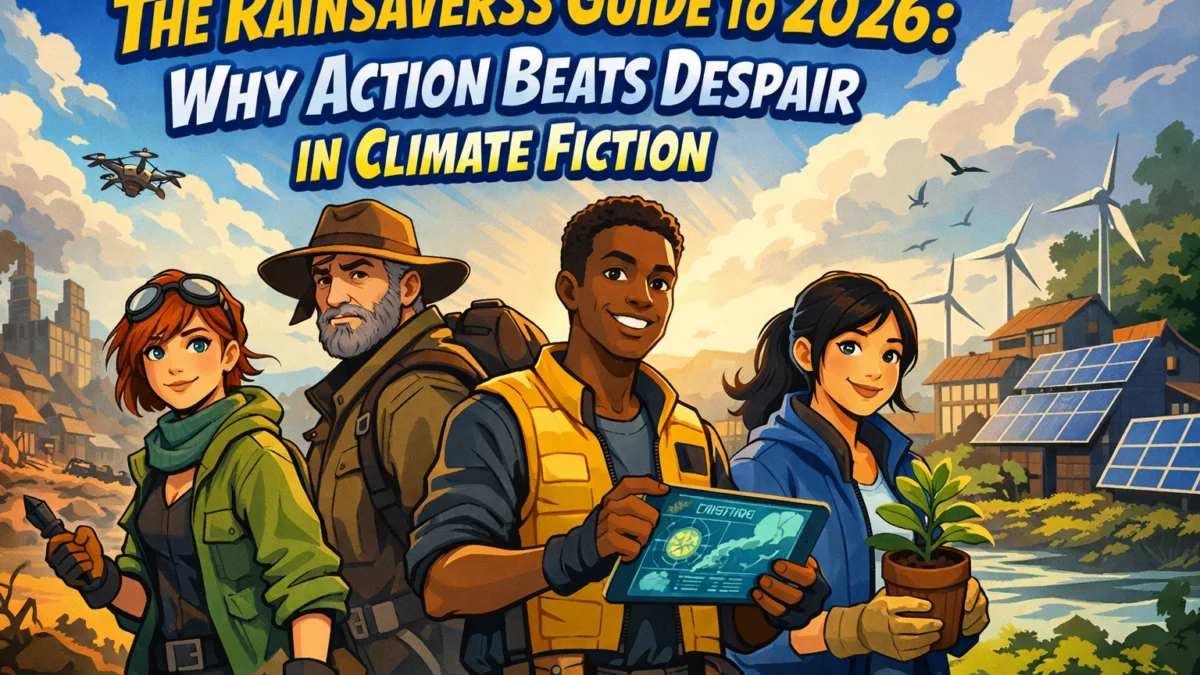
Gone are the days of the chosen one wearing a cape or a spandex suit. In 2026, the hero of the climate story wears cargo pants, carries a ruggedized tablet, and knows how to prime a solar-powered water filtration system.
We call this the Tactical Expedition Look.

It’s an aesthetic rooted in utility. It’s about gear that works, teams that communicate, and the grit required to face environmental challenges head-on. When you pick up a Rainsavers book, you aren't looking at a fantasy world: you're looking at a plausible, "five minutes into the future" reality where the tech is cool, the missions are dangerous, and the goal is restoration.
Why Teams Beat Solo Heroes
There’s a reason you don’t see many solo "eco-warriors" in our stories. Solving big problems requires big collaboration. One person can’t save a watershed, but a specialized team with diverse skills certainly can.
In the past, fiction leaned heavily on the "Lone Hero" trope. But as we’ve explored in our deep dive into why team-based adventure series are taking over, the modern reader craves community. We want to see the banter in the transport humvee. We want to see the engineer arguing with the biologist about the best way to divert a flood.
Action is a team sport. Despair is a solo activity. By focusing on the "Tactical Team," we turn climate fiction into a high-octane procedural where everyone has a job to do.
Intel Update: What Makes 2026 Action Different?
So, what specifically are we looking for in climate fiction this year? If you’re scanning the ultimate guide to climate fiction, you’ll notice a few recurring themes that define the "Action-First" era:
- Low-Latency Solutions: We aren't waiting for a magic wand. The action comes from using current or near-future tech in innovative ways.
- The "Fixer" Mentality: Characters aren't just surviving; they are repairing. There is a profound sense of satisfaction in seeing a plot of land restored or a community secured.
- High Stakes, High Rewards: The "villain" isn't always a person; sometimes it's a category 5 storm or a failing levee. The conflict is man vs. nature, but with the tools to actually win.

Field Notes: The "Oops" Moments of Saving the Planet
Being a "Rainsaver" isn't all cool gadgets and heroic poses. If you've ever tried to deploy a drone in a tropical downpour, you know that things go wrong. Fast.
Dispatch from the Field (July 12, 2026):
Note to self: The new bio-degradable tracking tags are great for the environment, but apparently, they also taste like candy to the local goat population. Mission 'Track the Water Table' has officially turned into 'Chase 40 goats through a ravine.' Tactical advantage: Zero. Cardio: 100.
These moments of levity are vital. Action isn't just about explosions and intensity; it's about the messy, human reality of trying to do something difficult. Despair is heavy and humorless. Action is vibrant, chaotic, and often a little bit funny.
Building the Future, One Chapter at a Time
At the end of the day, the stories we consume shape the way we view our own potential. If we only read about the end of the world, we’ll start to believe it’s inevitable. But if we read about teams of experts, adventurers, and everyday people working together to solve the "unsolvable," we start to see the world through a tactical lens.

We start asking:
- "What gear do we need?"
- "Who is on my team?"
- "What’s the first objective?"
That shift in mindset is the most powerful tool we have. In 2026, The Rainsavers are committed to bringing you stories that ignite that spark of "can-do" energy. We don't do doom. We do deployments. We don't do hopeless. We do high-adventure.
Your 2026 Reading Checklist
If you're ready to jump into the action, here’s how to spot a "New Era" climate fiction story:
- Is there a plan? Even if it’s a bad one, action-first stories start with a goal.
- Is there a team? Look for diverse skill sets working in tandem.
- Is the tech grounded? Look for tactical gear that feels like it could exist in your garage.
- Does it move? If the characters spend 300 pages crying in a basement, put it down. Look for the stories where they’re out in the mud, making things happen.

The world isn't a lost cause; it’s a mission in progress. And every mission needs a good story to keep the crew motivated.
See how we blend both action and adventure in our latest series. We’re moving beyond the "what if" of disaster and into the "how to" of heroics.
Check out our full collection and join the expedition at rainsavers.com.
The rain is coming. Are you ready to save it?
