
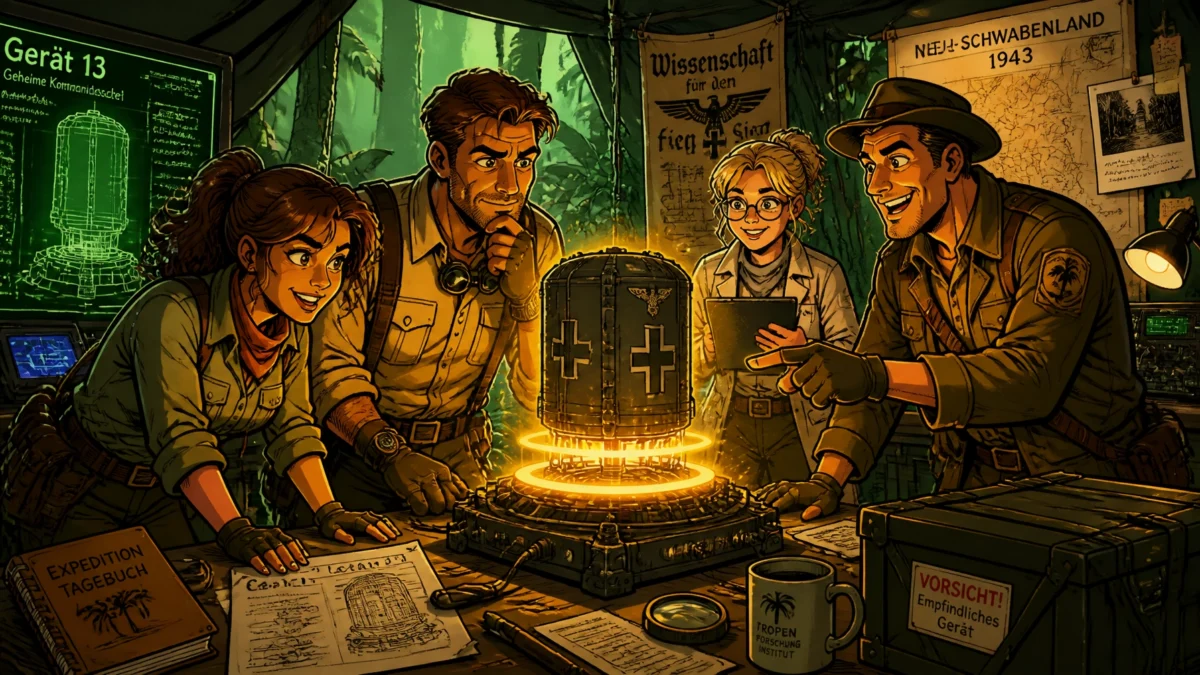
If you have ever cracked open The Rainsavers series, you know that Tom "Primal" Swift, Alpha, Dr. Mubari, and the rest of the crew don't just fight local corporate greed in the Amazon. As the saga unfolds across books like Black Rain, Tempest of the Crimson Skies, and Shadow of the Moon, the stakes expand from rainforest canopies to global espionage, forgotten polar expeditions, and even abandoned lunar installations.
What many readers ask us is: Where do these wild, high-stakes science-fiction concepts come from?
While our heroes and villains operate in a thrilling, action-packed universe of pure fiction, a surprising amount of our narrative inspiration is rooted in real historical anomalies, experimental mid-century German engineering, and forgotten wartime technological prototypes. Today, we are pulling back the curtain on how real history helped shape the most dangerous plotlines in The Rainsavers series!
1. The Blueprint of Ambition: From Experimental Rockets to Global Chases
In Book Two: Black Rain, the Rainsavers find themselves scrambling across the globe to intercept exotic weapons and secret wartime tech before rogue agents and corporate antagonists can weaponize them. This relentless pursuit of advanced propulsion and guidance systems didn't appear out of thin air.
During the mid-20th century, German research centers like Peenemünde were hotbeds for radical aerospace experimentation. Engineers pushed the boundaries of physics with the development of the world’s first long-range guided ballistic missiles, pulse-jet cruise missiles, and early rocket-powered interceptors. While many of these projects were plagued by logistical failures and entered service too late to alter history, they permanently changed the trajectory of human engineering.

In The Rainsavers universe, we took those historical seeds of rapid technological acceleration and asked: What if those secret research programs didn't just end in 1945? What if rogue factions spent decades quietly refining those experimental blueprints in hidden redoubts? That historical echo is what drives the breakneck pacing of Black Rain, where every clue leads closer to a terrifying technological threshold.
2. Into the Frozen Abyss: Historical Antarctic Expeditions Meet Secret Bases
In Book Three: Tempest of the Crimson Skies, the action shifts dramatically to the most inhospitable continent on Earth: Antarctica. Leonard West’s quest for ancient red mercury crystals to power long-lost weapons draws the Rainsavers into a frigid expedition where survival is just as difficult as outsmarting their enemies.
Real history has long whispered about secret German exploratory missions to the Southern Ocean during the late 1930s and early 1940s: missions that fueled decades of postwar rumor, myth, and speculation about hidden bases carved into Antarctic ice shelves. While historians emphasize that these wartime missions were primarily focused on whaling rights and geographic reconnaissance, the sheer mystery of the frozen continent captured the imagination of storytellers worldwide.

We leveraged that exact sense of isolation and historical enigma for Tempest of the Crimson Skies. Plunging our heroes into a freezing labyrinth of forgotten bunkers and experimental machinery creates an unforgettable contrast against the vibrant, green warmth of the Amazon rainforest. It reminds readers that the echoes of the past can freeze you in your tracks if you aren't prepared.
3. Orbital Ambitions: From Earthbound Rockets to Abandoned Moonbases
Perhaps one of the most jaw-dropping leaps in the series occurs in Book Four: Shadow of the Moon, when the pursuit of West leads the team all the way to an abandoned lunar base before culminating in a confrontation at the Giza Pyramid.
While crewed moonbases were obviously far beyond the technological reach of any 1940s nation, historical records show that wartime German scientists genuinely drafted avant-garde conceptual designs for long-range intercontinental strike aircraft (like the "Amerika Bomber" projects) and even theoretical space-based mirror weapons. These concepts were pure science fiction for their time, yet they laid the psychological and conceptual groundwork for the postwar space race.

In The Rainsavers, we took those ambitious paper-napkin sketches and cranked them up to eleven. When West transforms into Mortalis and unlocks ancient fusion technology, he is tapping into the ultimate logical extreme of mid-century technological hubris: the obsession with mastering the cosmos at any ecological cost.
4. Why Mixing History with Sci-Fi Creates Unstoppable Villains
What makes villains like Bossman and Leonard West so formidable is that their ambitions are tethered to tangible historical precedents. When a antagonist chases red mercury crystals or attempts to resurrect forgotten wartime engines, they aren't just waving a magic wand: they are wielding the terrifying weight of real human history gone off the rails.
This fusion of history, espionage, and environmental stakes is what keeps readers turning pages from Book One all the way to the epic conclusion in Book Wrath of Mortalis. Our heroes don't just fight for the trees; they fight to ensure that humanity's most destructive historical shadows never consume the future.

Dive Into the Adventure Today!
Ready to uncover all the secrets, tech, and action-packed twists that make The Rainsavers a must-read binge? Whether you are discovering Tom "Primal" Swift for the first time or following the team all the way to Antarctica and beyond, an epic journey awaits you.
- Explore the full six-book adventure series at The Rainsavers
- Meet the characters behind the mission, from Alpha to Dr. Mubari
Don't let history repeat itself in the wrong hands: join the Rainsavers today and help save the Earth!
