

Meta description: Learn five practical jungle survival tips inspired by The Rainsavers: safe hydration, smart navigation, wildlife awareness, first aid, and low-impact rainforest travel.
Incoming transmission from Rainsavers Field Operations:
Mission status: Deep jungle
Supplies: Damp
Morale: Surprisingly decent
Probability of becoming lunch: Lower than expected, provided everyone stops licking mysterious plants
The Rainsavers spend a lot of time navigating the Amazon rainforest, dodging dangerous schemes, protecting wildlife, and occasionally dealing with villains who have made some truly questionable career choices.
You probably aren’t planning to parachute into the jungle tomorrow. But the team’s adventures still offer useful lessons for anyone heading into a rainforest, hiking in a tropical climate, or simply trying to survive a family camping trip where one person forgot the bug spray.
Here are five jungle survival tips inspired by The Rainsavers characters and their rainforest missions.
1. Treat Water Like a Teammate, Not a Treasure Chest
In the jungle, water is everywhere.
That does not mean it is automatically safe to drink.
Streams, rivers, puddles, and suspiciously inviting leaf cups may contain bacteria, parasites, or other microscopic troublemakers. The rainforest is generous, but it is not running a complimentary bottled-water service.
The Rainsavers rule:
Find water. Treat water. Then drink water.
Whenever possible:
- Carry more water than you think you’ll need.
- Use a reliable filter, purification tablets, or boiling.
- Prefer clear, flowing water over stagnant pools.
- Collect rainwater in a clean container when practical.
- Keep your drinking containers sealed and separate from dirty gear.
Dr. Manaus would also remind us that “it looks clean” is not a scientific testing method. It is barely a method at all.
Active days in hot, humid conditions can increase your fluid needs, so plan ahead rather than waiting until you feel exhausted. If you are traveling into a remote area, ask local guides or health professionals about water safety and recommended supplies.
Tiny jungle oops: Alpha once identified a “perfect natural drinking bowl.” It turned out to be a frog’s extremely exclusive private bathtub.

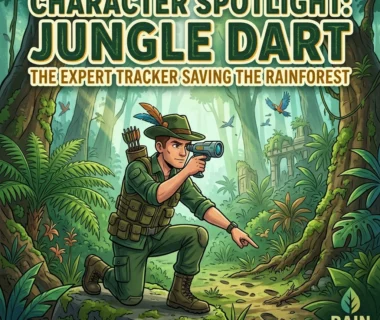
2. Navigate Like Jungle Dart, Not Like Someone Who Just Lost Their Phone
Dense rainforest can make every direction look identical.
There are trees. More trees. A vine that looks exactly like the other twelve vines. Congratulations: you are now directionally confused.
José Verdura, also known as Jungle Dart, relies on observation, memory, and a deep understanding of the forest. For the rest of us, a map and compass are also excellent life choices.
Your navigation loadout:
- A physical map stored in a waterproof sleeve.
- A compass you know how to use.
- A GPS device or phone with offline maps.
- A fully charged power bank.
- A trip plan shared with someone outside your group.
- A clear turnaround time.
When moving through unfamiliar terrain, pay attention to distinctive landmarks such as unusual rock formations, river bends, trail junctions, and large fallen trees. Avoid wandering off established trails unless you are with an experienced local guide.
If you realize you are lost, use the classic S.T.O.P. method:
- Stop. Don’t keep walking just because standing still feels unproductive.
- Think. Review your last known location.
- Observe. Look for landmarks, trail signs, watercourses, or other clues.
- Plan. Choose one careful next step instead of taking seventeen panicked ones.
In many situations, staying put and making yourself visible is safer than marching deeper into the forest. Your goal is not to win a dramatic tracking montage. Your goal is to be found.
Jungle Dart’s bonus tip: If your plan requires saying, “I’m pretty sure this is the way,” you may want to consult the compass.
3. Respect Wildlife, Insects, and Plants Like They Have a Group Chat About You
The rainforest is full of life, and much of it is excellent at hiding.
Snakes may be camouflaged. Insects may be tiny. Plants may have thorns, irritating sap, or a personal disagreement with human skin. Even harmless animals can become dangerous if cornered, startled, or approached too closely.
The safest jungle policy is simple:
Observe first. Touch almost never.
Protect yourself by:
- Wearing long sleeves, long trousers, and sturdy closed footwear.
- Using insect repellent according to the product directions.
- Checking clothing, boots, and sleeping areas regularly.
- Watching where you place your hands and feet.
- Avoiding nests, burrows, fallen logs, and dense brush.
- Keeping food sealed and away from where you sleep.
- Moving calmly rather than shouting or chasing animals.
Never handle wildlife, even if it appears injured, adorable, or extremely prepared for a close-up photograph. Leave that work to trained professionals and local experts.
And please don’t eat an unfamiliar plant because it “looks kind of like spinach.” That is how an expedition becomes a medical incident with a very embarrassing name.

4. Pack a First-Aid Kit: and Learn to Use It Before the Dramatic Music Starts
A first-aid kit is not magical simply because it is inside your backpack.
You should know what is in it, where it is stored, and how to use the basics before you need them. In a hot, wet environment, small cuts, blisters, and scrapes can become bigger problems if they are ignored.
A useful kit may include:
- Adhesive bandages and gauze.
- Antiseptic wipes or wound-cleaning supplies.
- Medical tape.
- Blister treatment.
- Tweezers.
- Antihistamine.
- Pain relief medication.
- Oral rehydration supplies.
- Personal prescriptions.
- Any location-specific medical items recommended by a professional.
Clean cuts promptly and protect them from dirt and moisture. Pay close attention to your feet: wet socks, friction, and long hours of walking are a truly terrible trio.
Lina Solimar: nurse, hacker, and general team problem-solver: would also recommend knowing the difference between “I have a minor scratch” and “I need medical help now.” Serious allergic reactions, severe bleeding, suspected venomous bites, heat illness, confusion, breathing problems, and infected wounds require urgent professional care.
For serious snakebites, stay calm, keep the affected limb as still as possible, and seek emergency assistance immediately. Do not attempt risky folklore treatments, cutting, or suction.
Sunbyte’s field note: The first-aid kit is not the place to store snacks. Even if the snacks are technically “healing.”

5. Leave the Rainforest Better Than You Found It
The Rainsavers aren’t in the Amazon to conquer it. They are there to protect it.
That distinction matters.
Good jungle survival is not just about staying alive. It is also about minimizing the damage you cause while you are there. The forest is not a backdrop, obstacle course, or free souvenir shop. It is a living ecosystem that supports people, animals, plants, rivers, and entire communities.
Practice low-impact travel by:
- Staying on established trails where available.
- Packing out every item you bring in.
- Carrying trash in waterproof bags.
- Avoiding damage to plants, trees, nests, and other habitats.
- Keeping noise low around wildlife.
- Using existing campsites instead of clearing new ones.
- Staying away from fragile riverbanks and vegetation when choosing where to rest.
- Following local guidance and respecting Indigenous communities and their knowledge.
Skip the urge to carve your initials into a tree. The rainforest does not need your autograph, and future visitors do not need to know that “MARCUS 2026” was here.
Dr. Mubari’s work in the series reflects a larger idea: science, adventure, and environmental responsibility can work together. The smartest explorers are not the ones who leave the biggest trail. They are the ones who understand the place well enough to move through it carefully.

The Final Field Briefing
If you remember only five things, remember this:
- Purify your water.
- Carry navigation tools and know how to use them.
- Give wildlife and unfamiliar plants plenty of space.
- Bring a real first-aid kit and learn the basics.
- Pack out your trash and respect the ecosystem.
And one more thing: don’t attempt a dangerous expedition without proper preparation, local guidance, permits, emergency communication, and professional advice. Fictional heroes may have daring escapes, secret labs, and unusually flexible insurance policies. Real travelers need a plan.
Ready to join the adventure? Explore The Rainsavers and discover the six-book mission to save the Earth.