Meta description: Explore The Rainsavers’ 2026 deforestation scorecard: real Amazon rainforest protection wins, ongoing risks, and fictional eco-adventure victories.
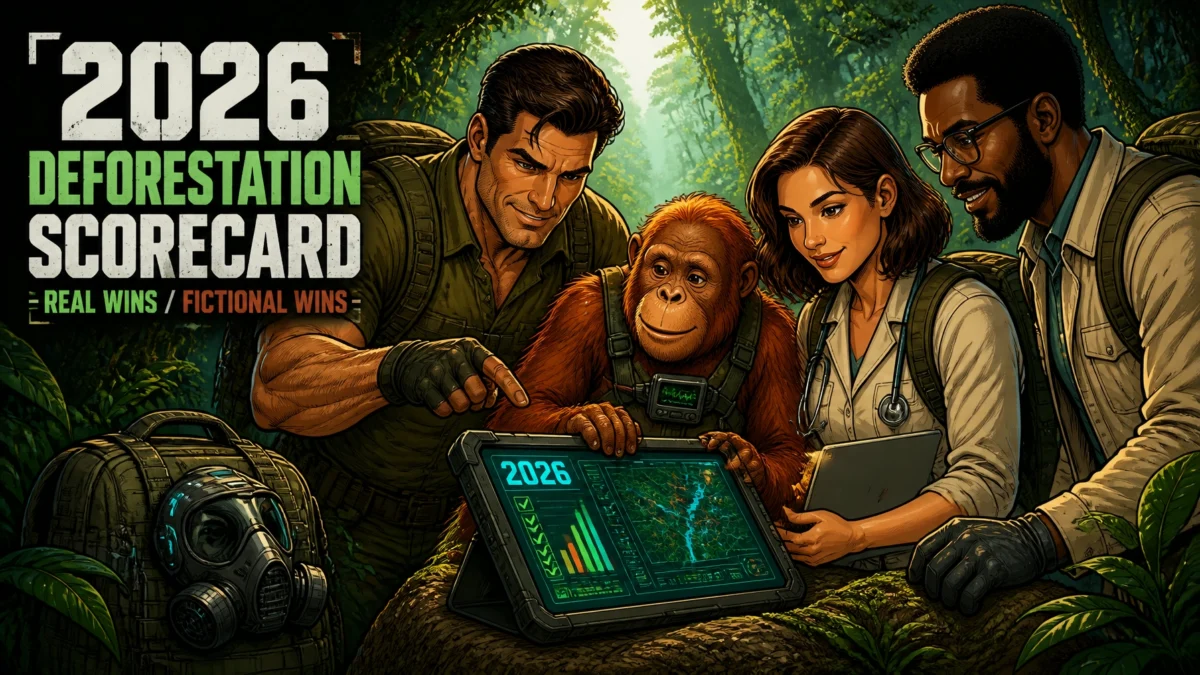
Welcome to the 2026 edition of the Rainsavers Scorecard, where we compare real-world progress in Amazon rainforest protection with the fictional victories of Primal, Alpha, Sunbyte, Dr. Manaus, and the rest of the team.
One side uses satellites, enforcement, conservation programs, and better land-use decisions. The other side uses superhuman strength, jungle know-how, intelligent orangutans, and the occasional high-stakes battle beneath the canopy.
Both have one goal: keep the rainforest standing.
The real-world news is encouraging: but not exactly a “mission accomplished” situation.
The quick scorecard
| Category | Real-world 2026 result | Fictional Rainsavers result |
|---|---|---|
| Deforestation alerts | Strong improvement | Bossman gets stopped: temporarily |
| Rainforest conservation | Moving forward, but fragile | The team protects communities and wildlife |
| Climate change pressure | Still intensifying risks | The planet is saved before the final chapter |
| Forest degradation and fire | Major unresolved threat | Jungle Dart notices danger before breakfast |
| Sustainable living | Everyone has a role | Sunbyte turns the mission into a global movement |
| Overall status | Hopeful, not finished | Team morale: muddy but determined |
Real win: deforestation alerts dropped
According to data reported by Brazil’s National Institute for Space Research, the INPE DETER satellite alert system recorded 2,874 square kilometers of Amazon deforestation alerts between August 2025 and July 2026.
That was:
- 36% lower than the previous 12-month period
- 55.6% below the average of the preceding decade
- The lowest total since 2013 when earlier DETER data are included
That is a meaningful conservation win. It suggests that stronger environmental enforcement, improved monitoring, protected areas, and cooperation with local communities can make a difference.
But there is an important detail: DETER is an alert system designed for rapid response. It is not the same as PRODES, Brazil’s higher-resolution system used for the country’s official annual deforestation rate. The latest figures are a powerful early signal, but the final score still requires continued monitoring.
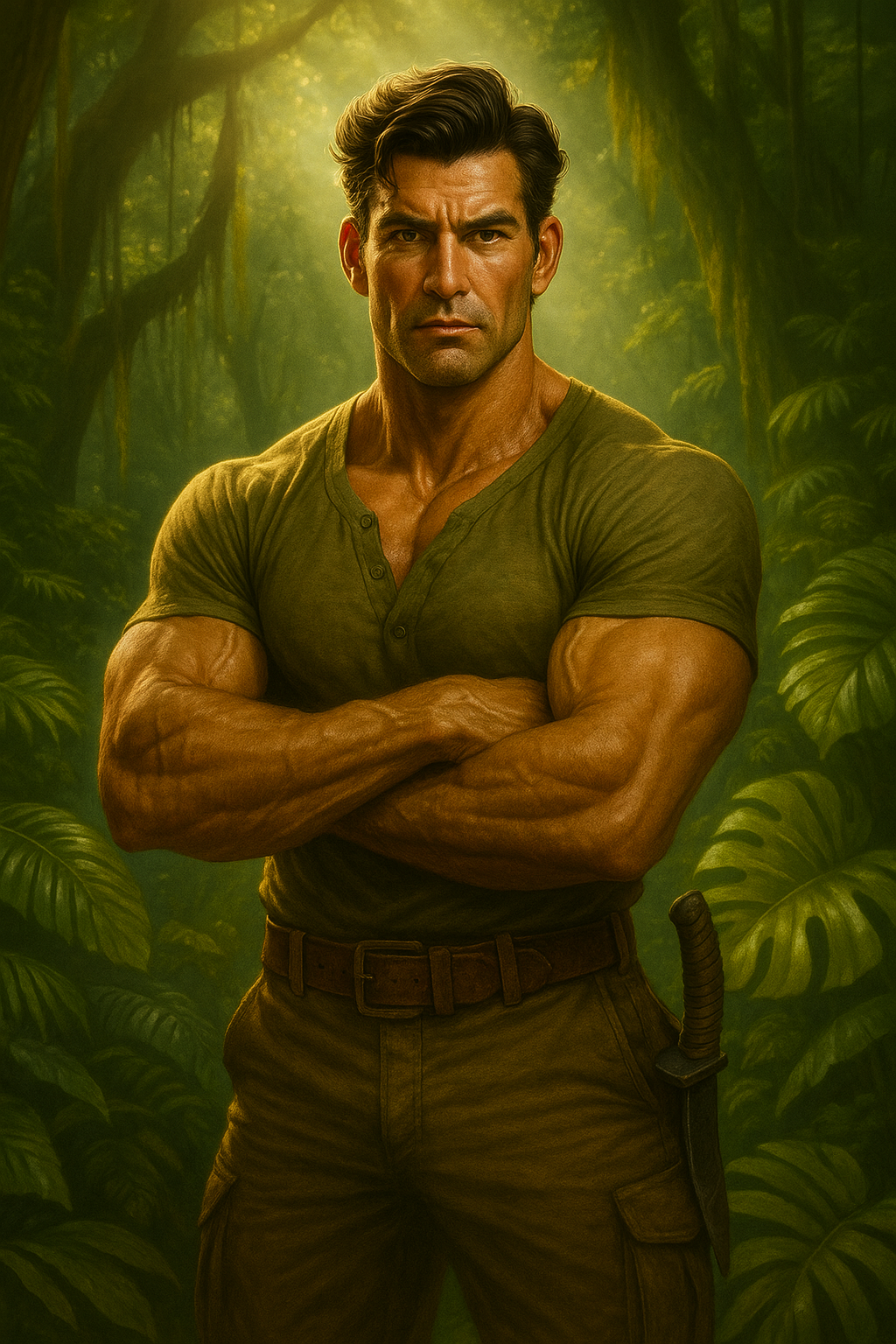
Rainsavers fictional equivalent: Primal arrives just as Bossman’s machines reach the next stand of trees, dramatically plants both feet in the mud, and says something inspirational.
Then he discovers that the mud is deeper than expected.
Real win: conservation efforts are showing results
The drop in deforestation did not happen because the forest suddenly became impossible to destroy. It followed renewed enforcement and monitoring efforts, including satellite-based alerts that help authorities identify new clearings more quickly.
This is one of the clearest lessons from 2026: rainforest conservation works best when technology and people work together.
Satellites can identify areas of concern. Scientists can analyze the data. Environmental agencies can investigate. Local and Indigenous communities bring essential knowledge of the land. Governments and businesses must then make decisions that protect forests instead of rewarding illegal clearing.
In The Rainsavers, Dr. Manaus represents the scientific side of that equation. His knowledge of biology, healing, and rainforest ecosystems helps the team understand what is at stake. Jungle Dart brings lived knowledge of the forest. Sunbyte connects information, technology, and action.
Nobody protects the Amazon alone: not even a hero with superhuman strength.
Fictional win: The Rainsavers make conservation impossible to ignore
In the world of The Rainsavers, environmental threats arrive with louder sound effects.
A corrupt businessman burns rainforest for profit. A rogue agent develops dangerous biological technology. Ancient energy, red mercury, global conspiracies, and secret facilities all become part of the problem.
That is fiction: but the underlying conflict is real. Deforestation is often connected to economic pressure, land speculation, agriculture, illegal logging, infrastructure, and weak enforcement. The Rainsavers simply turn those complicated issues into a fast-moving adventure with clearer villains and more dramatic entrances.
The team’s greatest fictional win is not just defeating one enemy. It is making rainforest protection feel urgent, personal, and exciting.
A reader may pick up Book One for the action and stay because the Amazon itself becomes one of the most important characters in the story.
Meet the full Rainsavers team and explore their missions.
Warning on the scorecard: forest degradation is still a major problem
Here is where the real-world scorecard gets more complicated.
Lower deforestation does not mean the Amazon is completely healthy. A forest can be damaged without being fully cleared. Logging, drought, fires, and selective cutting can weaken standing trees, fragment habitats, reduce biodiversity, and make the remaining forest more vulnerable to future destruction.
Recent reporting from Mongabay noted that degradation can outpace clear-cutting in parts of the Brazilian Amazon. That matters because a satellite map showing “forest” does not always mean a fully intact, resilient ecosystem.
Climate change adds another layer of pressure. Hotter and drier conditions can increase fire risk, especially in areas already affected by logging or fragmentation. A strong El Niño can make dry-season conditions more difficult, but climate change is a long-term challenge that does not disappear when one annual deforestation number improves.
Rainsavers fictional equivalent: The team celebrates a successful mission, only for Alpha to tap out a Morse code message that translates to:
“You forgot the fire.”

Real-world assignment: sustainable living without the guilt spiral
Individual choices cannot replace government action, corporate accountability, or the work of local conservation leaders. Still, sustainable living can help shape demand and keep pressure on institutions that control major supply chains.
A practical 2026 mission briefing:
- Choose products with clearer sourcing. Look for credible information about wood, paper, coffee, cocoa, palm oil, and soy.
- Reduce waste. Buying less, reusing what you already own, and avoiding unnecessary packaging can reduce pressure on forests and other ecosystems.
- Think about food choices. Cattle pasture expansion is a major driver of Amazon forest loss, so reducing high-impact consumption can be one part of a broader sustainability plan.
- Use energy thoughtfully. Cutting fossil fuel use helps address climate change, which increases stress on forests through heat, drought, and fire.
- Support reputable conservation organizations. Local communities, Indigenous organizations, scientists, and environmental groups all play important roles in rainforest protection.
- Stay informed. Follow reliable satellite data, conservation reporting, and science-based sources instead of sharing every alarming headline with a leaf emoji.
- Vote and speak up. Policies involving land use, environmental enforcement, climate action, and corporate transparency matter.
Sunbyte would probably add one more item: update your passwords before attempting to expose an international criminal network.
Fictional assignment: read the mission before the rainforest explodes
The Rainsavers series connects environmental protection with action-adventure, science fiction, espionage, and ancient mysteries. The stakes grow from one rainforest conflict into a six-book story reaching Antarctica, the moon, Egypt, and the Spirit Tree.
That larger journey reflects something important about conservation: local choices can have global consequences.
A damaged forest affects wildlife, communities, rivers, carbon storage, rainfall, and climate systems. Protecting it is not a side quest. It is part of protecting the future.
In the real world, the best scorecard is one where deforestation continues to fall, forest degradation is addressed, communities have meaningful support, and sustainable economic choices become easier for everyone.
In the fictional world, the scorecard is slightly simpler:
- Bossman: needs a new business plan
- Primal: still punching problems
- Alpha: has already noticed the flaw in your plan
- Jungle Dart: knows the safest route
- Dr. Manaus: has the data
- Sunbyte: has the network
- The rainforest: still worth saving
Final score: hopeful, but not finished
Real-world result: B-plus, with extra credit available.
The 2026 decline in Amazon deforestation alerts is a genuine win for rainforest conservation. It shows that monitoring, enforcement, and public commitment can move the numbers in the right direction.
But the remaining threats are serious. Forest degradation, fire, drought, climate change, and pressure from land-use industries mean the mission is ongoing.
Fictional result: A-plus for dramatic timing.
The Rainsavers are built around the idea that protecting the Earth requires courage, teamwork, science, and persistence. Their adventures may include glowing crystals and villains with wildly unreasonable plans, but the central message is grounded:
The rainforest is not disposable. The future is not guaranteed. And every successful mission begins with paying attention.
Ready to see how the story begins? Read The Rainsavers: Primal Awakening, Book One now.
For more rainforest-fueled adventure, visit The Rainsavers and see how we blend real environmental stakes with fictional wins.
