Meta description: Jungle Dart’s funny-but-serious 2026 canopy handbook covers Amazon fire-season preparedness, El Niño, smoke, deforestation, and rainforest protection.
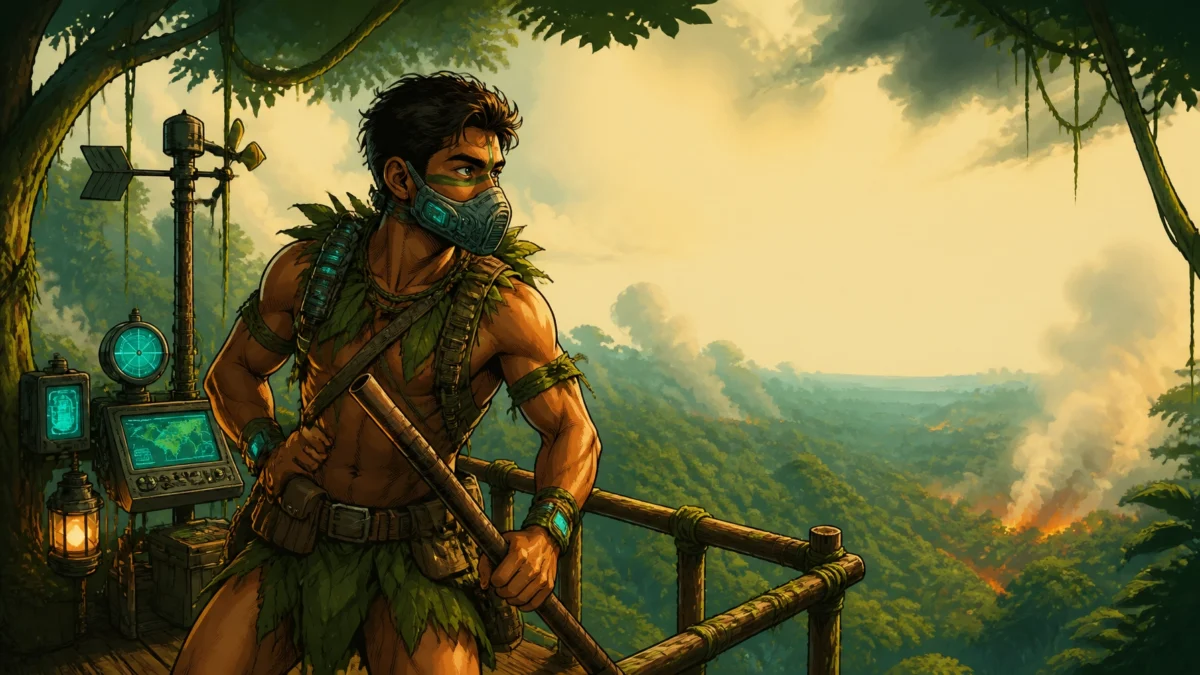
Transmission from José “Jungle Dart” Verdura, canopy level, somewhere above the “please do not touch” vines.
Welcome to the unofficial 2026 canopy handbook for surviving a hotter, drier Amazon fire season without becoming a crispy leaf with opinions.
First rule: respect the rainforest.
Second rule: respect the smoke.
Third rule: never trust a backpack that makes a sloshing noise.
Mission briefing: why 2026 matters
El Niño is raising the risk of heat, drought, low river levels, and intense fires across parts of the Amazon. The biggest danger may arrive after the event itself, when forests enter the next dry season already thirsty and stressed.
Research from the Food and Agriculture Organization warns that climate change is amplifying wildfire conditions. A recent MAAP analysis also points to a serious concern: strong El Niño events can be followed by much worse fire seasons the next year, including a potentially difficult 2027.
Translation from Jungle Dart:
The sky is sending us a warning flare. Maybe do not ignore it while arguing about who ate the last plantain.
Canopy Rule #1: Know your smoke signals
Smoke is not just dramatic background scenery. It can travel far, irritate lungs, reduce visibility, and make an already difficult emergency much more dangerous.
If you are near smoke:
- Move toward cleaner air when it is safe.
- Keep doors and windows closed if smoke is entering a building.
- Use a properly fitted respirator or mask designed for smoke particles.
- Avoid unnecessary outdoor exertion.
- Follow local emergency alerts and evacuation instructions.
- Check on children, older adults, and anyone with breathing conditions.
Do not attempt to fight a spreading forest fire with a bucket, a heroic pose, or Alpha’s emergency banana launcher. There is no emergency banana launcher. Probably.

Canopy Rule #2: Pack like the jungle is judging you
A useful field kit for 2026 should include:
- Plenty of drinking water.
- A charged phone, power bank, and radio if available.
- A flashlight and spare batteries.
- Basic first-aid supplies.
- A high-filtration mask or respirator for smoky conditions.
- Eye protection.
- Sturdy shoes and long sleeves.
- A paper map, because batteries enjoy failing during the exciting part.
- Emergency contacts and a clear meeting point.
Jungle Dart’s personal packing philosophy is simple: one tool for survival, one tool for communication, and one snack that cannot mysteriously become soup.
Oops. The snack became soup.
Canopy Rule #3: Fire prevention is cooler than fire drama
The safest fire is the one that never starts.
Communities, land managers, farmers, businesses, and visitors can help by:
- Following local restrictions on burning.
- Avoiding fires during hot, dry, windy conditions.
- Keeping sparks away from dry vegetation.
- Reporting smoke or illegal clearing through appropriate local channels.
- Supporting fire-free land-management practices.
- Protecting forest edges, wetlands, and intact primary forest.
This matters because deforestation does more than remove trees. Newly cleared areas can leave behind dry, highly combustible vegetation. During drought, fires started in cleared land can escape into surrounding forest.
The MAAP 2026 report highlights a blunt but important prevention strategy: minimizing new deforestation in 2026 can reduce the risk of a major fire crisis in 2027.
That is not flashy. It does not explode through a secret laboratory wall. It works anyway.
Canopy Rule #4: Watch the forest before it burns
Early warning saves time, and time saves forests.
Useful monitoring can include:
- Satellite-based hotspot detection.
- Rainfall and drought forecasts.
- Vegetation moisture measurements.
- Local fire-danger maps.
- Canopy sensors and community observation networks.
- Fast communication between residents, rangers, Indigenous communities, and emergency agencies.

Technology helps, but it cannot replace people on the ground. Local knowledge is essential for understanding river conditions, wind shifts, access routes, wildlife movement, and which “shortcut” is actually a vertical mud staircase.
The best response combines data, trained crews, community planning, and respect for the people who know the forest best.
Canopy Rule #5: Do not confuse fiction with instructions
In The Rainsavers, Jungle Dart moves through danger with sharp senses, acrobatic confidence, and a blowgun.
In real life:
- Do not enter an active fire zone for a better video.
- Do not approach a burning animal or damaged structure.
- Do not drive through smoke if visibility is poor.
- Do not create a firebreak without trained support.
- Do not assume rain means the danger is over.
- Do not let a fictional adventure team make you overconfident.
The rainforest is not a stunt set. It is a living system, a home, a climate regulator, and a network of communities and species that cannot simply respawn after the credits roll.

Final canopy note
El Niño is a natural climate pattern, but it is arriving in a warmer world shaped by climate change and ongoing deforestation. Hotter conditions dry vegetation faster. Fires release carbon. Burned forests become more vulnerable to future damage. The result can become a nasty feedback loop with absolutely terrible reviews.
Preparedness means more than reacting to flames. It means protecting intact forest, preventing unnecessary burning, strengthening early-warning systems, supporting local and Indigenous leadership, and reducing the pressures that make the Amazon easier to ignite.
Jungle Dart’s final instruction for 2026:
Keep your respirator clean. Keep your radio charged. Keep your snacks sealed. And if someone suggests clearing “just a little more” rainforest, ask them who exactly benefits from the oops.
Ready for a fictional mission where the stakes are global and the canopy fights back? Read Book One now and join The Rainsavers in Primal Awakening.
