
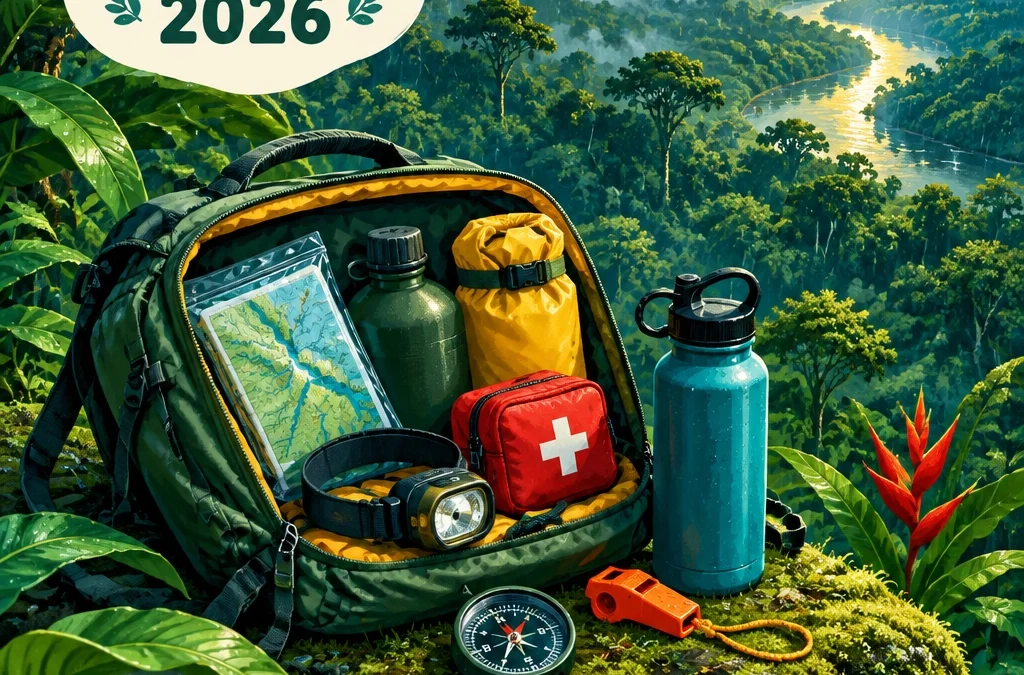
Meta description: Grab the 2026 Rainsavers field survival guide: playful, practical tips for staying safe, traveling lightly, and avoiding classic jungle-mission oops moments.
Welcome to the 2026 Rainsavers Field Survival Guide, assembled after extensive team debate, three misplaced compasses, and one incident involving a hammock, a rainstorm, and Alpha’s strong opinions.
This is not a replacement for a qualified local guide, official travel advice, or proper expedition training. It is a practical, playful handbook for thinking like a Rainsaver: prepare well, respect the rainforest, and never assume the mysterious glowing trail is “probably fine.”
If you’re new to the team, you can explore the full adventure through The Rainsavers series, beginning with Primal Awakening.
Rule One: Pack the Boring Heroes
The most exciting item in your field kit is usually the thing that prevents an emergency from becoming a full-blown adventure plot.
Bring:
- A waterproof map and compass
- A phone with offline maps
- A power bank stored in a dry bag
- A headlamp with spare batteries
- A whistle or emergency signaling device
- A basic first-aid kit
- Water containers and a reliable purification method
- Lightweight long sleeves and trousers
- Insect repellent
- A waterproof jacket or poncho
- High-energy snacks in sealed packaging
- A few extra plastic-free storage bags or dry bags
Field note from Sunbyte: A phone at 2% battery is not a navigation system. It is a tiny rectangle experiencing its final emotional moment.

Rule Two: Tell Someone Where You’re Going
Before heading into a remote area, share your route with someone who is staying behind. Include:
- Your starting point
- Your planned route
- Your group members
- Your expected return time
- Your emergency contact plan
Set a turnaround time and stick to it. “We’ll be back before dark” is not a plan unless you have also defined what “dark” means and who is checking on you.
In a Rainsavers mission, Dr. Mubari would call this responsible expedition protocol. Tom might call it “not making Alpha come find us.” Both are correct.
Rule Three: Water First, Dramatic Discovery Later
Rainforest conditions can be hot, humid, and physically demanding. Drink regularly rather than waiting until you feel thirsty, and carry enough water for your route.
If you need to collect more water, treat it before drinking. Rainwater collected cleanly may be preferable, but natural water can still contain harmful microorganisms. A filter followed by approved purification tablets: or boiling according to the equipment instructions: is a safer approach than trusting a stream because it looks cinematic.
Keep treated and untreated water separate. Label containers if necessary.
Important field principle: The river may be beautiful, mysterious, and surrounded by excellent scenery. It is not automatically safe to drink.
Rule Four: Use the S.T.O.P. Method
Dense vegetation can make navigation confusing very quickly. If you realize you’re lost, do not immediately charge ahead in the direction that “feels right.” That is how people end up naming a new swamp after themselves.
Use S.T.O.P.:
- Stop: Pause and control your breathing.
- Think: Recall your last confirmed location.
- Observe: Check your map, compass, landmarks, terrain, and daylight.
- Plan: Choose one careful next step: or stay put and signal for help.
A compass, offline map, and agreed meeting point are much more dependable than guessing based on moss, vibes, or Alpha’s suspiciously confident pointing.
Rule Five: Let the Rain Happen
The rainforest has a simple message for your carefully planned outfit: adorable.
Wear quick-drying, moisture-wicking layers instead of heavy cotton. Keep spare clothing and electronics sealed in waterproof bags. Pack a lightweight shell for sudden downpours, and choose footwear with good traction.
When selecting a campsite, avoid low areas, gullies, dry streambeds, unstable slopes, and places that could flood after heavy rain. Set up before dark whenever possible. A shelter assembled in daylight is a field camp. A shelter assembled in total darkness while everything is wet is a character-development exercise.

Rule Six: Outsmart the Tiny Villains
Mosquitoes, ticks, leeches, ants, and other small creatures do not need advanced technology to ruin your afternoon.
Reduce unwanted attention by:
- Wearing long sleeves, trousers, and a hat
- Applying a suitable insect repellent
- Checking clothing and skin regularly
- Using a properly secured mosquito net
- Keeping food sealed
- Avoiding strongly scented lotions and sprays
- Shaking out shoes and clothing before putting them on
If you develop concerning symptoms after a bite or exposure, seek medical advice promptly. The Rainsavers may have sci-fi equipment. Most of us have a first-aid kit and a phone, so use both wisely.
Rule Seven: Leave No Trace: Except Excellent Footprints
Environmental action begins with how you move through a place.
Stay on established paths when possible. Avoid damaging plants, carving marks into trees, feeding wildlife, or disturbing nests and habitats. Keep noise low enough to observe animals without stressing them. Pack out every piece of rubbish, including food scraps and packaging.
For hygiene, keep soaps, chemicals, and food residue away from streams and rivers. Never assume something is harmless simply because it is biodegradable.
Team motto: If you carried it in, you can carry it out.

Rule Eight: Don’t Turn Every Problem Into a Chase Scene
Adventure stories are full of narrow escapes. Real field safety is usually less dramatic and much more effective.
Move slowly over wet roots, rocks, and fallen branches. Keep your pack balanced and secure loose straps. Take regular breaks before you are exhausted. Watch the weather. Follow local guidance. Respect Indigenous communities and local knowledge, and seek permission where appropriate.
Most importantly, do not approach wildlife. Observe from a safe distance and never feed animals. A curious creature may be adorable from a distance and significantly less adorable when it wants your snack bag.
Your 2026 Mission Brief
A Rainsavers-style expedition is not about being fearless. It is about being prepared enough to make good decisions when the weather changes, the trail disappears, or someone confidently announces, “I know exactly where we are.”
Bring the practical gear. Protect your water. Watch the sky. Travel lightly. Stay with your team. And if the mysterious glowing object starts humming, call Dr. Mubari before touching it.
Ready for more rainforest action, science-fiction surprises, and high-stakes environmental adventure? Visit The Rainsavers and explore the books, characters, and continuing mission to protect the planet.
What would be the first item you’d pack for a Rainsavers-style jungle mission?
