
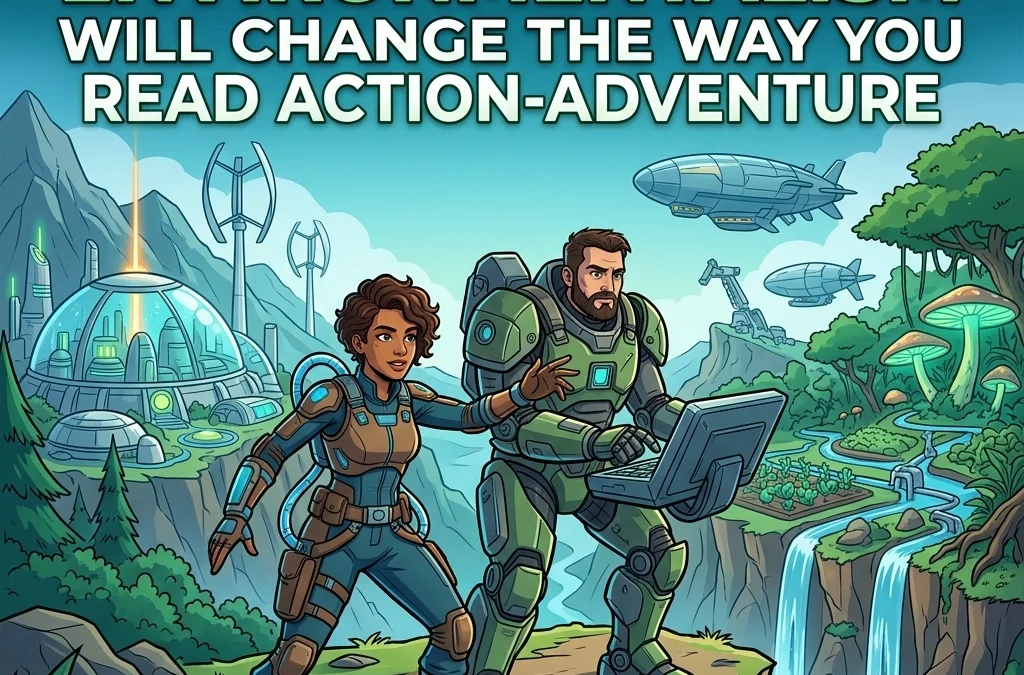
Meta Description: Explore how sci-fi environmentalism is transforming action-adventure stories in 2026. Learn how The Rainsavers combine high-tech mystery with planetary protection to create a reading experience that matters.
Hey there, adventure seekers! Steven G. Samuels here, CEO of The Rainsavers. It’s April 30, 2026, and the world looks a lot different than it did just a few years ago. If you’ve been following our journey, you know we aren’t just about writing books: we’re about building a world where the stakes are as real as the air you breathe.
Today, I want to talk about a massive shift in the stories we consume. We’ve all seen the classic action-adventure trope: a hero runs through a jungle, things explode, and they move on to the next mission. But in 2026, that’s not enough anymore. Science Fiction Environmentalism (or what some call "Eco-Adventure") is changing the game. It’s making every explosion feel heavier and every victory feel more vital.
Here is why this blend of sci-fi and environmentalism is going to change the way you read action-adventure forever.
1. The Environment Isn't Just a Backdrop: It’s a Character
In traditional action stories, the setting is just a stage. A desert is just "hot," and a forest is just "green." But in The Rainsavers universe, the environment has a voice, a pulse, and a temper.
When our team heads into a mission, they aren't just fighting villains; they are navigating a planet that is reacting to human intervention. Whether it’s the way the flora reacts to high-tech pollutants or how the very weather patterns shift during a firefight, the environment is an active participant.
When you read stories like this, you stop looking at the scenery as a static image. You start reading the landscape for clues. Is that mist natural, or is it a byproduct of Red Mercury leaching into the groundwater? That shift in perspective turns a standard "chase scene" into a high-stakes survival puzzle.
2. Red Mercury and the Tech of Tomorrow
What makes it Science Fiction Environmentalism? The tech. We’re obsessed with the intersection of "what if" and "what is."
Take Red Mercury, for example. It’s a recurring mystery in our world. Is it a clean energy miracle? A weapon of mass destruction? Or something even more ancient? When you introduce advanced technology into an environmental context, the stakes skyrocket.
In 2026, we’re dealing with real-world tech that feels like sci-fi, so reading about characters who use cutting-edge gear to protect: rather than exploit: the Earth feels incredibly relevant. It’s not just about flashy gadgets; it’s about how that tech interacts with the biosphere.

3. The Evolution of the Hero: Meet Primal and Mortalis
Gone are the days of the invincible, solo powerhouse who doesn't care about the collateral damage. Today’s readers want heroes who are connected to the world they are trying to save.
Let’s look at two of our heavy hitters:
- Primal: He represents the raw, visceral connection to nature. He doesn't just "fight" for the woods; he is the woods. His abilities are a direct reflection of the environment’s power.
- Mortalis: He brings the grit and the strategy, understanding that the modern world is a complex web of technology and biology.
When these characters step onto the page, they aren't just stopping a bank robbery. They are stopping ecological collapse. You can check out more about their backgrounds on our Characters page. This team-based dynamic shows that saving the world isn't a one-man job: it takes a diverse set of skills and a shared love for our planet.
4. Ancient Secrets and German Tech Mysteries
One of the coolest parts of writing action-adventure in a sci-fi environmentalist framework is digging into the past. We often explore the legacy of German technology from the WWII era.
History is full of rumors about "wunderwaffen" or wonder-weapons. In our stories, we ask: what if that ancient tech wasn't just about war? What if it tapped into energy sources that we are only now beginning to understand: and what if those sources are tied to the planet's health?
When our heroes uncover a hidden bunker from the 1940s, they aren't just looking for old maps. They are looking for the origins of modern environmental threats. It bridges the gap between historical mystery and futuristic sci-fi, making the "adventure" part of the story feel deeply rooted in our own timeline.

5. It Tackles "Climate Anxiety" with Action
Let’s be real: thinking about the environment in 2026 can be stressful. We’ve all felt that "climate anxiety." Traditional action-adventure often ignores this, offering an escape into a world where consequences don't exist.
Science Fiction Environmentalism does the opposite. It leans into the anxiety but gives you a way to process it through action. Instead of feeling helpless, you're riding along with The Rainsavers as they take on the threats head-on. It’s empowering.
We’ve seen a huge response to this in our community. If you’re feeling the weight of the world, reading about a team that actually does something about it is a breath of fresh air. You can read more about how we handle these themes in our article on struggling with climate anxiety.
6. The "Action" is More Meaningful
In a standard thriller, the "bad guy" usually wants money or power. In Eco-Adventure, the villain’s motivation is often more complex: and more dangerous. They might be trying to monopolize the world’s last clean water source or use ancient German tech to terraform the planet for their own benefit.
When the stakes are planetary, the action beats mean more. A bridge exploding isn't just a cool visual; it’s a potential disaster for the local ecosystem. A high-speed chase through a canyon isn't just about speed; it's about navigating the terrain without destroying it.
This changes your reading habit because you start to care about the where and the how just as much as the who. You aren't just reading for the body count; you're reading for the survival of the setting itself.
7. A Community of Protectors
Finally, this genre changes how you read because it connects you to a community. The Rainsavers isn't just a book series; it’s a movement. When you read our blog or join our contests, you’re engaging with other people who love high-octane adventure but also care deeply about the world.
We love hearing from you guys. Whether you’re voting in a poll about which character should lead the next mission or entering the Down the Rabbit Hole contest, you’re part of the team.

Why It Matters Right Now
In 2026, we don't have the luxury of "mindless" entertainment. Everything is connected. By choosing stories that highlight environmentalism through the lens of science fiction, you're training your brain to see the beauty and the fragility of our real world.
The Rainsavers are here to prove that you can have all the explosions, the ancient mysteries, and the tech-heavy battles you want, while still carrying a message that matters. It’s about the thrill of the hunt and the health of the habitat.
If you’re ready to dive into a world where the adventure is as big as the planet, it’s time to start your journey.
Ready to join the mission?
Stop by the Rainsavers Shop to grab the latest episodes and gear up. The planet isn't going to save itself, and neither are these books going to read themselves!
Stay adventurous, stay green, and keep your eyes on the horizon.
: Steven G. Samuels, CEO of The Rainsavers
Want to dive deeper? Check out these links:
- Learn about our heroes
- See our latest episodes
- Watch the TV Commercial
- Join the conversation on our blog
Visit us at https://rainsavers.com to start your adventure today!
