Meta Description: Ancient pyramid conspiracies or sci-fi world-ending catastrophes, which powers the best action-adventure fiction? We break down this ultimate storytelling showdown for 2026 readers.

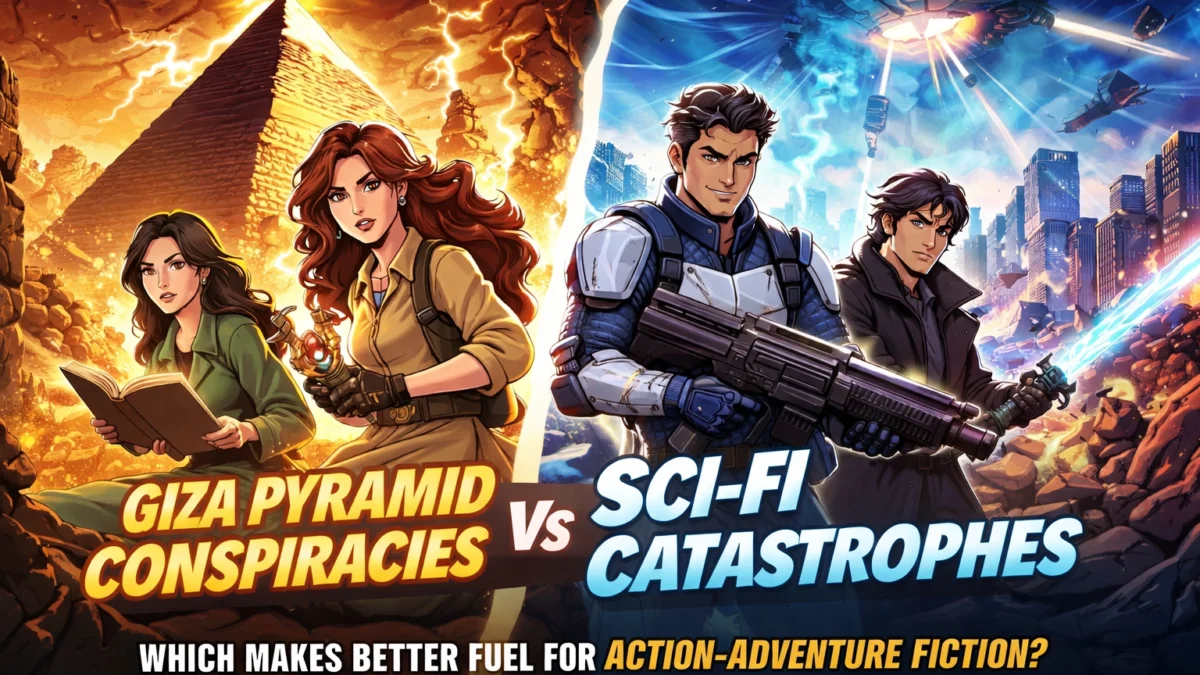
🥊 TONIGHT'S MAIN EVENT: The Ultimate Storytelling Showdown
Welcome, fiction fans, to the literary cage match nobody asked for but everyone secretly needed.
In the red corner: Giza Pyramid Conspiracies, ancient mysteries, secret chambers, and enough "what if aliens built this?" energy to fuel a thousand Reddit threads.
In the blue corner: Sci-Fi Catastrophes, world-ending disasters, extinction-level events, and technology so advanced it makes your smartphone look like a cave painting.
Which one makes better fuel for action-adventure fiction in 2026?
Grab your popcorn. We're settling this today.
Round 1: The "Wait, Could This Actually Be Real?" Factor
Pyramid Conspiracies: 9/10
Here's the thing about Giza conspiracy theories, they hit different because the pyramids actually exist. You can book a flight and stand in front of them tomorrow. Touch the stones. Feel the weight of 4,500 years pressing down on your imagination.
When a story starts with "What if there's a hidden chamber beneath the Great Pyramid containing…" your brain immediately goes, "I mean… maybe?"
That's powerful storytelling real estate right there.
The alien pyramid idea has been percolating in pop culture since H.G. Wells dropped The War of the Worlds back in 1897. Over a century of collective "what if?" energy has built up around those limestone blocks. Writers get to tap into established mythology, secret societies, and archaeological mysteries that already have cultural weight.

Sci-Fi Catastrophes: 6/10
Sci-fi catastrophes are spectacular, but they require more heavy lifting from the writer. You have to convince readers that your fictional disaster could happen. There's no monument they can visit. No YouTube rabbit hole waiting to validate their suspicions at 2 AM.
That said, with climate anxiety at all-time highs in 2026, environmental catastrophe storylines hit closer to home than ever before. So maybe this gap is narrowing.
Round 1 Winner: Pyramid Conspiracies 🏆
Round 2: Visual & Action Set Piece Potential
Pyramid Conspiracies: 8/10
Booby-trapped corridors? Check. Crumbling ancient mechanisms? Absolutely. Desperate races through torch-lit passageways while sand pours in from above? Chef's kiss.
Pyramid settings practically write their own action sequences. The confined spaces create natural tension. The ancient-meets-modern tech contrast gives you great visual pop. And let's be honest, there's something deeply satisfying about watching characters decode hieroglyphics while dodging poison darts.
Sci-Fi Catastrophes: 10/10
Okay, but hear me out: entire cities flooding in real-time. Asteroid impacts visible from orbit. Bioweapons turning ecosystems inside out. Technology failing catastrophically on a global scale.
Sci-fi catastrophes win the spectacle war because the stakes are literally planetary. When you're writing about the potential end of everything, you can go big in ways that tomb-raiding adventures simply can't match.
You want a set piece where characters outrun a collapsing glacier while a military drone swarm closes in? Sci-fi catastrophe gives you that playground.
Round 2 Winner: Sci-Fi Catastrophes 🏆
Round 3: Villain Motivation Depth
Pyramid Conspiracies: 7/10
Classic conspiracy villain motivations usually boil down to:
- Power (unlock ancient secrets, rule the world)
- Wealth (find the treasure, become obscenely rich)
- Knowledge (discover truth hidden from humanity)
Solid motivations! They work. But they've been done approximately eleven billion times since the adventure genre was invented.
Sci-Fi Catastrophes: 8/10
Environmental villains hit harder in 2026 because their motivations often have uncomfortable layers of logic to them. The corporate executive who knows the bioweapon exists but buries the evidence for quarterly profits? Terrifyingly plausible. The scientist who decides humanity doesn't deserve to survive? Uncomfortably relatable after doomscrolling for an hour.
Sci-fi catastrophe villains can be sympathetic, tragic, and terrifying all at once. That's a storytelling jackpot.

Round 3 Winner: Sci-Fi Catastrophes 🏆
Round 4: The "One More Chapter" Factor
Pyramid Conspiracies: 9/10
Mystery-driven narratives are addictive. Every decoded symbol, every hidden chamber, every cryptic warning carved into stone creates a breadcrumb trail that readers physically cannot resist following.
"What's behind the next door?" is one of fiction's most potent questions. Pyramid conspiracies ask it constantly.
Sci-Fi Catastrophes: 7/10
Catastrophe narratives create urgency, but urgency is exhausting. If every chapter is "THE WORLD IS ENDING RIGHT NOW," readers can burn out. The pacing requires more finesse to maintain that page-turning momentum without overwhelming people.
Round 4 Winner: Pyramid Conspiracies 🏆
Round 5: Blending Potential (The Secret Weapon)
Here's where things get interesting.
What if you didn't have to choose?
The smartest action-adventure fiction in 2026 isn't picking one lane, it's combining ancient conspiracies WITH modern catastrophes to create something that hits on every level.
Picture this: A team discovers that the Giza pyramids weren't just tombs. They were containment systems. And whatever they were containing? It's waking up. Now you've got your archaeological mystery, your modern catastrophe, your ticking clock, and your "oh no, the ancients knew something we didn't" horror all wrapped into one package.

That's the kind of genre-blending that makes readers lose entire weekends.
At The Rainsavers, we're obsessed with this exact kind of storytelling alchemy. Why settle for one flavor when you can mix ancient mysteries with modern environmental stakes and see what explodes?
The Final Scorecard
| Category | Pyramid Conspiracies | Sci-Fi Catastrophes |
|---|---|---|
| Plausibility Factor | 9 | 6 |
| Visual/Action Potential | 8 | 10 |
| Villain Depth | 7 | 8 |
| Page-Turner Power | 9 | 7 |
| TOTAL | 33 | 31 |
Winner by Technical Decision: Giza Pyramid Conspiracies!
But honestly? The real winner is both at the same time.
So Which Should YOU Be Reading?
If you love grounded mysteries with real-world anchors: pyramid conspiracies all day.
If you crave epic stakes and spectacular disaster sequences: sci-fi catastrophes are your jam.
If you're greedy and want everything (same, honestly): find stories that blend both traditions into something fresh.
Adventure fiction in 2026 has evolved past the old either/or debates. The best stories are the ones brave enough to throw ancient secrets and modern catastrophes into a blender and see what happens.
Spoiler alert: what happens is usually incredible.
Explore the mysteries behind ancient secrets colliding with modern catastrophe in our series at The Rainsavers.
Trust us( your reading list will thank you.) 📚🔥
