Meta Description: In 2026, the "lone wolf" hero is out, and tactical teams are in. Discover why collective action is the driving force behind modern eco-thrillers and how The Rainsavers are leading the charge in team-based adventure.
It’s May 2026, and if you’ve picked up a bestseller lately, you’ve probably noticed something: the "lone wolf" is looking a little lonely, and a lot less effective.
For decades, the thriller genre was obsessed with the singular hero. You know the type: the rogue agent who doesn’t play by the rules, the brilliant scientist who works alone in a basement, or the grizzled survivor who treats "teamwork" like a four-letter word. But as we navigate the complexities of our current decade, those tropes are starting to feel a bit… well, dusty.
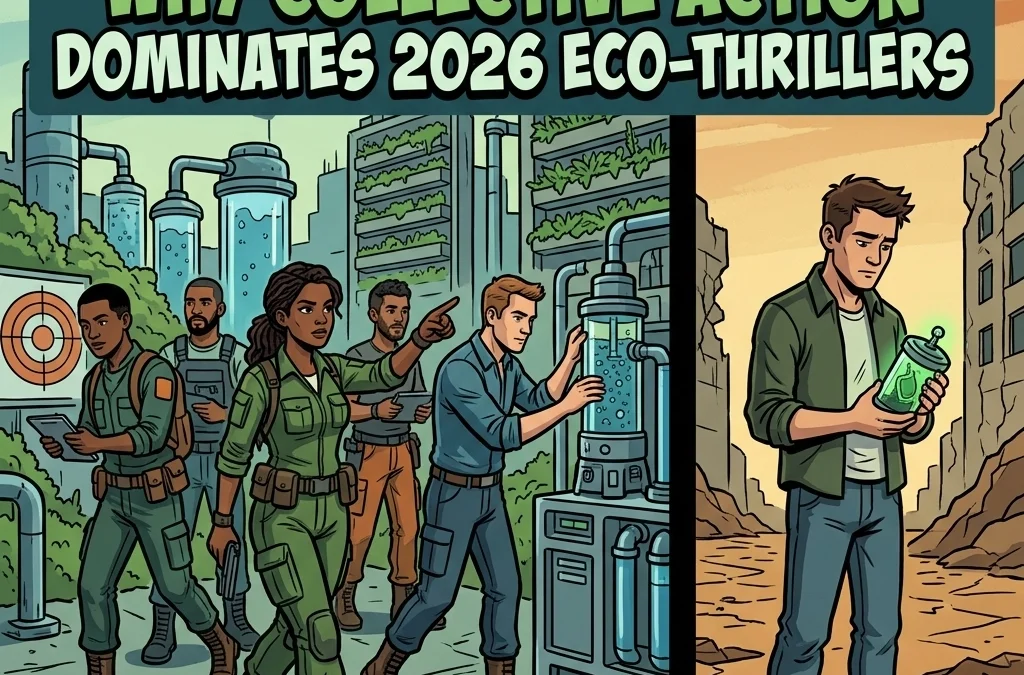
In the world of 2026 eco-thrillers, the narrative has shifted. Readers are no longer looking for a single savior to swoop in and fix the planet with a well-placed explosion. Instead, they are gravitating toward collective action. They want to see experts, misfits, and specialists coming together to solve problems that are quite literally too big for any one person to handle.
At The Rainsavers, we’ve leaned into this shift from day one. Our stories aren’t about a guy in a cape; they’re about a tactical squad trying to keep the world from tipping over the edge.
The Death of the One-Man Army
Let’s be real for a second. The idea of a "lone hero" stopping a global ecological disaster is about as realistic as a chocolate teapot. Environmental crises: the kind we tackle in our books: are systems problems. They involve hydrology, advanced tech, corporate espionage, and boots-on-the-ground survival.
If you send one guy into the Amazon to stop an ancient threat or a high-tech land grab, he’s going to get overwhelmed before he even finds a signal on his GPS.
In 2026, readers are smarter. They understand that solving climate-related threats requires a multi-disciplinary approach. This is why we’ve seen a massive surge in "team-based" fiction. People want to see the friction, the collaboration, and the combined brainpower of a group. There's a specific kind of satisfaction in seeing a plan come together because four different people brought four different skills to the table.

ALT text: A tactical team of Rainsavers characters in field gear standing together in the Amazon.
Why the "Tactical Squad" Works
When we look at the Rainsavers team: Jungle Dart, Sunbyte, Dr. Mubari, and Primal: we aren't just looking at four characters; we’re looking at a functioning ecosystem of skills.
- The Tactical Lead (Jungle Dart): You need someone who understands the "field." Someone who knows how to move through a rainforest without leaving a footprint and how to manage a team under fire.
- The Digital Backbone (Sunbyte): In 2026, if you aren't winning the war in the cloud, you've already lost. Sunbyte handles the drones, the encryption, and the "ancient tech vs. modern threats" balance that keeps the team alive.
- The Scientific Mind (Dr. Mubari): You can't save a biome if you don't understand the biology. Her expertise gives the mission its "why" and ensures they aren't just fighting symptoms, but the actual cause of the crisis.
- The Primal Force (Primal): Sometimes, you just need raw strength and survival instinct. Primal represents the connection to the Earth that technology and science sometimes overlook.
This isn’t just a group of friends; it’s a tactical team. And that’s exactly what 2026 readers are craving. They want to see how these different personalities clash and eventually click.
Climate Problems are Systems Problems
The shift toward collective action in fiction mirrors how we think about the world today. We’ve moved past the "Great Man" theory of history. We know that real change: especially environmental change: comes from movements and coordinated efforts.
As noted in recent literary analysis, 2026 eco-thrillers are leaning into "hopepunk": a subgenre that rejects doom-and-gloom in favor of a gritty, realistic hope built on collective agency. It’s easier to believe in us than it is to believe in a single, flawless savior.
When the Rainsavers face off against a global threat, the tension doesn't just come from the external villain. It comes from the internal pressure of the team. Can Sunbyte get the data before the perimeter is breached? Can Dr. Mubari find the antidote while Jungle Dart holds off an extraction team? This multi-threaded tension is much more engaging than watching one guy punch his way through a dozen guards.
The "Gamification" of Reading
Another reason tactical teams are dominating the 2026 charts is the influence of gaming. Today’s readers grew up with squad-based RPGs and tactical shooters. They understand the logic of "classes" and "roles."
When they read an eco-thriller, they are subconsciously looking for that same squad dynamic. They want to know who the "tank" is, who the "healer" (or scientist) is, and who is running the "overwatch." By using a team-based approach, we are speaking a language that modern audiences already speak fluently. It makes the high-stakes missions of The Rainsavers feel intuitive and immersive.

ALT text: Close-up of a high-tech tactical HUD overlaying a dense jungle scene, showing team vitals and map data.
Why This Shift Matters for the Future of Fiction
So, are solo superheroes dead? Not necessarily. But they are evolving. In 2026, even the "solo" characters you see are usually part of a larger network. They are the catalyst, not the entire reaction.
For The Rainsavers, focusing on the team allows us to explore deeper themes:
- Trust and Betrayal: It’s hard to have a betrayal plot with a lone wolf. With a team, the stakes are personal.
- Diverse Perspectives: A team from different backgrounds (like ours) allows for a richer exploration of how environmental issues affect different parts of the world.
- Sustainability: A team can endure. If one person falls, the mission continues. That’s a powerful metaphor for the environmental movement itself.
If you’re tired of the "invincible hero" and want something that feels a bit more like the world we actually live in: where solving big problems takes a village (or at least a very well-armed tactical squad): then it’s time to dive into the world of eco-adventure.
Whether they are uncovering ancient mysteries or fighting off modern corporate mercenaries, the Rainsavers show that we are always stronger together than we are apart.
Join the Mission
The world isn't going to save itself, and no one is coming to do it for us. It’s about the team. It’s about the collective. It’s about getting your hands dirty and working with people who have the skills you lack.
Ready to see how the team handles their first major operation? The jungle is waiting.
CTA: Join the team: Read Book One now.
Want more behind-the-scenes looks at the 2026 literary scene? Check out our blog page for more deep dives into eco-fiction, character profiles, and why the "lone wolf" is officially a dinosaur.
