
Hey everyone, Steven G. Samuels here.
As we sit here in mid-March 2026, the line between "science fiction" and "scary reality" is getting thinner by the second. If you’ve been following our latest releases at The Rainsavers, you know we love a good high-stakes adventure. But lately, I’ve been thinking a lot about the real-world science that inspires our stories, specifically the ethics (or lack thereof) behind bio-engineering.
We’re living in an era where labs can rewrite DNA as easily as I’m typing this blog post. But what happens when that power falls into the hands of corporate giants who value a profit margin over human life? That’s the core of the "Black Rain" threat we explore in our series, and honestly, the real history behind it is just as chilling as the fiction.
The Ghost in the Lab: German WWII Tech Resurfaces
One of the most terrifying aspects of modern bio-engineering isn't just the new stuff we're inventing; it's the old stuff we’re "perfecting."
History has a way of hiding its darkest secrets in the shadows of forgotten bunkers. During our research for the series, we dug deep into the archives of German WWII tech. Back then, scientists were already experimenting with ways to turn nature into a weapon. They weren't just looking at traditional chemistry; they were looking for "force multipliers", things that could incapacitate entire populations without firing a single bullet.
Fast forward to 2026. Imagine a modern corporation finding those old blueprints. They take that raw, unchecked ambition from the 1940s and give it a 21st-century upgrade with CRISPR and synthetic biology. That’s how you get something like the Black Rain. It’s not just a weapon; it’s a historical nightmare brought back to life by modern greed.

What Exactly is the "Black Rain"?
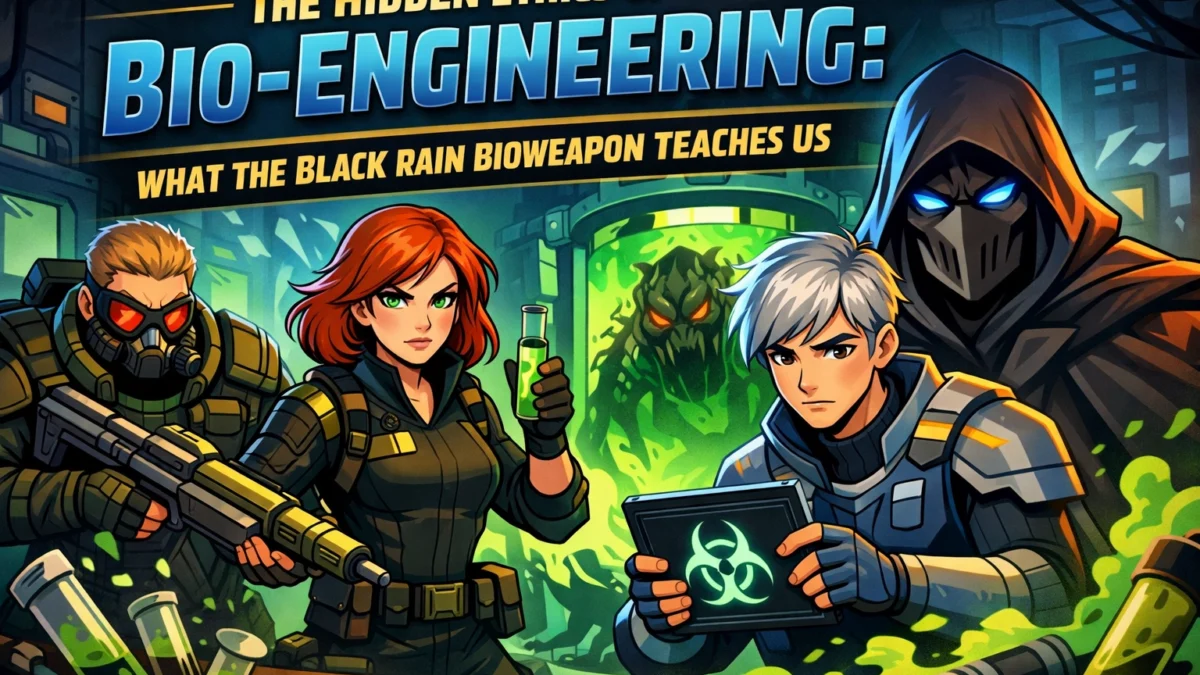
In the world of The Rainsavers, "Black Rain" isn't just a catchy name for a storm. It’s a sophisticated bioweapon designed for maximum psychological and physical impact.
Based on historical concepts of toxin sprays, this isn't your typical "virus" that takes weeks to spread. We’re talking about an aerosolized agent that works with terrifying speed.
The Mechanics of the Threat:
- Instant Incapacitation: The toxin is designed to freeze people in place. One minute you’re walking to work; the next, your nervous system is on a complete lockout.
- The "Frozen" Effect: Unlike traditional weapons that cause visible trauma, Black Rain leaves the victim conscious but unable to move. It’s a biological "pause button" that creates a landscape of living statues.
- Indiscriminate Reach: Once it’s in the atmosphere, there’s no "aiming." It affects the guilty, the innocent, the soldiers, and the children all the same.
This is the ultimate tool for a corporate entity looking to "clear" an area for resource extraction without damaging the infrastructure. It’s clean, it’s quiet, and it’s absolutely monstrous.
Bio-Engineering Ethics: Why 2026 is a Turning Point
We’ve reached a point where we have the "how" down pat. We know how to edit genes. We know how to synthesize pathogens. The problem is we haven’t spent enough time on the "should."
The 1972 Biological Weapons Convention (BWC) was supposed to put an end to this. It banned the development, production, and stockpiling of these kinds of agents. But in 2026, the biggest threats aren't necessarily rogue nations, they’re "rogue" corporations.
When a company has a larger budget than a small country, international treaties become "suggestions." They hide their research behind "proprietary secrets" and "agricultural advancements."
The Ethical Red Lines Being Crossed:
- Dual-Use Research: Developing a "pesticide" that just happens to work on human neurotransmitters.
- Lack of Accountability: If a biological agent "accidently" leaks from a private lab in the jungle, who do you hold responsible?
- Proportionality: There is no such thing as a "measured" response with a bioweapon. It spreads. It mutates. It’s the definition of overkill.

Corporate Greed: The Real Pathogen
Let’s be real, the science isn’t the villain. The person signing the paycheck is.
In our eco-thrillers, we focus on the intersection of environmental preservation and corporate overreach. We’ve seen it in the real world: companies cutting corners on safety to save a buck, or suppressing data about the toxicity of their products.
The Black Rain represents the logical (and terrifying) conclusion of that mindset. If a corporation decides that a specific rainforest is more valuable for its minerals than for the people living there, and they have a "clean" way to remove those people… well, you see where this is going.
That’s why The Rainsavers exist. Our characters aren't just fighting "bad guys"; they're fighting a system that views the planet as a ledger of assets to be liquidated.
The Rainsavers Approach: How We Fight Back
In a world dominated by high-tech beakers and tactical corporate hit squads, how do the "good guys" win?
It’s not about having a bigger bioweapon. It’s about transparency, courage, and a deep respect for the natural world. Our team doesn't just go in guns blazing; they use their knowledge of the environment to neutralize threats that shouldn't exist in the first place.
We believe that adventure stories should do more than just entertain. They should make you look at the world a little differently. When you read about the team tracking a shipment of bio-toxins through a dense jungle, you’re not just reading fiction: you’re reading a cautionary tale about what happens when we let greed dictate our scientific progress.

Why Bio-Fiction is More Relevant Than Ever
You might ask, "Steven, why write about bioweapons and Nazi tech in 2026? Isn't the world stressful enough?"
Honestly, it’s because fiction is where we can play out these "what if" scenarios before they become "what now" headlines. By exploring the ethics of bio-engineering in a thriller format, we can engage with these heavy topics without it feeling like a dry ethics lecture.
Plus, who doesn't love a story where the arrogant corporate CEO gets what's coming to him?
The Black Rain bioweapon teaches us that nature is a delicate balance. When we try to "re-engineer" it into a weapon, we aren't just threatening our enemies; we’re threatening the very foundation of life on this planet.
What’s Next for The Rainsavers?
If you thought the ethics of the Black Rain were intense, just wait until you see where the story goes next. We’re diving deeper into the history of these "lost" technologies and the brave men and women standing in the gap to protect our future.
The battle for the planet isn't just fought with recycling bins and solar panels: sometimes, it’s fought in the hidden labs and deep jungles where the most dangerous secrets are kept.

Are you ready to see how the team handles the fallout?
The stakes have never been higher, and the clock is ticking. If you want to see the full extent of what corporate greed can do when it meets 1940s experimental tech, you need to get the full story.
Read Book Two now and join the fight to save the rain.
Stay curious, stay brave, and maybe keep an eye on the weather report. You never know when the rain might turn black.
: Steven G. Samuels
CEO, The Rainsavers