
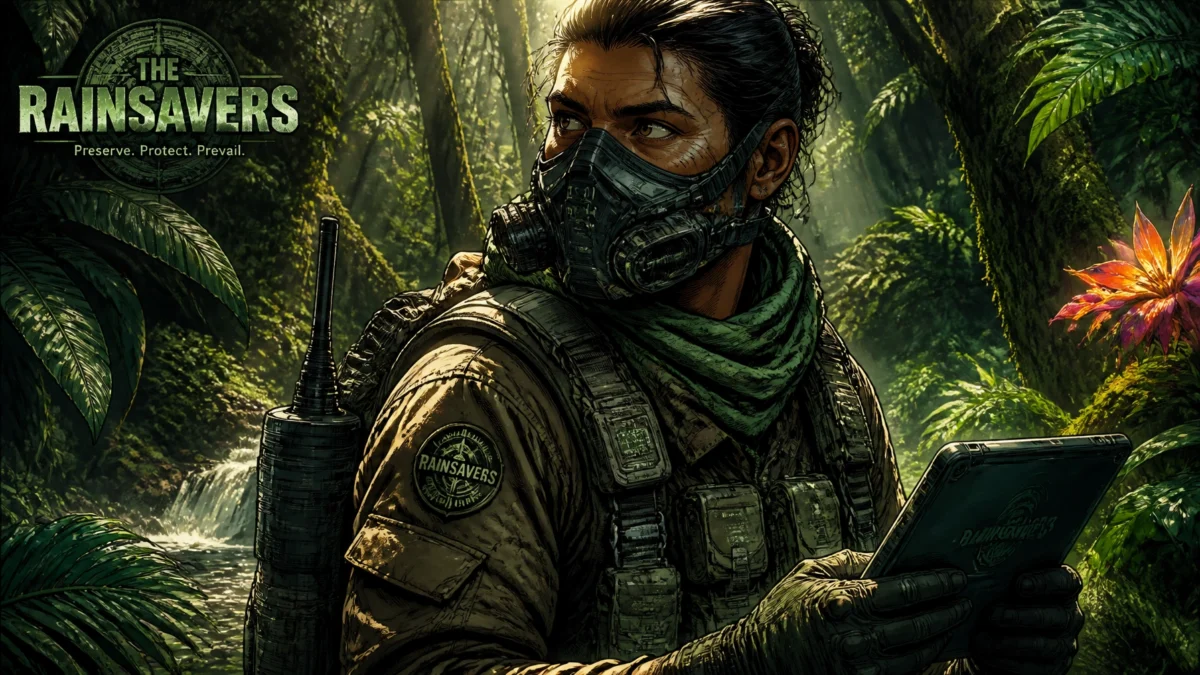
It’s July 2026, and if you’ve been keeping an eye on the satellite feeds lately, you know the Amazon is having a "moment." Between the latest reforestation breakthroughs in the Brazilian highlands and the looming "tipping point" warnings from the scientific community, the line between science fiction and our daily reality is getting thinner by the second.
In our six-book series, The Rainsavers, we talk a lot about the Spirit Tree: a bioluminescent heart of the rainforest that acts as a central hub for the Earth's life force. While a literal glowing tree might feel like pure fantasy, the concept behind it is rooted in some very real, very urgent ecological truths.
Climate fiction (or Cli-Fi) isn't just about entertainment anymore; it’s a mirror for the stakes we’re facing right now. Here are seven things the genre: and specifically the world of Tom "Primal" Swift and his team: gets absolutely right about the Amazon in 2026.
1. The Tipping Point is a Real Countdown
In The Rainsavers, the team is constantly racing against a clock. If Bossman succeeds in his latest deforestation scheme, the rainforest won’t just "shrink": it will collapse.
This mirrors the real-world 20-25% threshold. Scientists have long warned that if we lose a quarter of the Amazon’s original canopy, the forest will lose its ability to generate its own rainfall. It would essentially flip from a lush rainforest into a dry, degraded savanna. As of mid-2026, we are dancing right on that edge. When characters like Jungle Dart fight to protect a single valley, they aren't just being sentimental; they are holding the line against a planetary systemic failure.

2. The Villain Isn’t Just One Person; It’s a "Bossman" Mindset
In our books, Bossman represents the ultimate corporate greed. He doesn't hate the forest; he just values the gold, timber, and land more than the air we breathe.
In the real Amazon, the "villain" is often an amorphous mix of illegal logging, cattle ranching, and semi-legal infrastructure projects. In 2026, roughly 94% of deforestation is still linked to agriculture. Climate fiction gets this right by personifying these massive economic forces into characters we can actually confront. It’s a lot easier to understand the stakes when Tom "Primal" Swift is squaring off against a corporate titan than when you're reading a 500-page policy report.
3. High-Tech Conservation is the New Normal
If you think conservation is just people sitting in trees, 2026 has a surprise for you. In The Rainsavers, Sunbyte uses high-tech hacking and drone networks to stay one step ahead of the bad guys.
Real-life conservationists are doing the same. Today, we use near-real-time satellite alerts and AI-driven acoustic sensors that "listen" for the sound of chainsaws miles away. The tactical gear, high-tech respirators, and holographic data maps you see in our series are based on the very real technology being deployed by field scientists right now to monitor the "fishbone" patterns of illegal roads.

4. Biodiversity is the World’s Greatest Library
In The Rainsavers, the Spirit Tree holds secrets: ancient formulas and genetic codes that could change the world. This is why characters like Dr. Mubari are so protective of the forest’s "bioweapon" potential.
Back in reality, the Amazon holds 10% of the world’s known species. Every time a hectare is cleared, we aren't just losing trees; we’re burning a library of undiscovered medicines and biological solutions. Climate fiction captures the "magic" of this biodiversity by showing it as something worth fighting for with every ounce of our strength.
5. The Forest is a Giant Water Pump
We often hear the Amazon called the "Lungs of the Planet," but climate fiction (and real science) knows it’s more like a heart. The trees release roughly 20 billion tons of water into the atmosphere every single day. This "flying river" drives rainfall as far away as the United States and the Antarctic.
In Book Three, Tempest of the Crimson Skies, the Rainsavers have to travel to Antarctica because the weather systems are intrinsically linked. This isn't just a plot device; it’s a reflection of how the Amazon regulates the global climate. If the forest dies, the global weather machine breaks.

6. Ancient Wisdom and Modern Threats
One of the most popular tropes in the series is the discovery of ancient German technology left over from mid-century expeditions. While the history in our books is fictionalized, the theme is real: the Amazon is a place where the ancient past and the high-tech future collide.
Real conservation in 2026 relies heavily on Indigenous and traditional communities. These groups manage lands with the lowest deforestation rates on the planet. Like Jungle Dart, they use a combination of traditional ecological knowledge and modern tools (like smartphones and GPS) to guard their ancestral homes.
7. The Fight is Fragile, But Not Hopeless
The most important thing climate fiction gets right is the mood. It’s not all doom and gloom. In The Rainsavers, there are moments of incredible beauty, teamwork, and humor (usually involving Alpha and a holographic tablet he shouldn't be touching).
Real-world 2026 data shows that deforestation in Brazil is actually at a ten-year low. We are making progress! But as our characters know, that victory is fragile. One bad policy, one rogue agent like Leonard West, or one massive corporate project could reverse years of hard work. The tension you feel while reading the books? That’s the same tension environmentalists feel every single day.

Why We Tell These Stories
We didn't create The Rainsavers just to write an action-thriller. We created it because the Amazon is the greatest adventure on Earth, and it’s currently under threat. By blending sci-fi elements like red mercury and Nazi-era German tech with the real science of rainforest conservation, we hope to show that everyone can be a hero in the fight for our planet.
Whether it’s Tom’s strength, Sunbyte’s code, or your own voice: the Earth needs its Rainsavers.
Curious about how we turn real-world science into high-stakes sci-fi?
See how The Rainsavers blends both and start your adventure today.
Meta Description:
Explore 7 ways The Rainsavers series mirrors real 2026 Amazon conservation. From the tipping point to high-tech field gear, see how climate fiction gets the forest right.
