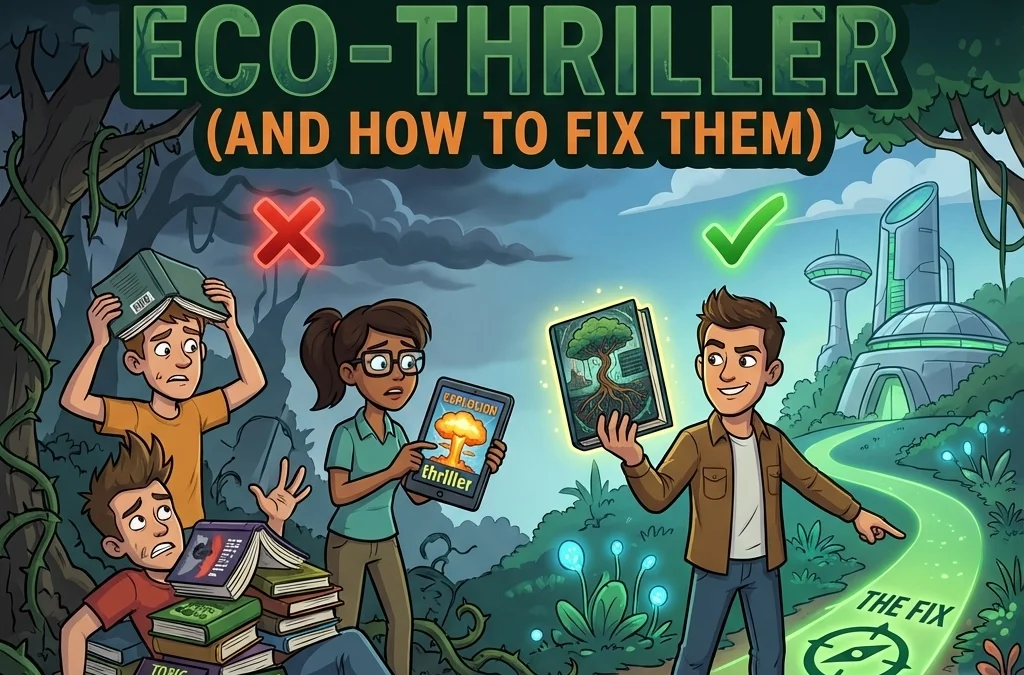
Ready for your next eco-thriller? Hold up. Before you dive into that Amazon wishlist or grab the first green cover that catches your eye, let's talk about the mistakes that could leave you with a DNF (did not finish) pile instead of your next obsession.
After years of watching readers stumble through disappointing picks, we've identified the six biggest mistakes people make when choosing eco-thrillers, and more importantly, how to fix them.
Mistake #1: Confusing Preachy with Passionate
The Problem: You pick up what looks like an adventure story, only to find yourself trapped in a 300-page environmental lecture disguised as fiction.
The Fix: Look for stories where the environmental stakes drive the action, not the other way around. The best eco-thrillers weave climate issues into heart-pounding plots naturally. Take The Rainsavers series, the Amazon rainforest isn't just a backdrop; it's a living character with secrets that fuel every twist and revelation. The environmental message comes through the adventure, not despite it.
Quick Test: Read the first chapter preview. If characters are giving environmental speeches instead of facing immediate danger, keep looking.

Mistake #2: Assuming All Eco-Thrillers Are Doom and Gloom
The Problem: You avoid the genre entirely because you think every story ends with planetary extinction and crushing despair.
The Fix: Seek out stories that balance realism with hope. Yes, eco-thrillers tackle serious issues, but the best ones show ordinary people (or extraordinary teams) making a real difference. The Rainsavers crew doesn't just witness environmental destruction: they actively fight to protect what matters. Their victories feel earned because the stakes are real, but hope isn't a dirty word.
What to Look For: Series descriptions that mention "protecting," "saving," or "fighting for" rather than just "surviving" or "escaping."
Mistake #3: Picking Solo Heroes in a Team-Problem World
The Problem: You default to lone-wolf protagonists trying to save the world single-handedly, which feels increasingly unrealistic in 2026.
The Fix: Choose team-based adventures. Environmental challenges require diverse skill sets: scientists, tech specialists, field operatives, and local guides. The Rainsavers works because each character brings unique strengths: from jungle survival skills to cutting-edge analysis. Their different backgrounds create natural conflict and chemistry that solo heroes can't match.
Team Dynamics to Watch For: Stories where characters complement each other's weaknesses rather than just being backup for the main character.

Mistake #4: Ignoring the Science-Fiction Balance
The Problem: You either go too hard sci-fi (incomprehensible tech) or too light (feels like contemporary fiction with a green twist).
The Fix: Find the sweet spot where advanced technology serves the story without overwhelming it. Look for books that blend cutting-edge environmental science with just enough speculative elements to feel fresh. The Rainsavers hits this balance perfectly: their gear feels grounded in real possibility while still being cooler than anything you can buy today.
Sweet Spot Indicators: Technology that enhances human capabilities rather than replacing human decision-making entirely.
Mistake #5: Choosing Wrong Based on Setting Alone
The Problem: You think "rainforest setting = good eco-thriller" or avoid certain locations because they seem "overdone."
The Fix: Focus on how the setting drives conflict, not just where it takes place. Any environment can work if the author understands its unique challenges and opportunities. The Amazon in The Rainsavers isn't just exotic scenery: it's a complex ecosystem with hidden dangers, ancient secrets, and modern threats that shape every plot decision.
Location Red Flags: Descriptions that focus on beauty rather than the specific environmental challenges characters will face.

Mistake #6: Overlooking Villain Motivation
The Problem: You accept mustache-twirling bad guys who destroy the environment "because evil" instead of complex antagonists with understandable (if wrong) motivations.
The Fix: Choose stories with villains who believe they're doing good. The most chilling eco-thriller antagonists think they're saving the world: just with methods that would destroy it. These conflicts feel real because sometimes the villains have valid points about environmental problems, even if their solutions are terrifying.
Compelling Villain Test: Can you understand why someone might follow this antagonist's logic, even while rooting against them?
Mistake #6: Series vs. Standalone Confusion
The Problem: You start a series expecting standalone satisfaction, or pick a standalone when you really want a deep-dive world.
The Fix: Match your commitment level to the story structure. If you want to fall in love with characters and watch them grow through multiple adventures, choose a series. If you want complete resolution in one book, go standalone. The Rainsavers series rewards investment: each book builds on previous relationships and revelations while delivering satisfying individual adventures.
Series Benefits: Character development, world-building depth, and the satisfying payoff of long-term story threads.

How to Put It All Together
Now that you know what to avoid, here's your action plan:
Step 1: Check sample chapters for natural dialogue and immediate conflict
Step 2: Verify the environmental stakes drive the plot forward
Step 3: Look for diverse character teams with complementary skills
Step 4: Ensure the tech/science level matches your preferences
Step 5: Read reviews that mention villain motivation and character development
Step 6: Decide if you want standalone satisfaction or series investment
The Bottom Line
Great eco-thrillers don't just happen to be about environmental issues: they use those stakes to create the most compelling adventures possible. When ancient mysteries collide with modern threats, when diverse teams face impossible odds, and when the fate of irreplaceable ecosystems hangs in the balance, that's when eco-thrillers deliver their best.
Ready to experience eco-thrillers done right? Start with The Rainsavers and see how environmental adventure should feel: urgent, hopeful, and absolutely unputdownable.
Your next great read isn't just waiting to entertain you. It's waiting to change how you think about both fiction and the world around you.
