Meta Description: Navigating the world of "Save the Earth" fiction in 2026? We break down the differences between Cli-Fi, Eco-Thrillers, and Hopepunk to help you find your next favorite adventure with The Rainsavers.
Hey there, fellow book lovers and planet-savers!
It’s April 2026, and if you’ve looked at a bestseller list lately, you’ve probably noticed something: the Earth is trending. Not just the literal Earth we’re all standing on, but stories about it. We’re living in a time where "climate anxiety" isn't just a buzzword; it’s a vibe we’re all navigating.
But here’s the cool part: fiction is stepping up to help us process it all. Whether you want a pulse-pounding race against a ticking clock, a deep dive into a flooded future, or a cozy story about neighbors building a better world, there’s a genre for that.
But wait, what do all these labels actually mean? If you’re standing in the "Environment" section of your local bookstore (or scrolling through a digital library), you might see terms like Cli-Fi, Eco-Thriller, and Hopepunk thrown around.
Today, we’re breaking them down. And more importantly, we’re going to show you why The Rainsavers is the "sweet spot" that takes the best parts of all three to create something totally unique.
Let’s dive in!
Cli-Fi: The "What If?" of Our Changing World
First up is Cli-Fi, short for Climate Fiction. This isn't just science fiction; it’s fiction where climate change is the main character: or at least the massive, unstoppable force driving the plot.
Cli-Fi asks the big "What If?" questions. What if the sea levels rose ten feet tomorrow? What if the bees really did disappear? It’s often set in the near future, making it feel uncomfortably close to home.
The Vibe:
Cli-Fi can be a bit heavy. It’s often about survival, adaptation, and the sheer scale of the environmental challenges we face. It’s for when you’re in the mood for something thought-provoking that makes you look at the weather report a little differently.
Key Features:
- Realistic (or speculative) science.
- Focus on how society changes under environmental pressure.
- A sense of urgency and sometimes a bit of a "warning" tone.

Eco-Thriller: The Pulse-Pounding Race Against Time
If Cli-Fi is the thoughtful professor, the Eco-Thriller is the action hero.
In an Eco-Thriller, the environment isn't just a backdrop: it’s a weapon or a victim. You’ve got villains (usually shadowy corporations or misguided extremists), heroes with specialized skills, and a plot that moves at 100 miles per hour.
Think of it like an Indiana Jones adventure, but instead of a golden idol, the hero is trying to stop a man-made plague or protect a secret German technology from the 1940s that could either save the world or end it.
The Vibe:
High stakes, big explosions, and "can't-put-it-down" energy. This is for when you want to turn your brain off and your adrenaline up.
Key Features:
- Fast-paced action and cliffhangers.
- Clear "good guys" vs. "bad guys."
- Technological mysteries and global conspiracies.
Hopepunk: The "Kindness as Rebellion" Genre
Now, let’s talk about the newcomer: Hopepunk.
In a world that can sometimes feel pretty grim, Hopepunk is a radical act of optimism. It’s the opposite of "grimdark." Hopepunk says that even when things are falling apart, choosing to be kind, choosing to build community, and choosing to believe in a better future is a form of resistance.
It’s not "toxic positivity." Hopepunk characters know the world is messy, but they fight for the light anyway.
The Vibe:
Heartfelt, communal, and inspiring. It’s for when you’re feeling a bit overwhelmed by the news and need a reminder that humans are actually pretty great when we work together.
Key Features:
- Focus on teamwork and cooperation.
- Themes of resilience and "fighting the good fight."
- Emphasis on the emotional journey of the characters.

Why The Rainsavers is Your 2026 Reading "Sweet Spot"
At The Rainsavers, we looked at these three genres and thought, "Why choose?"
We love the high-stakes realism of Cli-Fi. We crave the "sit-on-the-edge-of-your-seat" action of an Eco-Thriller. And we absolutely believe in the communal, defiant optimism of Hopepunk.
So, we blended them into one epic adventure.
1. The Action of an Eco-Thriller
Our series follows a team of specialists: the Rainsavers: as they hunt down ancient secrets and battle modern threats. We’ve got mystery, ancient German engineering that’s been hidden for decades, and villains who think they can own the planet’s resources. It’s a thrill ride from page one.
2. The Stakes of Cli-Fi
The world of The Rainsavers isn't a fantasy land. It’s our world, facing the very real challenges of 2026. The environmental threats our characters face are grounded in the reality of our changing climate. When the Rainsavers fight to protect a watershed, the stakes feel real because they are real.
3. The Heart of Hopepunk
Most importantly, The Rainsavers is about a team. It’s not about one "chosen one" superhero doing it all alone. It’s about a group of people with different skills: engineers, historians, and activists: who realize that the only way to save the world is to do it together. That's the core of our brand: friendly, collaborative, and unshakeably hopeful.

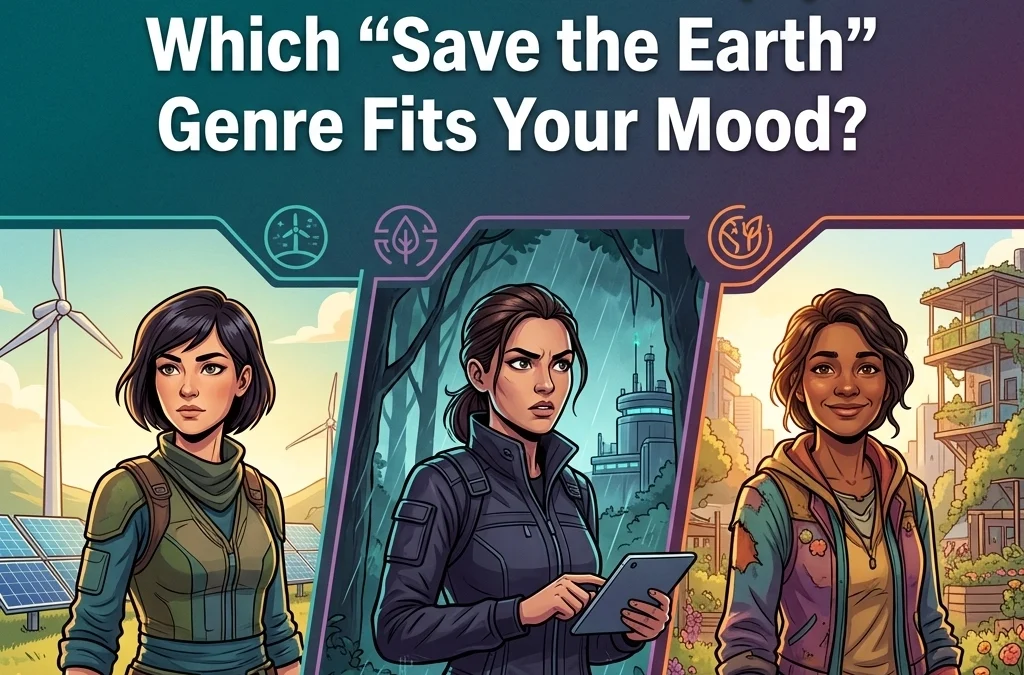
Which Genre Fits Your Mood Today?
Still not sure what to pick up next? Use our quick "Mood Guide" to decide:
- "I want to feel like I’m learning something while being slightly terrified of the future."
- Go for: Classic Cli-Fi.
- "I want to see bad guys get what’s coming to them and solve a 100-year-old mystery."
- Go for: An Eco-Thriller.
- "I need a hug in book form, but I still want the characters to stand up to the man."
- Go for: Hopepunk.
- "I want all of the above: the mystery, the action, the real-world stakes, and a team of characters I’d actually want to hang out with."
- Go for: The Rainsavers.
The Power of Story in 2026
We believe that the stories we tell today shape the world we build tomorrow. Whether you’re reading a grim survival tale or a hopeful story of community gardens, you’re engaging with the most important conversation of our century.
In The Rainsavers, we don't shy away from the scary stuff. We know the climate is changing. We know there are people who would rather profit from disaster than prevent it. But we also know that there are people like Leonard West and his team: people who are willing to go "down the rabbit hole" to find solutions.

Our stories are designed to be skimmable, fun, and fast-paced, because we know you’re busy. But we also want them to stick with you. We want you to finish a chapter and feel like maybe, just maybe, we’ve got a shot at fixing this place.
If you're tired of the "doom and gloom" but you're not ready for "sunshine and rainbows," come join us in the middle. It's a lot more exciting here.
Ready to join the mission?
There’s a world of ancient technology, environmental mysteries, and high-stakes adventure waiting for you. Don't just watch the world change: read about the people who are changing it for the better.
Read Book One now and see why the "Save the Earth" genre has never been more exciting.
Want to dive deeper into the world of eco-fiction? Check out our ultimate guide to climate fiction or meet the team behind the mission on our characters page.
