
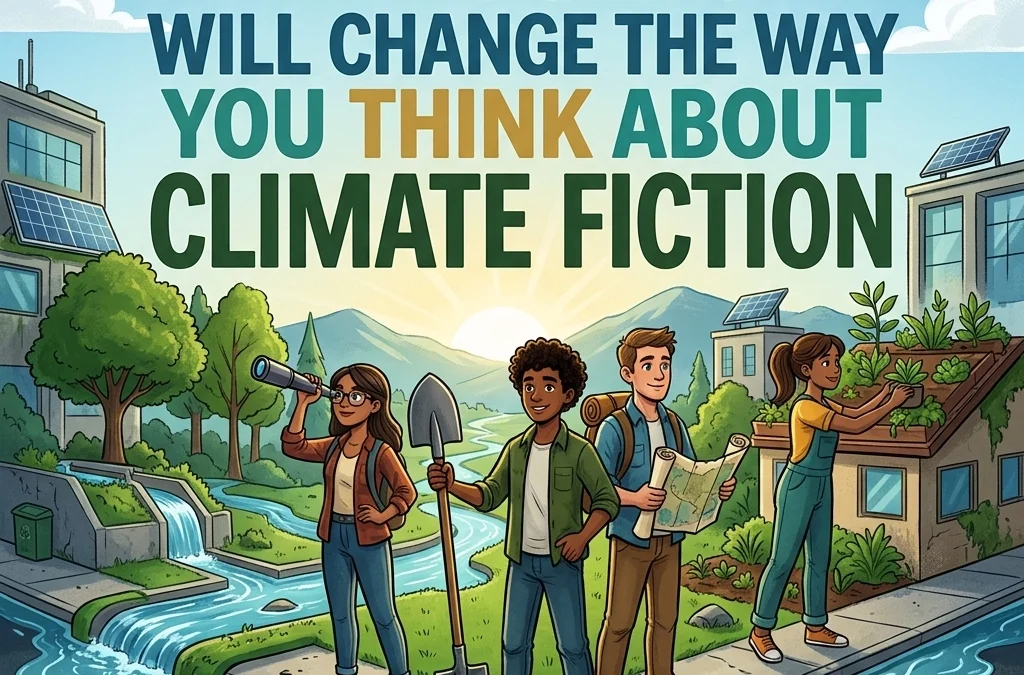
Hey everyone, Steven G. Samuels here. It’s May 2026, and if you’ve picked up a book lately, you’ve probably noticed the vibe is shifting. For years, "Climate Fiction" (or Cli-Fi) was basically code for "The World Is Ending and Everyone Is Miserable." You know the drill: scorched earths, lonely survivors, and a whole lot of gray filters.
But here at The Rainsavers, we’re seeing a massive pivot. Readers are moving away from pure catastrophe and toward something we call Eco-Hope.
Eco-Hope isn’t about pretending problems don't exist. It’s about the thrill of the fix. It’s about tactical teams, high-stakes missions, and the belief that even if the planet is in a tight spot, we’ve got the guts and the gear to do something about it.
If you’re tired of doom-scrolling through your fiction, here’s why Eco-Hope is the subgenre you didn't know you needed.
The Death of the "Slow Apocalypse"
Let’s be real: we’re living in 2026. We see the headlines every day. When we open a book for entertainment, the last thing most of us want is a 400-page lecture on how doomed we are. That’s why eco-fiction is changing the way people think about adventure stories.
Eco-Hope flips the script. Instead of focusing on the collapse, it focuses on the response. It takes the environmental challenges we face and turns them into the ultimate adventure backdrop. Think of it as a tactical thriller where the villain isn't just a person: it’s a ticking clock, a drought, or a lost piece of ancient technology that could save a city.

What Exactly is Eco-Hope?
If you’re new to the term, don’t worry: it’s a 2026 staple. Eco-Hope is defined by three main pillars:
- Agency over Apathy: Characters don't just sit around mourning the loss of a forest; they strap on their boots and go protect what’s left.
- Tactical Realism: There’s a big focus on the how. How do we move water? How do we stop a corporate saboteur? It’s fiction with a "can-do" tactical edge.
- Positive Outcomes: It doesn't mean a perfect ending, but it means a meaningful one. It’s about winning the battles that matter.
This is exactly why so many readers struggling with climate anxiety are turning to series like The Rainsavers. It’s therapeutic to see a team of experts actually winning for once.
The "Tactical Expedition" Look
One of the coolest parts of the Eco-Hope movement is the aesthetic. We’re moving away from the "ragged survivor" look and toward the "tactical specialist."
In the Eco-Hope world, our heroes look more like elite expedition teams. We’re talking:
- High-performance gear designed for extreme environments.
- Advanced tech (sometimes recovered from the past).
- A focus on utility, teamwork, and readiness.
When you see a character like Leonard West or the rest of the crew, they aren't just wandering the desert. They are on a mission. This "tactical expedition" vibe makes the environmental struggle feel like a high-octane heist or a military operation rather than a funeral march.

Why Team-Based Adventures are Dominating 2026
Remember the lone wolf hero? The guy who survives the wasteland all by himself with nothing but a dog and a shotgun? In 2026, that trope is feeling a little dusty.
Eco-Hope thrives on Team-Based Adventure. Solving big problems requires different skill sets. You need the tech expert, the muscle, the historian, and the strategist. This shift is one reason why team-based eco-adventures are dominating fiction this year.
In The Rainsavers, the chemistry between the team is what keeps the engine running. You can’t save the world alone, and honestly, it’s a lot more fun to read about a group of friends bickering while they try to outrun a flash flood or a corporate mercenary.
Ancient Mysteries vs. Modern Threats
A big part of the Eco-Hope subgenre involves looking backward to move forward. We’ve found that readers love a mix of historical mystery and cutting-edge environmental stakes.
Whether it's ancient technology vs. modern threats or uncovering secrets from old German research labs (minus the politics, strictly the tech!), these stories bridge the gap between the past and the future.
When our heroes find an ancient way to manage water or a lost energy source, it adds a sense of wonder to the "Hope" part of Eco-Hope. It reminds us that humanity has been solving problems for thousands of years. We just need to get back to work.

The Psychological Power of the Mission
Why does this matter? Because fiction isn't just an escape; it's a blueprint for how we feel about our own world.
If every story you read says the future is a desert where everyone fights over a can of beans, you start to believe it. But if you read stories where smart, tactical people work together to overcome environmental odds, you start to see possibilities.
Eco-Hope acts as a catalyst. It replaces the "I give up" feeling with a "Let's go" attitude. It’s why we focus so much on climate fiction series that actually save your reading list from being a total downer.
Join the Mission at The Rainsavers
If you’re ready to ditch the doom and join the expedition, you’re in the right place. At The Rainsavers, we’re dedicated to telling stories that keep you on the edge of your seat while giving you a reason to look forward to the future.
We’ve got books, we’ve got gear, and we’ve got a community of readers who are tired of being depressed by their bookshelves.
Ready to dive in?
- Check out our latest episodes and books: https://rainsavers.com
- Meet the team behind the missions: https://rainsavers.com/characters
- Grab some tactical gear for your next "expedition": https://rainsavers.com/shop
The world is changing, and your fiction should too. Welcome to the era of Eco-Hope. Let’s save some rain.
: Steven G. Samuels
CEO, The Rainsavers
