Let's be honest. Most adventure fiction villains are… kind of dumb.
They monologue when they should shoot. They build elaborate death traps with obvious escape hatches. They hire henchmen who can't aim. And somehow, despite having unlimited resources and zero moral constraints, they still lose to a scrappy band of heroes who showed up last Tuesday.
It's 2026, and readers have seen every trope. We're tired of villains who exist just to lose. We want antagonists who make us genuinely worried for the good guys.
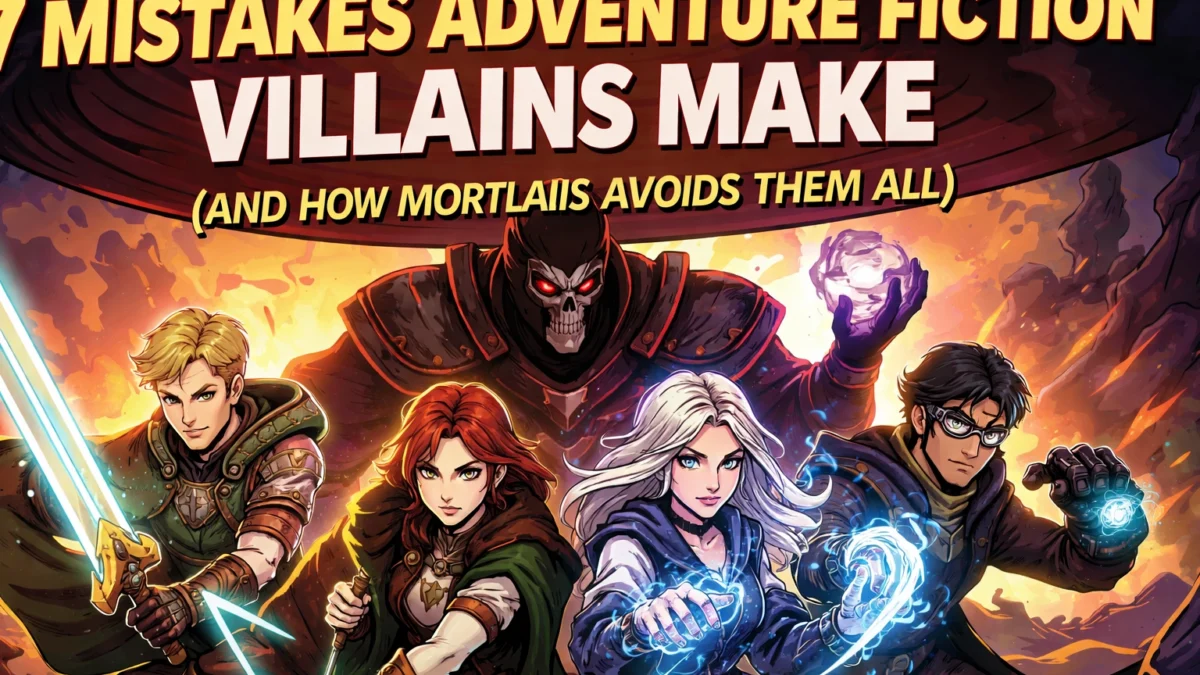
Enter Mortalis.
The primary antagonist of The Rainsavers series isn't your typical mustache-twirling bad guy. He's a tactician. A ghost. A problem that doesn't go away just because the heroes figured out his plan.
Here's a breakdown of the seven classic villain mistakes, and why Mortalis refuses to make any of them.
Mistake #1: Having a Vague or Nonsensical Motivation
The Trope: "I want to destroy the world because… chaos? Power? Tuesday?"
Most villains suffer from motivation problems. Their goals are either comically evil (world domination for its own sake) or so abstract that readers can't engage with them. Why does this guy want a doomsday device? What's he actually going to do with it?
How Mortalis Avoids It:
Mortalis has one clear, terrifying objective: control the Amazon's most valuable resources before anyone else realizes what's hidden there.
His motivation isn't abstract power. It's specific, strategic, and rooted in real geopolitical stakes. Ancient technology. Rare biological compounds. Information that governments would kill to possess.
He's not trying to blow up the world. He's trying to own it, quietly, efficiently, and permanently.
That's way scarier than a doomsday laser.

Mistake #2: Underestimating the Hero
The Trope: "You? A threat to ME? Ha! I am invincible!"
Classic villain arrogance. They dismiss the hero as irrelevant right up until they're getting punched through a wall. It makes them look foolish and undermines any sense of real danger.
How Mortalis Avoids It:
Mortalis doesn't underestimate anyone. Period.
The moment The Rainsavers appear on his radar, he treats them as a credible threat. He studies them. He anticipates their moves. He adjusts his plans based on their capabilities, not his ego.
When your villain respects the heroes enough to prepare for them, suddenly every confrontation feels like it could go either way.
Mistake #3: Creating Needlessly Complicated Plans
The Trope: "First, we'll redirect the satellite, which will trigger the volcanic eruption, which will cause the tsunami, which will, "
Overly complex schemes are villain suicide. Every extra step is another chance for heroes to intervene. Every elaborate mechanism is another gear that can break.
How Mortalis Avoids It:
His operations are surgical. Direct. Efficient.
Mortalis doesn't need a chain reaction of seventeen events. He needs three things: the right location, the right timing, and the right team. When he moves, he moves fast, with minimal exposure and maximum impact.
The Rainsavers don't get weeks to unravel his master plan. They get hours, if they're lucky.

Mistake #4: Using Elaborate Death Traps Instead of Just… Finishing the Job
The Trope: "I won't simply eliminate you. No, I'll place you in this slowly flooding chamber while I leave to attend to other matters!"
We've all watched this scene. The villain has the hero captured, defeated, helpless: and instead of ending it, they set up some Rube Goldberg machine of death and walk away.
Spoiler: the hero escapes. Every. Single. Time.
How Mortalis Avoids It:
Mortalis doesn't do theater.
If someone becomes a liability, he handles it. Cleanly. Personally, when necessary. No elaborate traps. No dramatic speeches about their impending doom. No convenient "I'll leave you alone with one guard who conveniently falls asleep."
This isn't sadism: it's professionalism. And it makes every encounter with him feel genuinely dangerous. Because readers know: he won't hesitate.
Mistake #5: Forgetting to Actually Use Their Resources
The Trope: Villain has a private army, unlimited funding, and access to advanced technology… and somehow still loses to four people in a jungle.
How many times have we seen a villain with overwhelming advantages just… not use them? They have helicopters but send ground troops. They have surveillance but don't check the monitors. They have a fortress but leave the back door open.
How Mortalis Avoids It:
Every resource at Mortalis's disposal gets deployed strategically.
His network spans continents. His surveillance tech tracks environmental anomalies across the Amazon basin in real-time. His operatives are trained, equipped, and actually competent.
When The Rainsavers face Mortalis, they're not fighting one guy. They're fighting an organization that runs like a military operation: because it is one.

Mistake #6: Having Zero Personal Connection to the Hero
The Trope: Villain and hero meet in the final act, exchange some generic threats, fight.
The best villain-hero dynamics have history. Tension. Stakes that go beyond "good vs. evil." When there's no relationship, the conflict feels hollow: just two strangers punching each other because the plot says so.
How Mortalis Avoids It:
Mortalis isn't just an obstacle for The Rainsavers. He's a mirror.
His methods raise uncomfortable questions about their own mission. His knowledge of the Amazon rivals: maybe exceeds: theirs. And his path has crossed with certain team members before, in ways that make every encounter personal.
This isn't just a fight. It's a reckoning. And that history gives their conflict actual weight.
If you want to see how this plays out, check out the full character roster.
Mistake #7: Acting Like a Cartoon Instead of a Person
The Trope: Evil laugh. Dramatic cape swirl. Inexplicable decision to reveal the entire plan to the captured hero for no reason.
Cartoon villains are fun for about five minutes. Then they become predictable. You know they'll lose because they don't behave like anyone with actual intelligence would behave.
How Mortalis Avoids It:
Mortalis is terrifyingly human.
He doesn't cackle. He doesn't grandstand. He makes calculated decisions based on available information, adjusts when circumstances change, and prioritizes survival over spectacle.
You won't catch him monologuing while the heroes escape. You won't see him make obviously stupid choices because the plot requires it. He operates like someone who genuinely wants to win: and has the discipline to do what that requires.
That's what makes him the most dangerous antagonist in eco-fiction right now.
Why This Matters for Readers in 2026
We're in a golden age of adventure fiction. Readers are smarter. They've consumed more stories. They can spot lazy writing from miles away.
A great villain isn't just someone for the heroes to defeat. They're the reason the heroes matter. They raise the stakes. They force growth. They make victory feel earned: if victory comes at all.
Mortalis represents a new standard for antagonists: tactical, motivated, relentless, and genuinely formidable.
The Rainsavers aren't fighting a cartoon. They're fighting someone who might actually beat them.
And that uncertainty? That's what makes the story worth reading.
Think you can outsmart Mortalis? Start the mission at https://rainsavers.com.
