
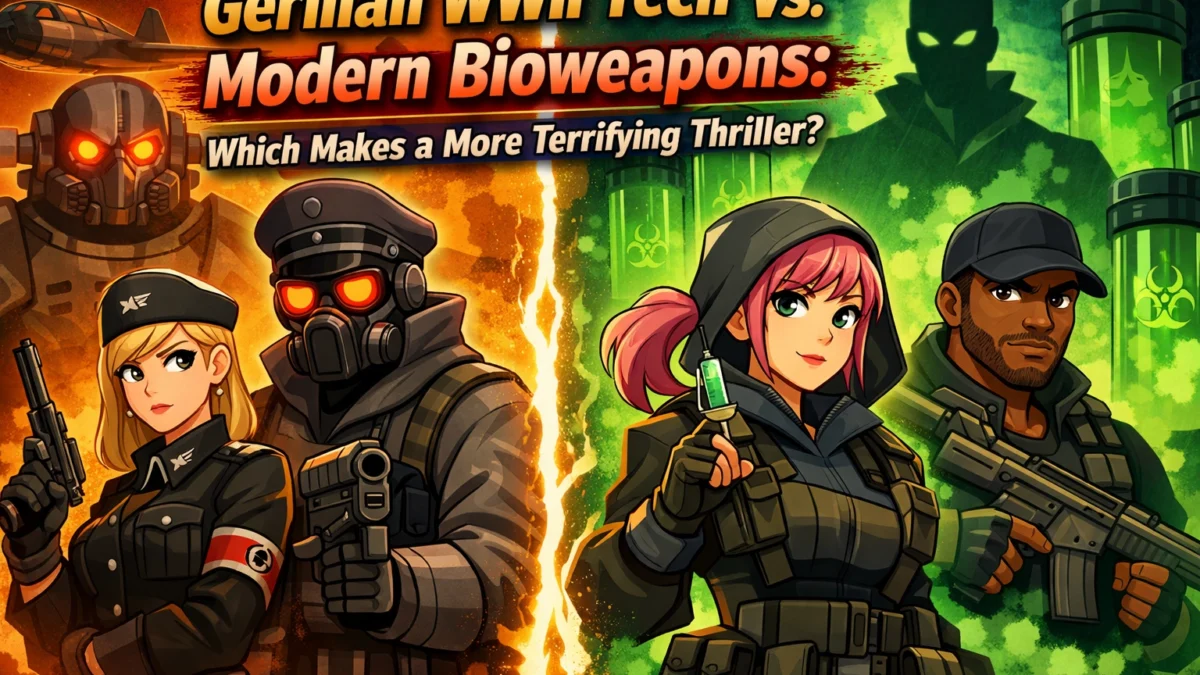
Meta Description: Discover the ultimate thriller showdown: German WWII Wunderwaffen vs. modern engineered bioweapons. We explore which threat raises the stakes higher in The Rainsavers Book Two.
Hey everyone! Steven G. Samuels here. If you’ve been following our journey at The Rainsavers, you know we live for that sweet spot where history, high-tech gear, and pulse-pounding adventure collide. Today, we’re diving into a debate that’s been brewing in the writer’s room: what’s actually scarier? The heavy, clanking, terrifying Wunderwaffen (miracle weapons) of WWII Germany, or the silent, invisible, DNA-shredding bioweapons of the modern age?
In Book Two of The Rainsavers series, our team faces threats that bridge these two worlds. But for you, the reader, which one makes your skin crawl more? Let’s break down the tactical terror of both.
The Heavy Metal Nightmare: German WWII Tech
When we talk about WWII tech, we aren’t just talking about old tanks. We’re talking about the stuff of nightmares: the Vergeltungswaffen (vengance weapons) and the experimental designs that looked like they were ripped from a sci-fi movie.
There is something inherently terrifying about the Luftwaffe’s jet prototypes or the massive V-2 rockets. It’s "Heavy Metal" horror. You can hear it coming. You can feel the ground shake. In a thriller, this represents an unstoppable, physical force.
The Tactical Feel of the Past
- The Wunderwaffe Factor: The Germans were obsessed with "Miracle Weapons." From the "Die Glocke" (The Bell) urban legends to actual heavy-water experiments, the tech felt like it was breaking the laws of physics.
- The Aesthetic: Imagine our heroes stumbling into a rusted, underground bunker in the Alps. The air is thick with the smell of diesel and old grease. There’s a Panzer idling in the shadows. It’s tactile. You can touch the cold steel.
- The Blitzkrieg Mentality: It’s fast, it’s loud, and it’s destructive.
In The Rainsavers, we love playing with the idea of "found tech." What happens when a modern eco-hero has to face a relic that still works? Or worse, a relic that has been upgraded with modern AI? The contrast of that old-school German engineering with 2026 electronics is where the sparks really fly.

The Invisible Enemy: Modern Bioweapons
Now, let’s flip the script. In Book Two, the stakes shift. We move away from the "thud" of boots and the "clank" of gears toward something much more insidious: biological warfare.
While the German Waffen-SS Entomological Institute experimented with mosquitoes during the war, they never quite mastered the art of the biological "doomsday" device. Modern science, however, is a different story. We’re talking about pathogens that are CRISPR-edited to target specific genetic markers.
Why Bioweapons Win the "Scare" Factor
- Invisibility: You can’t shoot a virus. You can’t outrun a cloud of spores. For a character like those in The Rainsavers, who are used to solving problems with grit and tactical gear, a bioweapon is the ultimate frustration.
- The "Oops" Factor: As we’ve seen in real-world research, biological agents are unpredictable. They mutate. A weapon designed to target a specific crop or region can suddenly jump species.
- Psychological Warfare: The fear of infection is a primal human instinct. It creates a tension that a rocket strike simply can’t match.
In The Rainsavers Book Two, our heroes aren't just fighting villains; they're fighting a ticking clock inside their own veins. That’s the kind of high-stakes eco-adventure we’re known for.
The Showdown: Tactically Speaking
Let's look at this through the eyes of a character on the ground. Imagine you're part of the team at The Rainsavers Characters page. You're geared up, your comms are live, and you're entering the "Hot Zone."
Scenario A: The WWII Tech Threat
You’re facing a renovated Königstiger (King Tiger) tank controlled by a rogue militia.
- The Pros: You can see it. You can use anti-tank mines. You can outmaneuver it using the terrain.
- The Cons: If it hits you, there’s nothing left. It’s a battle of hardware and skill.
Scenario B: The Modern Bioweapon Threat
You’re entering a facility where a modified strain of a prehistoric pathogen has been released.
- The Pros: …Honestly? Not many.
- The Cons: You’re in a MOPP suit (Mission Oriented Protective Posture). Your vision is restricted. Your breathing is heavy. Every tear in your suit is a death sentence.
For a thriller writer, Scenario B is often more "terrifying" because it limits the hero’s agency. You can't punch a germ. It forces the characters to use their brains, their science, and their sheer will to survive.

Why We Mix Both in The Rainsavers
At the end of the day, the best thrillers don't choose: they mix.
In our world, we love the idea that "Ancient technology meets modern threats." We’ve explored this in our blog post about Ancient technology vs. modern threats. The most terrifying villain isn't just the guy with the virus; it's the guy who found a way to deliver that virus using a forgotten WWII-era delivery system.
Imagine a V-2 rocket, silent and forgotten for 80 years, suddenly launched from a hidden silo in the Amazon, carrying a payload of genetically engineered spores. That is the "Rainsavers" vibe. It’s the marriage of historical "Heavy Metal" and futuristic "Invisible Death."
The Character Perspective
Our team handles these threats with a mix of old-school grit and new-school tech. They are environmental heroes who realize that the planet is the ultimate prize. Whether it's a diesel-belching relic from the 1940s or a lab-grown plague, it's all a threat to the world we’re trying to save.

Which is Better for Your Reading List?
If you like your thrillers with a side of historical mystery, the WWII tech angle is unbeatable. There’s a reason movies like Indiana Jones or games like Wolfenstein resonate so well. It’s about the "What If?" What if the Reich had perfected their jet technology sooner? What if they really did find something supernatural in the desert?
But if you want to stay up at night wondering if that cough you just heard is the start of the end, modern bioweapons are your go-to. It’s a more intimate, claustrophobic kind of fear.
In The Rainsavers Book Two, we give you both.
We believe that a great eco-adventure should make you think, make you sweat, and: most importantly: make you want to get out there and protect the real world. If you're struggling with the weight of the world's real-life threats, check out our guide on struggling with climate anxiety. Fiction is a great way to process these fears in a safe (and super exciting) way!
The Verdict
So, which is more terrifying?
The German WWII Tech wins on sheer intimidation and physical presence. It represents a dark chapter of human history that we can see and touch.
The Modern Bioweapon wins on psychological dread and the "invisible" nature of the threat. It represents an uncertain future that we can't quite grasp.
In the world of The Rainsavers, we say: why not both? Our villains are smart, they’re well-funded, and they aren’t afraid to use the past to destroy the future.
Ready for the Adventure?
If you’re ready to see how our team handles these world-ending threats, dive into the series. Whether you’re looking for movies vibes in a book or want to see our tv commercial to get a feel for the action, we’ve got you covered.
Join the fight for the planet today.
Check out our latest episodes and books at the link below. Don't forget to enter our latest contest while you're there: you might just win some gear to help you survive your next "Hot Zone" encounter!

Explore the world of The Rainsavers and grab your copy of Book Two here:
https://rainsavers.com
Stay tactical, stay safe, and keep reading!
: Steven G. Samuels, CEO of The Rainsavers
