
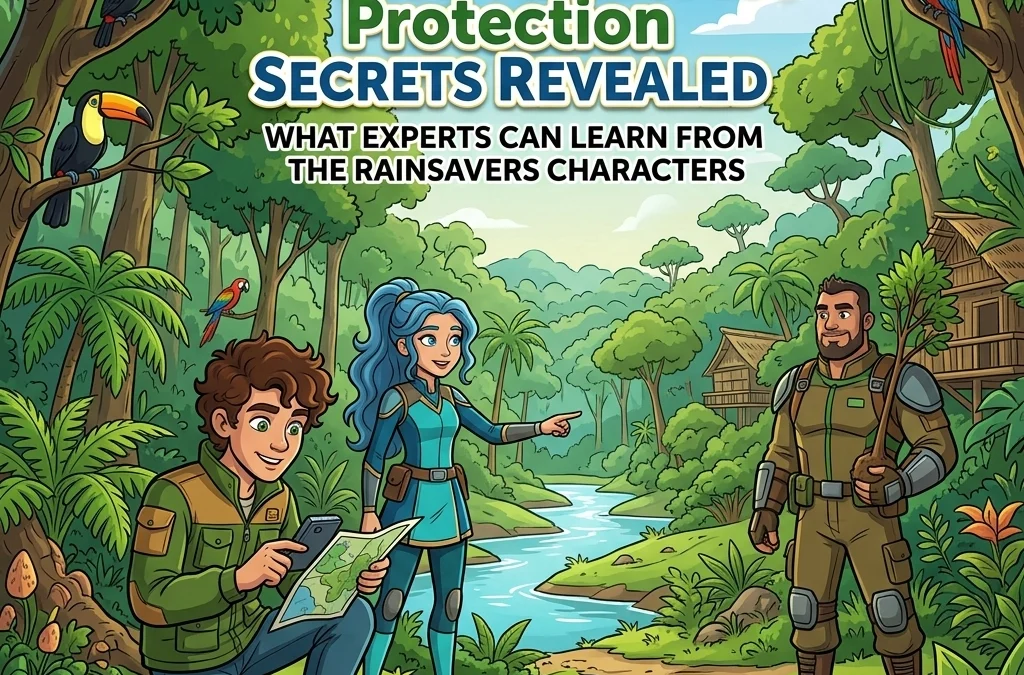
Meta Description: It’s 2026, and the Amazon needs more than just hope, it needs a plan. Discover how Tom Swift and The Rainsavers use cutting-edge tech and tactical strategy to protect the rainforest, and see how their fictional solutions stack up against real-world environmental efforts.
Hey there, eco-adventurers! It’s Tuesday, May 5th, 2026, and if you’ve been keeping an eye on the news lately, you know the Amazon Rainforest is still the heart of our planet's survival. Here at The Rainsavers, we spend a lot of time thinking about how to protect that vibrant, green lungs-of-the-earth. But we don’t just think about it in terms of policy and spreadsheets: we think about it in terms of action, tech, and the kind of grit you only find in the middle of a dense jungle clearing.
While the world’s leading environmental experts are doing incredible work in 2026: using everything from AI-driven satellite monitoring to massive reforestation projects: there’s a lot they can learn from the fictional world of The Rainsavers. Specifically, the way Tom Swift and the team approach protection isn’t just about "saving trees"; it’s about a high-stakes, tactical defense of the environment.
So, let’s peel back the canopy and reveal the secrets behind the Rainsavers’ strategy.
The "Swift" Strategy: Tech as a Shield
In our stories, Tom Swift isn’t just a guy with a gadget; he’s an innovator who treats environmental protection like a mission-critical operation. In the real world of 2026, we’ve seen a huge jump in "Smart Forest" technology, but Tom takes it a step further.
One of the biggest "secrets" revealed in our latest episodes is the use of Bio-Sync Mapping. While real-world experts are currently using high-resolution satellite imagery to detect illegal logging (a massive win for the Amazon!), the Rainsavers team uses localized, drone-deployed sensors that can "hear" a chainsaw before it even touches a trunk.
Why this matters for experts:
Real-world conservation is often reactive. You see the clearing on a satellite map, and then you send a team. In the world of The Rainsavers, protection is proactive. The lesson? The closer the tech is to the ground, the faster the response.

ALT Text: A close-up of a high-tech Bio-Sync sensor attached to a mossy tree trunk, glowing with a faint blue light in the shadows of the Amazon.
The Gear: High-Tech Field Respirators & Mapping Tools
If you’ve looked at our character art lately, you’ve noticed the team isn’t wearing standard hiking gear. They’re rocking tactical expedition suits and high-tech field respirators.
In the story, these respirators aren't just for breathing in high-humidity or toxin-heavy zones; they’re integrated communication hubs. When Tom is deep in the brush, his respirator provides a heads-up display (HUD) of the surrounding terrain.
Compare this to 2026 Real-World Tech:
Right now, field researchers are starting to use Augmented Reality (AR) glasses to identify plant species and track animal migration patterns. We’re getting closer to that "Rainsavers" level of immersion! By integrating data directly into the gear researchers wear, we reduce the time spent looking at screens and increase the time spent looking at the environment.
To see the full breakdown of who’s who on the team and what they carry, check out our Characters page.
Secrets of Team-Based Protection
One of the biggest mistakes in early environmental fiction was the "Lone Hero" trope. You know the one: one person vs. a giant corporation. But as we’ve discussed in our post about why team-based adventure series are taking over, that’s just not how it works in 2026.
The Rainsavers succeed because they are a diverse unit:
- The Tech Genius (Tom): Provides the tools.
- The Tactical Lead: Ensures the team stays safe in dangerous terrain.
- The Local Expert: Understands the soul of the forest.
Experts in the real world are learning this, too. The most successful Amazon protection projects today are collaborations between indigenous communities, tech companies, and international NGOs. The "secret" is that no single person: or single country: can save the Amazon alone. It requires a specialized squad.

ALT Text: The Rainsavers team huddled around a holographic map in a makeshift jungle command center, debating their next move.
Fictional Solutions vs. 2026 Reality
It’s fun to dream up gadgets, but how do they compare to what’s actually happening in the Amazon right now?
| Feature | The Rainsavers (Fiction) | Real World (2026) |
|---|---|---|
| Detection | Bio-Sync sensors with AI "ear" technology. | Satellite-based Lidar and acoustic monitoring. |
| Reforestation | Rapid-growth bio-gel seeds. | Drone-fired seed pods and agroforestry. |
| Defense | Tactical intervention teams. | Legal protections and community-led patrols. |
| Communication | HUD-integrated respirators. | Starlink-enabled field tablets and AR. |
As you can see, the gap is closing! What was "science fiction" when we started writing The Rainsavers is becoming "science fact." This is why eco-fiction will change the way you think about adventure stories. It provides a sandbox for ideas that might actually save us.
The Secret of "Social Pressure"
One of the most powerful tools the Rainsavers use isn't a laser or a drone: it’s information. In our books, the team often uses "The Leak" strategy, where they broadcast live feeds of environmental destruction directly to the world to bypass corrupt systems.
In 2026, transparency is our greatest weapon. With the internet reaching even the most remote parts of the basin, illegal activities have nowhere to hide. The "secret" experts are learning from fiction is that the story of the forest is just as important as the forest itself. If people care about the characters (or the real-life people protecting the trees), they will fight to protect the land.

ALT Text: A sleek, black Rainsavers drone hovering above the canopy, its camera lens reflecting the vast green expanse of the Amazon.
Why We Write This Stuff
You might wonder why a publishing company like The Rainsavers focuses so much on tactical gear and high-tech strategies. It’s because the Amazon isn’t just a pretty background for a story: it’s a battlefield for the future of the planet.
We believe that by creating heroes like Tom Swift, we can inspire the next generation of real-world experts. If you want to dive deeper into how modern eco-heroes are changing the game, check out our deep dive on how modern eco-heroes are saving both fiction and the planet.
What can you do?
You don't need a high-tech field respirator to make a difference (though they are pretty cool).
- Support technology: Support organizations using drone and satellite tech for forest monitoring.
- Stay informed: Follow the real-world news about Amazon protection laws.
- Read the stories: Engaging with eco-fiction keeps the conversation alive and sparks new ideas.

ALT Text: An illustrated tactical map of a section of the Amazon, marked with "Rainsavers" waypoints and protection zones.
Final Thoughts from the Field
The secrets of the Amazon aren't just hidden in the ancient ruins or the undiscovered species; they’re hidden in the way we choose to protect it. Whether it's through the tactical genius of a character like Tom Swift or the tireless work of a real-life field biologist, the goal is the same: keeping the heart of the world beating.
The Rainsavers are more than just characters in a book; they’re a vision of what environmental protection could look like if we treated it with the urgency and innovation of a high-tech thriller.
See the team in action: Read Book One now.
Explore The Rainsavers Universe
Want more behind-the-scenes looks at our tech and characters? Visit our blog page for the latest field notes and updates!
