
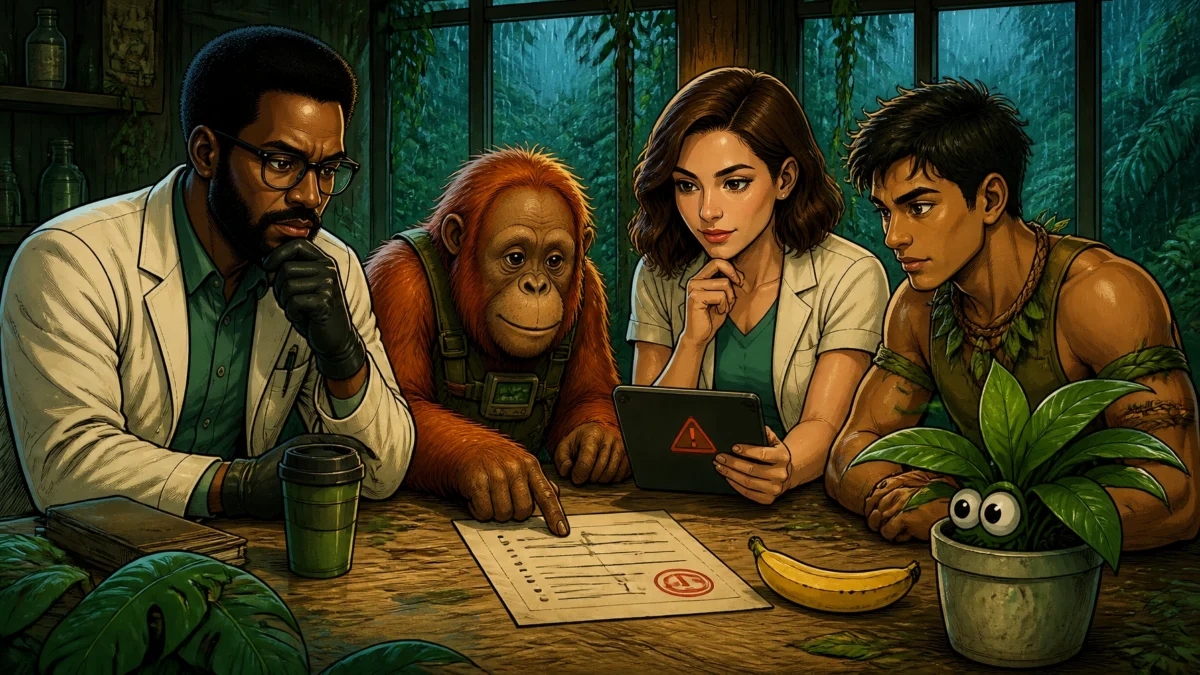
Meta description: Discover five realistic sustainable-living habits that support Amazon rainforest protection, reduce deforestation pressure, and help fight climate change, straight from a leaked Rainsavers HQ memo.
CLASSIFICATION: GREEN
ORIGIN: Rainsavers HQ
STATUS: Mildly leaked
THREAT LEVEL: One determined orangutan, several reusable containers, and absolutely no bioweapons detected
Team,
We have received intelligence that protecting the rainforest does not always require a jungle expedition, a secret aircraft, or the ability to lift a truck with one hand.
Sometimes it involves checking a label.
Sometimes it means taking the bus.
And sometimes it means telling a very persuasive friend that, no, throwing a banana peel into the recycling bin is not “thinking outside the box.”
The Amazon rainforest faces enormous pressure from deforestation, agriculture, logging, mining, and climate change. No single shopper can solve those problems alone, and responsibility should never be shifted away from governments and corporations. But everyday choices can reduce demand for destructive practices, support conservation, and strengthen the people working on the front lines.
Here are five practical eco-wins approved by Rainsavers HQ.
1. Activate Fork Protocol: Build a More Forest-Friendly Plate
Agriculture is a major driver of tropical deforestation, and beef production is one of the biggest pressure points connected to Amazon forest loss. That does not mean every meal needs to become a solemn bowl of leaves while a rainforest choir sings in the background.
Start smaller.
Try one or two plant-based meals each week. Choose beans, lentils, vegetables, grains, nuts, or plant-based proteins more often. If you eat meat, reducing beef, even occasionally, can help lower demand connected to land clearing.
A few easy missions:
- Make one weekday dinner plant-based.
- Try a bean, mushroom, or lentil version of a familiar meal.
- Buy seasonal produce when practical.
- Treat “meatless” as an experiment, not a personality test.
- Learn where your favorite foods come from.
Palm oil and soy also deserve a closer look. Both ingredients can be produced responsibly, but supply chains vary. Rather than panic over every ingredient list, look for brands that clearly explain their sourcing and support deforestation-free production.
The Rainforest Foundation US recommends a forest-friendly diet that reduces pressure from products connected to land clearing. Its guidance also highlights the importance of choosing seasonal food and supporting sustainable farming.
HQ oops report: Tom once attempted a “simple” plant-based stew and accidentally created something with the structural integrity of a canoe. Dr. Manaus recommends following a recipe.
Read more from the Rainforest Foundation US about protecting rainforests.
2. Run the Shopping Scan: Buy Less, Reuse More, Ask Better Questions
Deforestation can be hidden inside ordinary products, including paper, furniture, packaging, cosmetics, and jewelry. That makes responsible shopping feel a bit like detective work, except the clues are printed in very small letters and the suspect is sometimes called “fragrance.”
Before buying, ask:
- Do I need this new, or would secondhand work?
- Can I repair, refill, borrow, or reuse what I already own?
- Is the wood recycled, reclaimed, or responsibly sourced?
- Does the company explain how it avoids deforestation?
- Is there a credible certification or transparent supply chain?
For paper products, choose recycled or post-consumer content when possible. Use both sides of paper, switch to paperless statements, and keep a reusable bag nearby. For furniture and musical instruments, be cautious with tropical hardwoods such as mahogany, rosewood, and ebony unless the source is clearly responsible.
The goal is not to become afraid of every product in your home. The goal is to become a more informed customer who rewards better practices.
You can also support companies that contribute to conservation or belong to recognized environmental initiatives. A little research before checkout can send a useful message: forests are worth more standing than hidden inside a disposable purchase.

Alpha’s shopping rule: If you cannot explain why you bought it, Alpha may stare at you until you develop a better answer. He is remarkably effective.
3. Lower the Climate Settings: Use Less Energy and Fuel
Amazon rainforest protection and climate action are connected. A hotter, more disrupted climate can intensify drought, fires, and stress on forest ecosystems. At the same time, deforestation releases carbon and weakens one of the planet’s most important natural systems.
You do not need to rebuild your home into a solar-powered treehouse to begin.
Try these low-drama changes:
- Turn off lights and electronics when you are finished.
- Use efficient bulbs and appliances where possible.
- Adjust your thermostat modestly.
- Walk, bike, carpool, or use public transportation for some trips.
- Combine errands instead of making several separate journeys.
- Consider reducing unnecessary flights.
- Buy secondhand clothing and repair garments before replacing them.
Pick one change that fits your actual life. Sustainable living works better when it is repeatable. A habit you keep is more useful than an ambitious eco-plan that collapses after three days and a single late-night delivery.
The Rainforest Foundation US specifically recommends reducing unnecessary air travel, driving less, using public transportation, and switching off unused lights and electronics. These actions will not replace strong climate policy or corporate accountability, but they can help reduce household emissions while building momentum for larger changes.
Sunbyte’s technical note: A charging cable is not technically a rainforest vine, even when it has wrapped itself around three chair legs and your ankle.
4. Support the People Protecting the Forest
Amazon conservation is not only about trees. It is also about people, communities, rights, livelihoods, and local knowledge.
Indigenous peoples and local communities are essential partners in protecting rainforest territories. Organizations such as WWF and Amazon Conservation emphasize the importance of supporting local leadership, conservation work, science, monitoring, and sustainable livelihoods.
You can help by:
- Donating to a credible conservation organization if you are able.
- Supporting Indigenous-led initiatives and rights-based campaigns.
- Buying fair-trade or ethically sourced products.
- Learning whose land you live on and whose voices are often missing.
- Sharing information from organizations working directly on rainforest protection.
- Volunteering skills such as writing, translating, editing, design, or fundraising.
When evaluating a group, look for clear information about its mission, programs, financial practices, and local partnerships. Good intentions matter, but transparency matters too.
Amazon Conservation describes its approach as a combination of protecting wild places, empowering people, and putting science and technology to work. That is a useful model: conservation is strongest when environmental protection and community well-being are treated as connected missions rather than separate departments arguing over the last chair.
Explore Amazon Conservation’s work in the region.
5. Deploy Your Voice: Vote, Share, and Ask for Better Supply Chains
The final eco-win is the least glamorous and one of the most powerful: participate.
Contact elected representatives about climate policy, rainforest protection, Indigenous rights, and deforestation-free supply chains. Vote for leaders who take these issues seriously. Ask companies how they source materials and whether they can trace products back through their supply chains.
You can also share reliable information with friends and family. Not every conversation needs to become a debate featuring twelve browser tabs and a dramatic hand-drawn map of the Amazon. One accurate article, one thoughtful question, or one encouraging conversation can help more people understand why rainforest conservation matters.
Useful actions include:
- Emailing or calling your representatives.
- Supporting credible petitions and campaigns.
- Following conservation organizations for updates.
- Sharing verified news instead of sensational posts.
- Asking brands for specific sourcing information.
- Encouraging your workplace, school, or community group to reduce waste.
WWF recommends learning about the Amazon, listening to Indigenous peoples, and becoming part of the change through everyday choices and public engagement. The Rainforest Foundation US also encourages people to use their social networks, inform others, and advocate for stronger environmental action.
In other words: your voice is equipment. Please use it responsibly. Do not aim it at Alpha before breakfast.
Mission Summary: Start With One Win
You do not have to make every change today.
Choose one:
- A plant-based meal.
- A secondhand purchase.
- A bus ride or carpool.
- A paperless bill.
- A donation or volunteer hour.
- A message to a representative.
- A conversation about rainforest conservation.
Then choose another when you are ready.
The Rainsavers’ mission has always been about protecting the Amazon from forces that treat nature as an obstacle or a warehouse. In real life, the work is shared by communities, scientists, conservation groups, responsible businesses, policymakers, and ordinary people making better choices again and again.
That is how sustainable living becomes more than a slogan. It becomes a team effort.
Ready for an adventure where environmental protection is part of the story? Meet The Rainsavers and begin the six-book saga at rainsavers.com.
Your turn: Which of these five eco-wins could you try this week: and what sustainable habit has already become part of your routine?
