Meta Description: Ever wonder how an intelligent orangutan leads a tactical eco-mission without saying a word? Dive into Field Note #14 as we decode Alpha’s secret hand signals and why communication is the heartbeat of The Rainsavers.
TO: Rainsaver Operatives (All Levels)
FROM: Steven G. Samuels, CEO
SUBJECT: Stop Yelling in the Jungle, Please.
Listen up, team. I’ve noticed a bit of a "communication breakdown" during our last few excursions into the deeper sectors of the Amazon. Last Tuesday, somebody (I won’t name names, but your initials are B.B.) decided that the best way to alert the team to a hovering surveillance drone was to scream, "HEY LOOK, A BIRD WITH A CAMERA!"
Needless to say, the "bird" saw us. The "bird" alerted the local corporate security team. And we all ended up spending four hours hiding in a swamp that smelled like fermented gym socks.
This is exactly why we rely on Alpha.
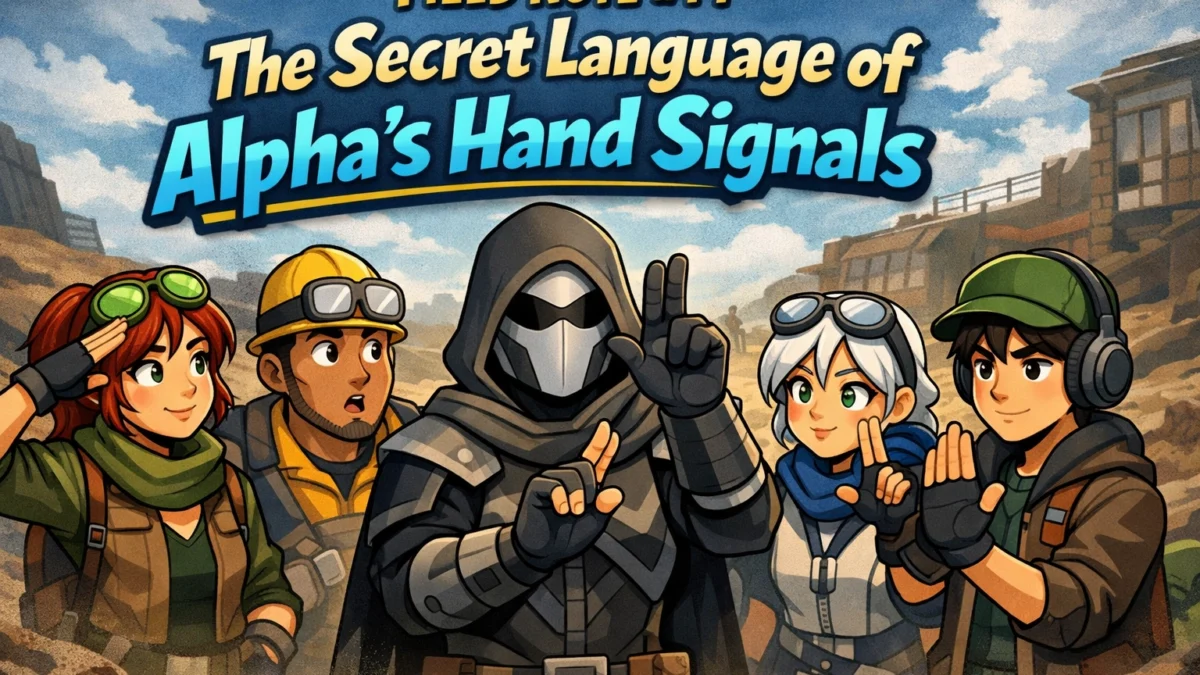
As many of you know, Alpha isn't just the muscle of the The Rainsavers; he’s our tactical lead. Being an intelligent orangutan comes with many perks: incredible strength, an innate understanding of the canopy, and, most importantly, the ability to communicate with absolute silence.
Today’s Field Note is all about Alpha’s proprietary hand signals. If you want to survive the next mission without getting a face full of sedative darts, you’d better memorize these.
1. The Rule of Visibility (Alpha’s First Law)
According to our internal research (and some very frantic Google searches I did while hiding in that swamp), effective leadership starts with hand visibility. In the human world, keeping your hands in your pockets sends a message of insecurity or, worse, that you’re hiding a stolen snack.
For Alpha, hands are always visible. Whether he’s swinging from a Liana vine or signaling a tactical halt, his hands are expressive tools of confidence. If you can’t see Alpha’s hands, it means you’re either standing in the wrong spot or he’s currently face-palming because of your latest tactical blunder.
The Tactical Takeaway: Keep your hands out of your tactical vests. Be ready to signal. If your hands are hidden, you’re basically a liability with a backpack.

Alt Text: A group of Rainsaver team members looking intently at a dense thicket, mimicking tactical hand signals.
2. The "Slow-Mo Snail" (The Halt Signal)
Most tactical teams use a simple closed fist to signal "Stop." Alpha, being a bit more… let's say "expressive," has modified this.
When Alpha wants the team to stop, he doesn’t just raise a fist. He does the Slow-Mo Snail. He raises his hand slowly, palm toward the team, and gradually closes his fingers one by one. This isn't just a "Stop" command; it’s a "Stop and match the tempo of the environment" command.
Our research shows that gestures should match the tempo and cadence of the situation. In a high-stress environment, wild, jerky movements make people nervous. Alpha’s rhythmic signals keep the team's collective heart rate down.
The "Oops" Moment: During Mission 04, Jackie thought Alpha was just trying to catch a butterfly. She kept walking right into a tripwire. We spent the next hour untangling her from a net. Remember: if the hand moves, you stop. Don't chase the imaginary butterfly.
3. The "Peeling the Banana" (All Clear / Proceed)
This is a fan favorite. When Alpha determines that the coast is clear, he performs a gesture that looks remarkably like he’s peeling a giant, invisible fruit.
- The Gesture: Thumb and forefinger mimic a peeling motion downward.
- The Meaning: "The threat has been neutralized or bypassed. Proceed with caution."
It’s an open body language gesture. Open hand postures project confidence and openness. It lets the team know that the tension can drop from a Level 10 (Panicked Screaming) to a Level 3 (Vigilant Walking).
4. The "Scratchy Belly" (The Ambush Warning)
Now, this one is tricky. To the untrained eye, it looks like Alpha just has a bit of an itch. But if you see Alpha scratch his left ribs three times in quick succession, do not offer him a comb.
The "Scratchy Belly" is the signal for an imminent ambush. It’s subtle, it’s low-profile, and it doesn’t alert the enemy that we know they’re there.
The "Oops" Moment: I once thought he was actually itchy and threw him a bottle of medicated powder. The "poof" of white powder essentially acted as a smoke grenade for the enemy. I am still hearing about that one during performance reviews.

Alt Text: Alpha the orangutan looking through a pair of high-tech binoculars while holding up a three-finger signal.
5. The "Palm-to-Forehead" (The 'Samuels' Signal)
I’ve been told by the rest of the characters that this signal is used exclusively when I’m around. It involves Alpha placing his massive palm over his entire face and shaking his head slowly.
Apparently, it translates to: "The Boss is doing that thing again where he thinks he’s in a movie. Everyone just stay still and wait for him to trip over that log."
Very funny, guys. Real professional.
Why We Don’t Use Words
In the world of eco-adventure and environmental heroes, the environment is our greatest ally: but it’s also our loudest critic. Sound travels differently in a humid jungle than it does in a boardroom. A single snapped twig or a whispered "Is that a jaguar?" can be heard for a quarter-mile by someone with the right tech.
We’ve moved past the era of the solo superhero who shouts catchphrases while punching a mountain. Modern hero work is about team-based precision. If you’ve been following our blog, you know that solo hero stories are dying out. The future is collaborative. And collaboration requires a language that doesn't rely on vocal cords.
Alpha’s hand signals are the bridge between human tech and animal intuition. It’s how we bridge the gap between ancient mysteries and modern threats.
Mastering the Firm "Handshake"
The research also suggests that a firm handshake is the key to confidence. While Alpha doesn't exactly go around shaking hands with the villains we encounter, he does have a "tactical grip."
When we meet an ally in the field, Alpha uses a light, subtle touch on the arm: a technique known to subconsciously make others feel more engaged and connected. It’s hard to feel nervous when a 300-pound orangutan gently pats your shoulder and gives you a "we got this" look.
Just don't give him a "dead fish" handshake. He hates that. He’ll think you’re holding a literal dead fish and will try to find a place to compost you.

Alt Text: A tactical map laid out on a mossy rock, with a large orange finger pointing to a specific coordinates.
The Ultimate Goal: Synergy
At the end of the day, these signals aren't just about being "cool" or "tactical" (though they are both). They are about survival. Whether we’re dealing with ancient technology or modern threats, the ability to communicate without a sound is what keeps The Rainsavers ahead of the curve.
If you’re struggling with the complexity of the world right now: maybe even feeling a bit of climate anxiety: remember that there is power in the silent, steady work of a team that knows how to move as one.
We aren't just saving the planet; we're rewriting the rules of how adventure stories are told. We’re moving away from the "chosen one" trope and into the "chosen team" reality. And in that reality, Alpha’s hands are the ones guiding us home.
Gear Up for the Next Mission
Think you’ve mastered the signals? Put your skills to the test. We’ve got new episodes and field reports dropping constantly.
- Check out the latest gear: Visit the Rainsavers Shop to get your own field manual (non-smelly swamp boots sold separately).
- Catch up on the action: Watch our TV Commercial to see Alpha in motion.
- Join the fight: Enter the Down the Rabbit Hole Contest and see if you have what it takes to join the crew.
Remember: Keep your eyes on Alpha, your hands out of your pockets, and for the love of all that is green, stop yelling.
Over and out.
: Steven G. Samuels, CEO, The Rainsavers
Ready to dive deeper into the world of eco-adventure?
Explore the full Rainsavers Series here!
