Meta Description: Discover the 6 key signs that reveal you've found your next climate fiction obsession. From team dynamics to tech integration, learn what makes eco-adventure series irresistible in 2026.

Look, we get it. You're scrolling through endless book recommendations, drowning in "must-read" lists, and feeling like you need a GPS just to navigate the climate fiction landscape in 2026. The good news? Finding your next eco-adventure obsession doesn't have to feel like searching for clean water in a post-apocalyptic wasteland.
After watching thousands of readers dive headfirst into environmental thrillers this year, we've cracked the code on what separates the page-turners from the shelf-sitters. Whether you're a climate fiction newbie or a seasoned eco-warrior looking for your next fix, these six signs will help you spot a series worth your precious reading time.
1. The Characters Feel Like Your Dream Adventure Squad
The Sign: You find yourself mentally assigning roles to your friends while reading.
Here's the thing about great eco-adventure series in 2026, they've figured out that saving the planet is a team sport. If you're reading about a lone wolf who single-handedly stops climate disasters with nothing but grit and a recycled water bottle, you might want to keep looking.
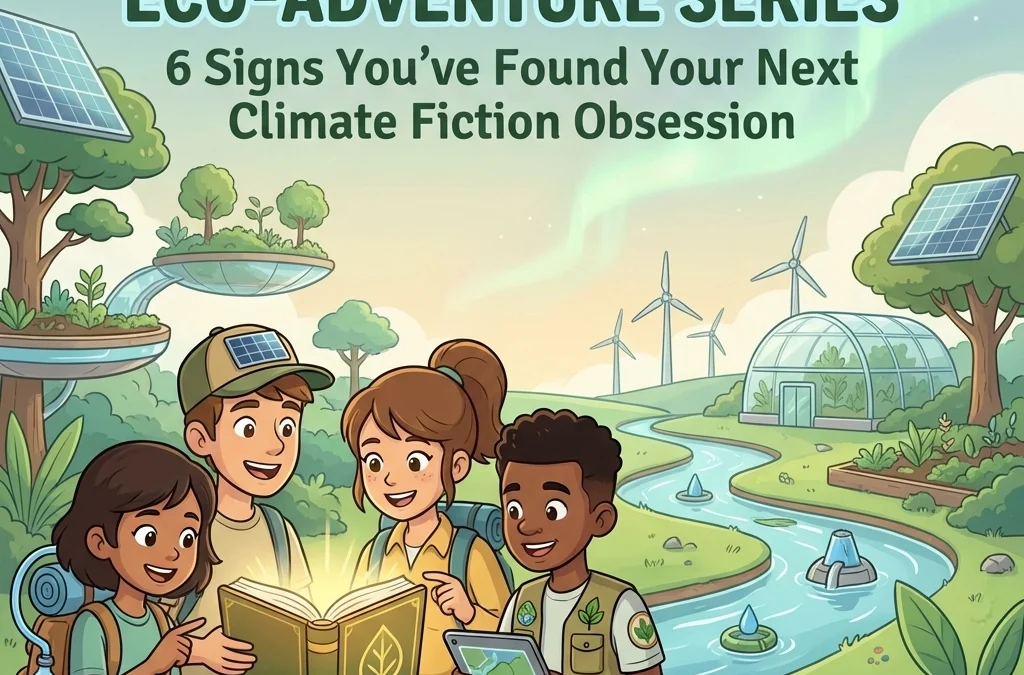
The best series feature diverse teams where each member brings unique skills to the table. Think tech specialists who can hack into corporate surveillance networks, indigenous guides with ancestral knowledge, marine biologists who speak whale (okay, maybe not literally), and tactical experts who know how to navigate both urban decay and pristine wilderness.

When you catch yourself thinking, "Sarah would totally be the tech person, and Mike could handle the wilderness survival stuff," you've found a winner. Bonus points if the characters have realistic flaws and don't magically know everything about everything.
2. The Science Doesn't Make Your Eyes Glaze Over
The Sign: You're actually learning stuff without feeling like you're back in high school chemistry.
Climate fiction walks a tightrope between entertainment and education. The sweet spot? When environmental science feels like a natural part of the story rather than a preachy lecture disguised as dialogue.
Great eco-adventure series weave real scientific concepts into the action seamlessly. You'll find yourself Googling terms like "mycorrhizal networks" or "atmospheric river patterns" not because the book confused you, but because it made these concepts so compelling you want to know more.
The authors who nail this understand that readers want to feel smart, not stupid. They explain complex environmental systems through character discoveries and plot developments, making the science feel like treasure rather than homework.
3. The Stakes Feel Both Huge and Personal
The Sign: You're equally worried about saving the rainforest AND whether Jake will finally tell Maya how he feels.
This might be the most important sign of all. Mediocre climate fiction focuses solely on global catastrophe, melting ice caps, rising seas, mass extinction. While these threats are real and terrifying, they can feel so massive that they become abstract.
The series that hook readers understand that we connect with stories through personal stakes. Yes, the Amazon is burning, but also, the team's base camp is in immediate danger. The coral reefs are dying, but the marine biologist's life work is being destroyed in real time. The air quality is toxic, but the character's younger sister has asthma and needs that experimental filtration system to survive.

When you find yourself equally invested in both planetary salvation and whether the obvious romantic tension between team members will finally be addressed, you've struck gold.
4. The Technology Feels Realistic (Not Magic)
The Sign: You think "I could actually see this happening" instead of "yeah, right."
2026 has taught us that readers are savvy about tech. We've lived through enough overhyped gadgets and underdeveloped "revolutionary" apps to spot unrealistic tech from a mile away.
The best eco-adventure series ground their technology in current scientific possibilities. Solar-powered communication devices that actually run out of juice at inconvenient moments. Water purification systems that work great until they don't. Atmospheric monitoring equipment that gives real data but requires someone who knows how to interpret it.
The gear feels functional rather than fantastical. Characters deal with equipment failures, battery life, and the eternal struggle of keeping electronics dry in humid environments. When the tech solutions feel earned rather than convenient, you know the author has done their homework.
5. The Villains Have Believable Motivations
The Sign: You can almost understand why they're making terrible choices (even though you hate them for it).
Forget mustache-twirling evil corporation CEOs who destroy the environment for fun. The eco-adventure series that really work feature antagonists with understandable, if misguided, motivations.
Maybe it's a government official who genuinely believes that short-term economic stability is more important than long-term environmental protection. Or a scientist who's convinced that human intervention is the only way to save endangered species, even if it means breaking every conservation law in the books.
The best villains make you think, "If I were in their position, with their information and pressures, would I make the same choice?" That uncomfortable moment of recognition is when you know you're reading something sophisticated.

Check out our character development insights to see how complex motivations drive compelling storytelling.
6. The Ending Leaves Room for Hope (But Doesn't Tie Everything in a Bow)
The Sign: You close the book feeling energized rather than depressed, but still hungry for more.
Climate fiction can be a tough sell because, let's face it, environmental threats are genuinely scary. The series that keep readers coming back understand that while the problems are real, the solutions are achievable: with enough creativity, teamwork, and persistence.
Look for stories that end with meaningful progress rather than complete resolution. Maybe the team has protected one critical habitat while learning about three more that need help. Perhaps they've developed a promising new technology that still needs years of refinement. The victories feel earned but not final.
You should finish each book feeling like you've witnessed something significant, but knowing that the bigger mission continues. If you immediately want to know what happens next: not just to the characters, but to their world: you've found your next obsession.
The Real Test: Does It Change How You See the World?
Here's the ultimate litmus test for eco-adventure series worth your time: Do you find yourself noticing environmental details in your daily life that you previously ignored? Are you suddenly aware of bird sounds, air quality, or the way water moves through your neighborhood?
Great climate fiction doesn't just entertain: it rewires your awareness. You start seeing your local ecosystem as a character in its own story. You begin to understand that adventure doesn't always require exotic locations; sometimes the most important discoveries happen in your own backyard.
Ready to Find Your Next Obsession?
If you're nodding along to these signs and feeling that familiar itch for a new series to devour, we've got you covered. The Rainsavers combines all six elements into an eco-adventure series that readers are calling "impossibly addictive" and "the climate fiction we've been waiting for."
Our team doesn't just face environmental threats: they live in a world where the line between ancient wisdom and cutting-edge technology creates possibilities nobody saw coming. Want to see if it passes your personal obsession test?
Start your journey at rainsavers.com and discover why readers are staying up way too late, completely absorbed in adventures that feel both wildly entertaining and surprisingly possible.
Trust us, your future book hangover will thank you.
