
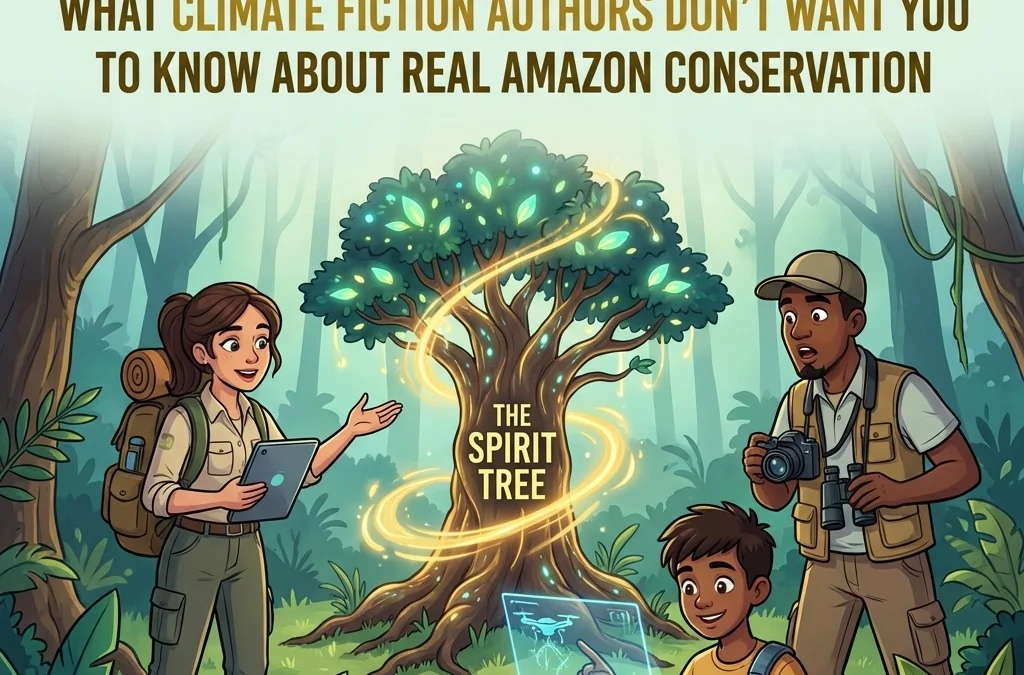
Okay, let's get one thing straight, there's no grand conspiracy among climate fiction authors. But there is a pretty big gap between how most eco-thrillers portray Amazon conservation and what's actually happening in the real rainforest. And honestly? The reality is way more fascinating than most fiction gives it credit for.
Here's what most climate fiction gets wrong, what's really going on in the Amazon, and why The Rainsavers series decided to bridge that gap with some seriously wild (but surprisingly accurate) storytelling.
The Fiction Fantasy vs. Boots-on-the-Ground Reality
Most environmental thrillers love their dramatic villains, evil corporations with massive chainsaws, government conspiracies, or mad scientists with world-ending schemes. It makes for great page-turning action, but it misses the complex, messy, and often inspiring reality of actual conservation work.
Real Amazon conservation isn't just about stopping one big bad guy. It's about 230 million hectares of protected areas, Indigenous communities who've been expert land stewards for centuries, satellite monitoring systems that can spot illegal logging in real-time, and sustainable production models that actually work when given proper support.

But here's where it gets interesting, and where most fiction drops the ball. The real conservation heroes aren't typically gun-toting adventure protagonists. They're Indigenous leaders, research scientists, local communities, and yes, even some reformed corporations working together in ways that are actually more complex and compelling than your average thriller plot.
What's Really Happening in the Amazon (Spoiler: It's Actually Pretty Amazing)
Let's talk about what climate fiction authors often skip over because it doesn't fit the "humans bad, nature doomed" narrative that sells books.
Indigenous Communities Are the Real MVPs
Indigenous peoples manage their territories as sustainable use reserves, and they've been doing it successfully for generations. Their conservation practices aren't just effective, they're embedded in their cultural identity. They're not the mystical forest spirits that fiction sometimes portrays them as, but they're not helpless victims either. They're skilled, knowledgeable advocates who know the forest better than any outsider ever will.
Technology That Actually Works
Remote sensing and satellite data now enable real-time monitoring across all Amazonian countries. Scientists can validate climate models with forest plot data and spot deforestation patterns as they happen. It's not the dramatic "hacking the mainframe" scenario you see in thrillers, but it's incredibly effective and constantly evolving.
Sustainable Success Stories
While governments and private sector timber reforms have been slow, there are real wins in sustainable forestry, fisheries, and aquaculture. These aren't the flashy victories that make for exciting climax scenes, but they're the steady, long-term progress that actually changes ecosystems.

The Problem Most Climate Fiction Won't Touch
Here's the "secret" that climate fiction authors don't really want to address: the biggest obstacles to Amazon conservation aren't usually cartoonish supervillains. They're political resistance to conservation policies and insufficient funding for ecosystem services payments.
That's not particularly dramatic or action-packed, which is why most eco-thrillers invent more exciting problems to solve. But it's also why real conservation progress can feel frustratingly slow compared to the quick wins that fictional heroes achieve.
How The Rainsavers Flips the Script
This is where The Rainsavers series does something different. Instead of ignoring the complexity of real conservation or dumbing it down for dramatic effect, we embraced it, and then added some seriously fun chaos on top.
Our team doesn't just fight generic evil corporations. They deal with the messy reality of balancing Indigenous rights, scientific research, sustainable development, and yes, occasionally some actual bad guys with questionable technology. But the real conflict comes from trying to coordinate all these different approaches while dealing with very human problems like miscommunication, cultural differences, and the occasional orangutan with strong opinions about strategy.

Alpha the Orangutan isn't just comic relief: he represents the intelligence and agency of the forest itself, something that climate fiction often treats as a passive victim rather than an active participant in its own conservation.
The team structure reflects the reality that effective conservation requires diverse expertise, cultural knowledge, and cooperation between groups that don't always see eye-to-eye.
The technology is grounded in real conservation tools, just pushed a few steps further into science fiction territory. Because honestly, if you're going to write about saving the rainforest, why not make it as exciting as the real thing deserves to be?
Why This Matters for Your Reading Experience
When climate fiction ignores the complexity and success stories of real conservation, it can leave readers feeling either hopeless about environmental issues or overly simplistic about solutions. Neither of those responses actually helps anyone.
But when you ground environmental fiction in the real challenges and victories of conservation work: and then add some adventure, humor, and yes, the occasional evil scheme involving questionable Nazi technology: you get stories that are both entertaining and genuinely inspiring.
Real conservation work requires hope, creativity, cooperation, and persistence. It requires understanding that solutions are complex and that progress comes from many different approaches working together. And sometimes, it requires the ability to laugh when your carefully planned strategy gets completely derailed by an orangutan who has better ideas than you do.

The Real Secret Climate Fiction Doesn't Want You to Know
Here's the actual "secret" that most climate fiction avoids: effective environmental action is collaborative, ongoing, often incremental, and requires both scientific knowledge and cultural wisdom. It's not about one hero saving the day: it's about communities, scientists, Indigenous leaders, and yes, even some well-meaning outsiders working together over time.
That's not a secret because it's hidden or controversial. It's a secret because it's harder to write as a thrilling adventure series. But when you do write it that way: when you embrace the complexity and add the adventure on top: you get stories that are both more realistic and more exciting than the standard eco-thriller formula.
The real Amazon conservation story includes satellite monitoring, sustainable aquaculture projects, Indigenous land management, international cooperation, political negotiations, scientific research, and community organizing. It's messy, complex, and ongoing.
And in The Rainsavers series, it also includes a genius orangutan, some questionable PowerPoint presentations, and a team of heroes who are just trying to figure out how to save the rainforest without completely messing up their lives in the process.
Ready to See How It All Comes Together?
If you're curious about how environmental fiction can embrace the complexity of real conservation work while still delivering the adventure and humor you want in a good book series, it's time to meet the Rainsavers team.
See how they balance real conservation challenges with seriously entertaining chaos. Discover why cooperation works better than solo heroics (even when that cooperation includes arguing with an orangutan about strategy). And find out how environmental fiction can be both realistic and ridiculously fun.
Ready to jump into the adventure? Start with Book One at https://rainsavers.com and see why readers are calling it "the most realistic unrealistic environmental series they've ever read."
Because the real secret isn't what climate fiction authors are hiding: it's what happens when environmental storytelling finally embraces everything that makes real conservation work both challenging and amazing.
