Meta Description: It’s 2026, and the Amazon is fighting back. From high-tech reforestation to major legal wins for indigenous guardians, here are three reasons to feel hopeful about the future of the rainforest, and how the spirit of The Rainsavers is becoming reality.
Alt Text: A tactical expedition team standing on a ridge overlooking a hopeful, mist-covered Amazon jungle landscape as the sun breaks through the clouds.
Hey everyone, Steven G. Samuels here.
It’s April 2026, and if you’ve been following the news lately, it’s easy to get bogged down in the "doom and gloom" of environmental headlines. But here at The Rainsavers, we’re all about action, adventure, and, most importantly, hope.
When I first started writing about a team of eco-heroes fighting to save the world’s most precious ecosystems, some people told me it was "too sci-fi." Well, looking at the state of the world today, the line between fiction and reality is getting thinner by the day. And honestly? That’s a good thing.
We’re seeing some incredible "small wins" in the Amazon Basin this year that look like they were ripped straight out of one of our chapters. Whether it’s tech-savvy hackers protecting the trees or indigenous protectors using ancient knowledge to outsmart modern threats, the tide is starting to turn.
Grab a coffee, settle in, and let’s look at three reasons to be optimistic about the Amazon right now.
1. The "Bio-Hacker" Boom: Drones are Winning the Reforestation War
Back in 2022, the idea of using drones to replant entire forests was a pilot program. In 2026? It’s a full-scale tactical operation.
We’ve seen a massive surge in "autonomous silviculture": which is just a fancy way of saying seed-slinging drones. These aren't your average backyard hobby drones. We’re talking about heavy-duty, AI-driven swarms that can map a deforested area and "fire" nutrient-packed seed pods into the soil with 95% accuracy.
This reminds me so much of our character Sunbyte, the hacker nurse. In the books, she uses her tech skills to disrupt the machines behind deforestation. In the real world of 2026, we’re seeing engineers do the exact opposite: using machines to build life back up.
Why this is a "Win":
- Speed: A swarm of 10 drones can plant roughly 40,000 trees a day. For perspective, a human planter usually hits about 1,000.
- Access: These drones can reach remote, steep areas of the Amazon that are nearly impossible for ground crews to navigate.
- Diversity: New AI algorithms ensure that we aren’t just planting a "monoculture" (one type of tree), but a diverse mix that mimics the natural jungle.

Alt Text: A high-tech reforestation drone hovering over a cleared patch of jungle, deploying a biodegradable seed pod.
2. The Rise of the Indigenous "Cyber-Guardians"
If there’s one thing we’ve learned from Jungle Dart, our teen protector raised by the rainforest, it’s that the people who live in the forest are its best defenders.
In early 2026, a landmark legal victory in the Tapajós region shifted the power back to the indigenous communities. But the real win isn't just on paper: it’s on the ground. Communities are now combining ancestral tracking knowledge with satellite "geofencing."
When a chainsaw starts up or a tractor crosses a protected boundary, sensors hidden in the canopy alert the local guardians via encrypted satellite links. They aren't waiting for the government to show up anymore; they are documented, organized, and using "eco-surveillance" to stop illegal logging before it even begins.
It’s a classic example of Ancient Mysteries vs. Modern Threats. By using the tools of the modern world to protect the wisdom of the ancient one, these communities are creating a shield that is proving very hard for illegal interests to pierce.
The 2026 Stats:
- Illegal logging in monitored indigenous territories is down by nearly 40% compared to last year.
- The use of "hidden" audio sensors (the "ears" of the forest) has expanded to cover over 2 million hectares.
3. The "Jaguar Corridor" Connectivity Project
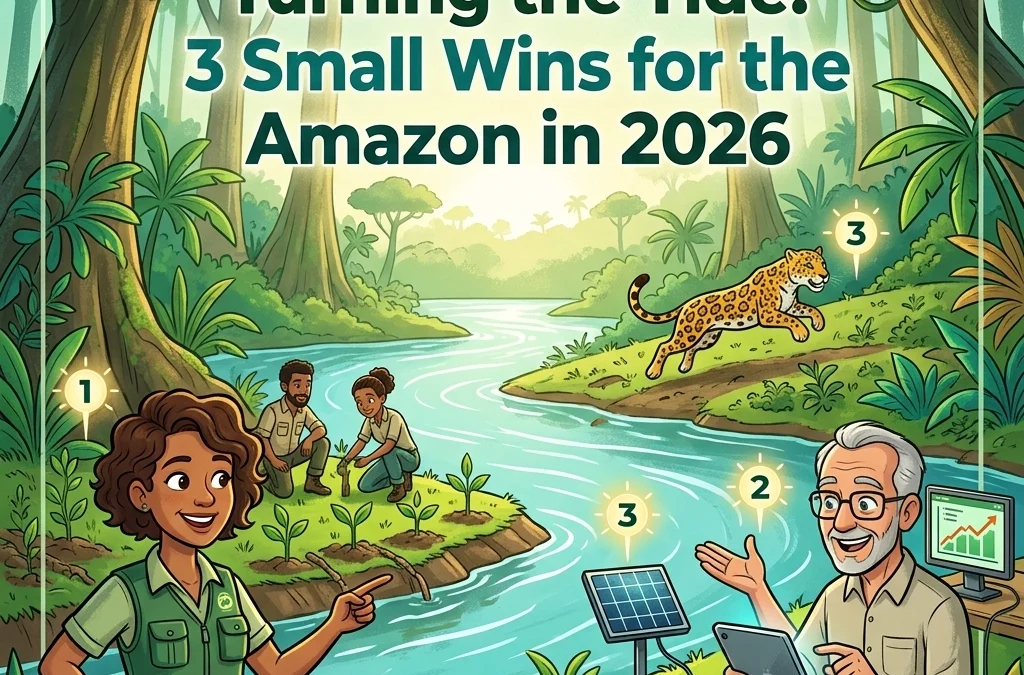
Nature needs space to move. One of the biggest wins of 2026 has been the completion of the "Central Amazon Corridor."
For years, the Amazon was being "fragmented": cut into little islands of green separated by roads and farms. This is a death sentence for big predators like jaguars. This year, thanks to a massive collaborative effort between non-profits and local governments, we’ve seen the successful creation of "wildlife bridges" and protected "green ribbons" that reconnect these islands.

Alt Text: A majestic jaguar crossing a lush, plant-covered land bridge over a remote Amazonian highway.
We talk a lot in our series about how team-based adventure is taking over. This corridor project is the ultimate real-world team-up. It took biologists, engineers, local farmers, and tech experts to make it happen. Just like The Rainsavers, no one could do it alone.
The Result?
We’re already seeing the "genetic flow" returning. Jaguars, tapirs, and even some rare primate species are moving between territories that were cut off for decades. It’s a literal bridge to the future.
Why These "Small Wins" Matter for Your Reading List
You might be wondering: “Steven, why are you talking about real-world news on a fiction blog?”
Because at The Rainsavers, we believe that the stories we read shape the way we see the world. If we only read about the end of the world, we start to believe it’s inevitable. But if we read about heroes: about teams of regular people (and maybe one genius orangutan) taking on the impossible: we start to look for ways to be heroes in our own lives.
2026 is a pivotal year. We’re at a crossroads where technology and nature are finally starting to work together rather than against each other. It’s the exact theme we explore in our 6-book series.
If you’re feeling a bit of climate anxiety, these real-world wins should be your "mental health break." And if you want to dive deeper into a world where the good guys actually win: using cool gadgets, ancient secrets, and a whole lot of heart: then you’re in the right place.

Alt Text: A group of diverse eco-adventurers from The Rainsavers series gathered around a holographic map of the Amazon.
Field Notes from the CEO’s Desk
I’ll be honest, writing The Rainsavers has changed me. I used to look at a forest and just see trees. Now, I see a complex, living machine that needs a maintenance crew. I see the villains: the "Exploiters": not as cartoons, but as the real-world greed we all have to stand up against.
We’ve got a lot of exciting things coming up this year. More character deep-dives, more tech "leaks" from the Rainsaver HQ, and maybe even another contest (did you catch the last one down the rabbit hole?).
The Amazon is the heart of our planet. Seeing it beat a little stronger in 2026 gives me the fuel to keep writing these stories.
What can you do right now?
- Stay Informed: Follow the real-world tech updates on reforestation.
- Spread the Word: Share these small wins! Hope is contagious.
- Get Inspired: Read a story that reminds you why the planet is worth fighting for.
The tide is turning, friends. Let’s keep pushing.
Read Book One now and join the team that’s saving the world, one adventure at a time.
Stay adventurous,
Steven G. Samuels
CEO, The Rainsavers
Want to know more about the team? Check out our Characters Page or find out why rainforest adventures are the new superhero origin stories.
