Forget everything you think you know about how superheroes get their powers. The tired old formulas: radioactive spider bites, alien crashes, lab accidents: are getting a major upgrade in 2026. The future of superhero fiction isn't happening in sterile laboratories or gleaming cities. It's deep in the heart of our planet's most mysterious ecosystems.
The Rainsavers is leading this revolution, proving that when you ground superhero origins in real environmental science and ancient rainforest wisdom, you get something way more compelling than the same recycled origin stories we've seen a thousand times.
The Problem with Traditional Superhero Origins
Let's be honest: most superhero origin stories follow the same predictable pattern. Random accident + mysterious transformation + instant powers = hero. It worked great in the 1960s, but today's audiences want something deeper. They want heroes whose powers make sense, whose abilities connect to real-world issues, and whose journeys feel authentic rather than accidental.
Traditional origins also tend to be pretty isolated events. One person, one moment, one transformation. But real change? Real environmental challenges? They're never solo missions.

Why Rainforests Change Everything
Here's what makes rainforest-based origins so brilliant: rainforests are living laboratories where evolution happens faster than anywhere else on Earth. They're home to symbiotic relationships we're still discovering, chemical compounds that could revolutionize medicine, and indigenous knowledge systems that have sustained communities for thousands of years.
When The Rainsavers grounds its heroes' abilities in this reality, something magical happens. Powers aren't random: they're earned through deep connection with ecological systems. Heroes don't just gain abilities; they become guardians of knowledge that could save our planet.
Take Maya's story in The Rainsavers. Her connection to the Amazon's mycorrhizal networks didn't happen overnight in some freak accident. It developed through years of working alongside indigenous botanists, learning to read the forest's chemical communications, understanding that trees have been networked long before humans invented the internet. Her abilities to sense ecosystem health and communicate with plant networks feel earned because they are.
The Science Behind the Fiction
What makes modern rainforest adventures so compelling is how they blend cutting-edge science with ancient wisdom. In 2026, we know so much more about how rainforest ecosystems actually work than we did even five years ago.
Recent discoveries about mycorrhizal networks: the underground fungal networks that connect forest trees: read like science fiction but are completely real. Trees sharing resources, sending chemical warnings about insect attacks, supporting their offspring through root-connected communication systems. This stuff is happening right now in every healthy forest.
The Rainsavers takes this real science and asks: what if humans could tap into these networks? What if our heroes' abilities came from learning to interface with systems that have been operating successfully for millions of years?

Ancient Knowledge Meets Modern Threats
The most innovative thing about rainforest-based superhero stories isn't just the environmental angle: it's how they honor indigenous knowledge while tackling contemporary global challenges.
Traditional superhero fiction often treats ancient wisdom as mystical background noise. But stories like The Rainsavers understand that indigenous communities have been developing sophisticated environmental technologies for generations. When your heroes learn from people who've been managing complex rainforest ecosystems sustainably for centuries, their powers feel grounded in real expertise rather than Hollywood magic.
This creates heroes whose abilities are both incredibly advanced and deeply traditional. They're using biomimicry, natural pharmacology, and ecological engineering: but they're doing it in ways that honor the communities who developed these approaches first.
Team-Based Origins That Actually Make Sense
Most superhero teams feel artificial: a bunch of random individuals who happen to work together. But when your heroes' powers emerge from ecosystem connections, team dynamics become natural and necessary.
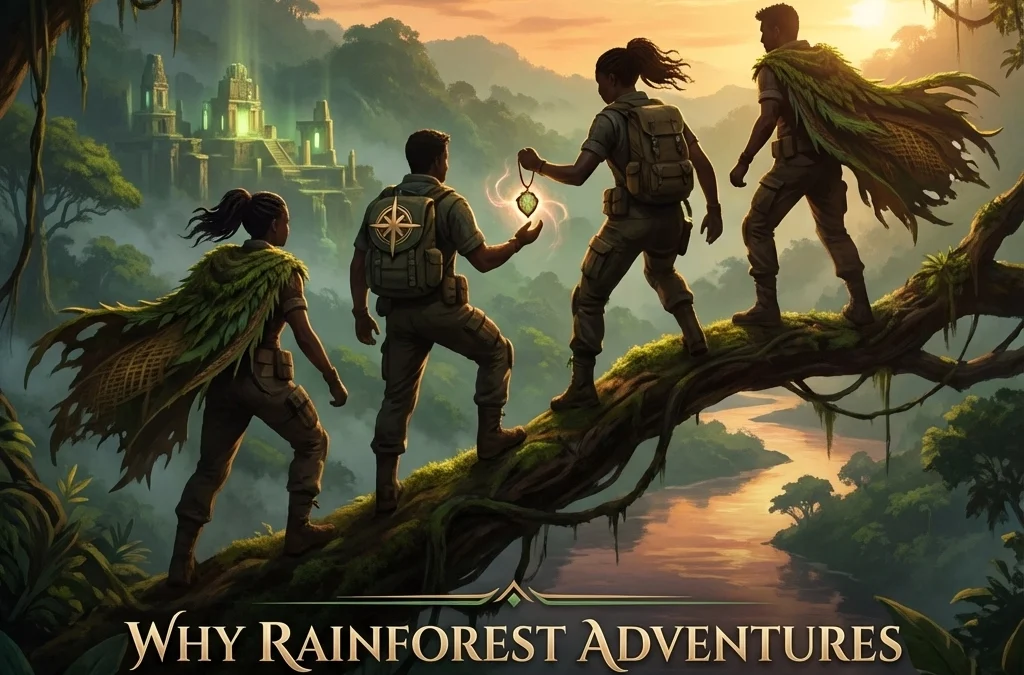
In The Rainsavers, each team member represents a different aspect of rainforest expertise: indigenous botanical knowledge, cutting-edge conservation technology, mycological research, wildlife tracking, atmospheric chemistry. Their abilities complement each other because they're all part of the same larger ecological system.
This approach creates much more interesting team dynamics than the usual "different personalities learning to work together" formula. When your heroes' powers are literally interconnected through natural networks, collaboration isn't just tactically smart: it's how their abilities actually function.

Why This Matters for Modern Audiences
Audiences in 2026 are dealing with climate anxiety, environmental uncertainty, and a growing awareness that individual action isn't enough to tackle planetary-scale challenges. Traditional superhero stories about individual transformation and personal responsibility feel increasingly disconnected from the collective action actually needed to address real-world problems.
Rainforest adventures solve this by creating heroes whose powers are inherently collaborative and environmentally grounded. These aren't stories about individuals transcending nature: they're about humans learning to work with natural systems more effectively than ever before.
When readers see heroes whose abilities come from deep ecological knowledge rather than random accidents, they start thinking differently about what real-world "superpowers" might look like. Maybe our actual superpower is learning to listen to ecosystems. Maybe heroism is about becoming effective environmental stewards rather than dominating through force.
The Adventure Factor
Don't worry: focusing on environmental themes doesn't mean sacrificing thrills. If anything, rainforest adventures offer more diverse, unpredictable challenges than traditional urban superhero stories.
Rainforests are inherently dramatic environments. They're vast, dangerous, filled with unknown species and unexplored territories. They're under constant threat from deforestation, climate change, and industrial development. They're home to amazing indigenous cultures and cutting-edge scientific research. Plus, they're gorgeous.
The Rainsavers proves you can have heart-pounding adventure sequences while exploring serious environmental themes. When your heroes are tracking illegal mining operations through uncharted Amazon territories, using bio-luminescent organisms for night navigation, and coordinating with indigenous communities to protect sacred sites: you've got built-in excitement that doesn't require destroying half a city.
Looking Forward
2026 feels like the perfect time for this evolution in superhero storytelling. We're seeing more environmental awareness, more indigenous voices in mainstream media, and more sophisticated understanding of ecological science. Audiences are ready for heroes whose abilities feel both fantastical and scientifically grounded.
The success of rainforest-based adventure stories suggests that readers want superhero fiction that connects to real-world challenges without being preachy about it. They want heroes who are powerful because of their knowledge and connections, not despite them.
The Rainsavers is showing how to blend environmental themes with classic adventure storytelling in ways that enhance both. When superhero origins grow from real ecological relationships rather than random accidents, you get stories that are more scientifically interesting, more culturally respectful, and more emotionally satisfying.
Ready to see how we blend ancient wisdom with cutting-edge science? Read Book One now and discover why the future of superhero fiction is growing deep in the Amazon.
