
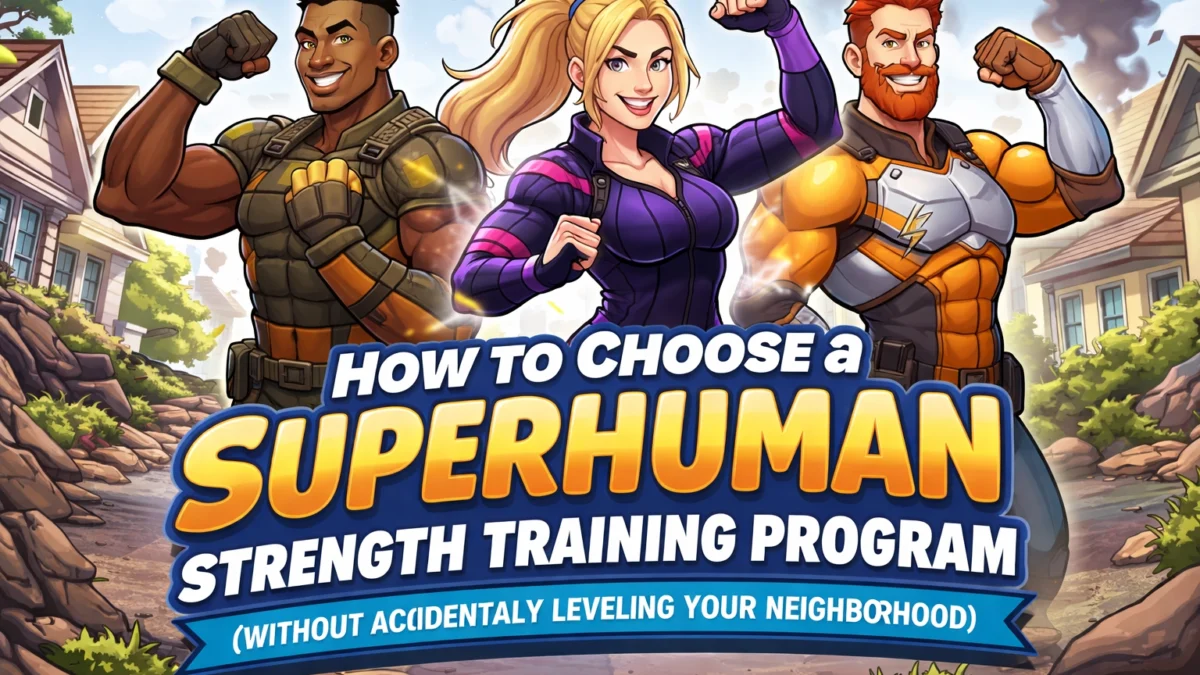

Meta Description: Woke up with superhuman strength? Don't panic. Here's your 2026 survival guide to training without crushing your car, your house, or your neighbor's prized garden gnomes.
So. You've woken up with superhuman strength.
Maybe it was that weird meteorite you touched last Tuesday. Maybe it was the experimental smoothie from that sketchy wellness kiosk at the mall. Maybe you just got really into cold plunges and something snapped (in a good way? Unclear).
Either way, congratulations! You're now capable of bench-pressing a sedan and high-fiving someone into the stratosphere.
Here's the problem: nobody prepared you for this.
Your gym's liability waiver definitely doesn't cover "accidentally yeeted the squat rack through the roof." And those YouTube fitness influencers? Their programs assume you're working with normal human muscle fibers, not whatever cosmic upgrade you've got going on.
Don't worry. We've got you.
Welcome to the only training guide you'll need in 2026, designed specifically for the newly super-strong, the accidentally powerful, and anyone who's tired of explaining drywall holes to their landlord.
Step 1: Accept That Your Old Routine Is Dead

Let's get this out of the way: your previous workout plan is now a relic.
That progressive overload spreadsheet you meticulously maintained? Adorable. You're going to max it out on Day One and then spend the rest of the week confused about why the barbell feels like a pool noodle.
Here's what happens when super-strength meets a normal gym:
- Treadmill: You accidentally set a land-speed record and fly off the back into a wall of mirrors.
- Cable machine: You pull the entire weight stack through the ceiling.
- Yoga class: You sneeze and send three mats airborne.
The foundation-building approach that works for regular humans, establishing baseline strength before intensity, doesn't apply when your baseline is already "industrial crane."
So step one? Mourn your old routine. Light a candle for it. Then move on.
Step 2: Assess Your "Oops" Risk Tolerance
Before picking any program, you need to honestly evaluate how much collateral damage you're comfortable with.
Ask yourself:
- Do you rent or own? Homeowners can patch drywall quietly. Renters have security deposits to lose.
- How much do you like your neighbors? Because if the answer is "not much," maybe outdoor training is fine.
- Can you afford to replace your car? If you're training grip strength near vehicles, this matters.
Different training methodologies carry different risk profiles. A simple resistance routine? Low damage potential. A complex program combining plyometrics, isometrics, and explosive movements? You might crater your backyard.
Pro tip: Start every new exercise at approximately 3% effort. Yes, it'll feel ridiculous. Yes, you'll look like you're moving in slow motion. But it's better than learning the hard way that "jumping jacks" now involve actual flight.
Step 3: Find Equipment That Can Handle You
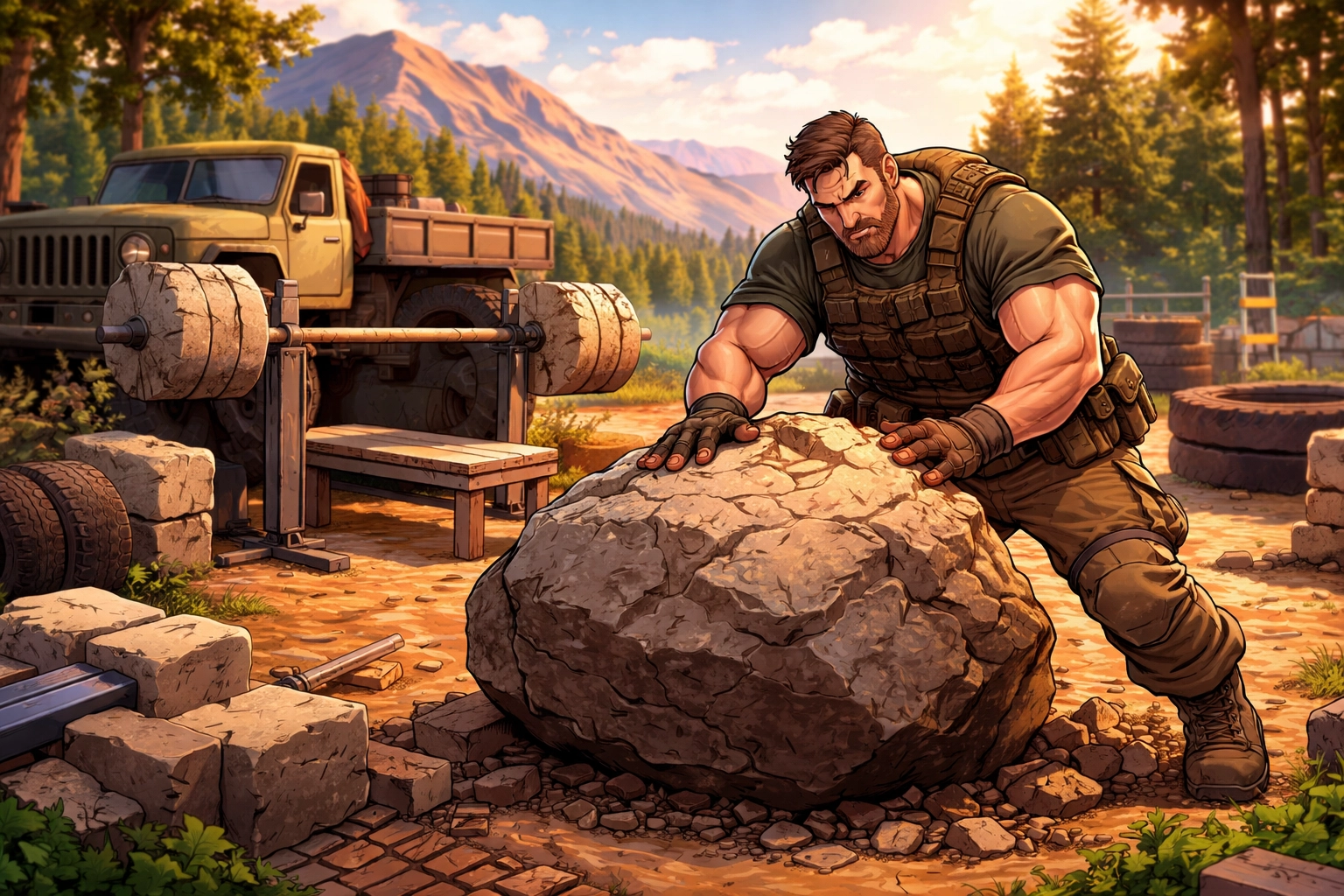
Here's a fun discovery you'll make quickly: commercial gym equipment is not built for you anymore.
That fancy machine with 300 pounds of resistance? Cute. You'll snap the cable on rep two.
What you actually need:
- Reinforced steel bars (not chrome-plated hollow ones)
- Concrete blocks instead of rubber weights
- An outdoor space with nothing breakable within a 50-foot radius
- A really understanding insurance agent
Some people opt for resistance training using heavy machinery, decommissioned vehicles, or, in extreme cases, boulders. If you're going the boulder route, please source them ethically. Stealing from national parks is still illegal even if you can carry a two-ton rock like a basketball.
The key principle here: choose equipment you can access consistently. Programs that require specialized gear you can't maintain long-term will fail you when you need them most, like when you're stress-lifting after a bad day and all you've got is your car.
(Don't lift your car. Seriously. The axle thing gets expensive.)
Step 4: Design Around the "One Major Lift" Rule
Quality strength programs, even superhuman ones, follow specific principles.
The most important: perform one major exercise per muscle group per session, and do your heaviest lifting first.
Why? Even with superhuman strength, your nervous system still needs to adapt. Those motor units you've suddenly unlocked? They're powerful but unstable. Fatiguing yourself before the big lifts means sloppier form, which means more "oops" moments.
Here's a sample structure that works:
| Day | Primary Lift | Secondary Work | Oops Risk Level |
|---|---|---|---|
| Monday | Deadlift (boulder) | Farmer carries | Moderate |
| Tuesday | Overhead press (truck) | Core stability | High |
| Wednesday | Active recovery | Walk gently | Low |
| Thursday | Squat (whatever you can find) | Balance drills | Moderate |
| Friday | Grip training | Crushing practice | VERY HIGH |
| Weekend | Rest / apologize to neighbors | N/A | Depends |
Notice Friday's risk level? Grip training is where most newly super-strong people cause property damage. Start with stress balls. Then tennis balls. Then maybe: maybe: move to softballs after a month.
Do NOT start with anything you'd be sad to see explode.
Step 5: Master the Art of Relaxing Carefully

This sounds weird, but hear us out: the most dangerous part of superhuman training is relaxing.
When you ramp effort up quickly, your newly recruited muscle fibers can spasm. When you relax too fast after a heavy lift, same thing. And when a superhuman muscle spasms, you don't just get a cramp: you launch nearby objects at escape velocity.
The fix? Slow ramps.
Before each lift, gradually increase effort over 5-10 seconds. After each lift, gradually decrease over the same period. Think of it like easing a sports car from zero to sixty and back: you wouldn't just floor it and slam the brakes.
(Unless you're trying to recreate an action movie. Which, fair. But maybe save that for Week 12.)
Step 6: Embrace Sustainability Over Spectacle
Look, we get it. You want to show off. You want to flip a bus on Instagram. You want to be the main character.
But here's the truth: sustainable training beats spectacle every time.
Programs you can maintain for years will produce better long-term results than intense eight-week challenges that leave you with chronic injuries and a restraining order from your gym.
Pick methods that don't require:
- Equipment you'll lose access to
- Environments you'll get banned from
- Repair bills you can't afford
The goal is longevity. You want to be flipping buses at 80, not blowing out your super-tendons at 28 because you tried to impress someone at a barbecue.
Step 7: Find a Community Who Gets It
Training alone is lonely. Training alone with superhuman strength is dangerous.
You need people who understand what it's like to accidentally rip a door off its hinges. People who won't judge you for crushing your phone during a stressful text. People who can spot you without getting launched into orbit.
Not sure where to find them?
Start with fiction. Seriously. Reading about characters navigating similar challenges can help you feel less alone: and maybe teach you a few tricks.
Speaking of which…
See How Tom 'Primal' Swift Handles the Weight
If you're looking for a character who gets the superhuman strength struggle: the chaos, the "oops" moments, the learning curve: you need to meet Tom 'Primal' Swift.
He's part of The Rainsavers, a team that blends raw power with actual purpose. And watching how he navigates his abilities? It's equal parts inspiring and hilarious.
See how Tom 'Primal' Swift handles the weight at https://rainsavers.com
Final Thoughts (Before You Bench-Press Anything Else)
Superhuman strength is a gift. It's also a liability, a learning curve, and occasionally a comedy of errors.
But with the right training approach: sustainable methods, proper equipment, slow ramps, and a healthy respect for collateral damage: you can master it.
Just remember:
- Start at 3% effort
- Relax slowly
- Avoid grip training near anything you love
And when in doubt? Read about someone who's been there.
Welcome to the strong life. Try not to break anything important.
