

You've seen it in thrillers. You've heard about it in hushed tones on conspiracy forums. Maybe you've even watched a spy movie where the entire plot hinges on someone getting their hands on a glowing red vial of… something very bad.
Welcome to the wild, murky, and surprisingly fascinating world of red mercury, a substance that probably doesn't exist, yet has managed to fuel decades of paranoia, international arms stings, and some of the most pulse-pounding fiction ever written.
Including, as it happens, a certain eco-adventure series you might have heard of.
Let's crack this mystery open.
Wait, What Even Is Red Mercury?
Here's the short answer: Nobody really knows.
Here's the longer answer: Red mercury is the ultimate MacGuffin of the real world. It's been described as everything from a magical healing elixir to a terrifying nuclear booster, depending on who's telling the story and what decade you're in.
The most persistent claims suggest red mercury is:
- A Soviet-era compound that could enhance the explosive yield of small nuclear devices
- A key ingredient for building suitcase nukes (yes, those are a thing people worry about)
- A substance so classified that governments deny its existence… which only makes people believe in it more
Scientists, for the record, have repeatedly stated that red mercury as described does not exist. There's no verified compound that does what the legends claim.
And yet.
The myth persists. The black market sales continue. And fiction writers? We can't resist it.
The Origin Story: Mummies, Magic, and Mercury
Every great conspiracy needs a weird origin, and red mercury delivers.
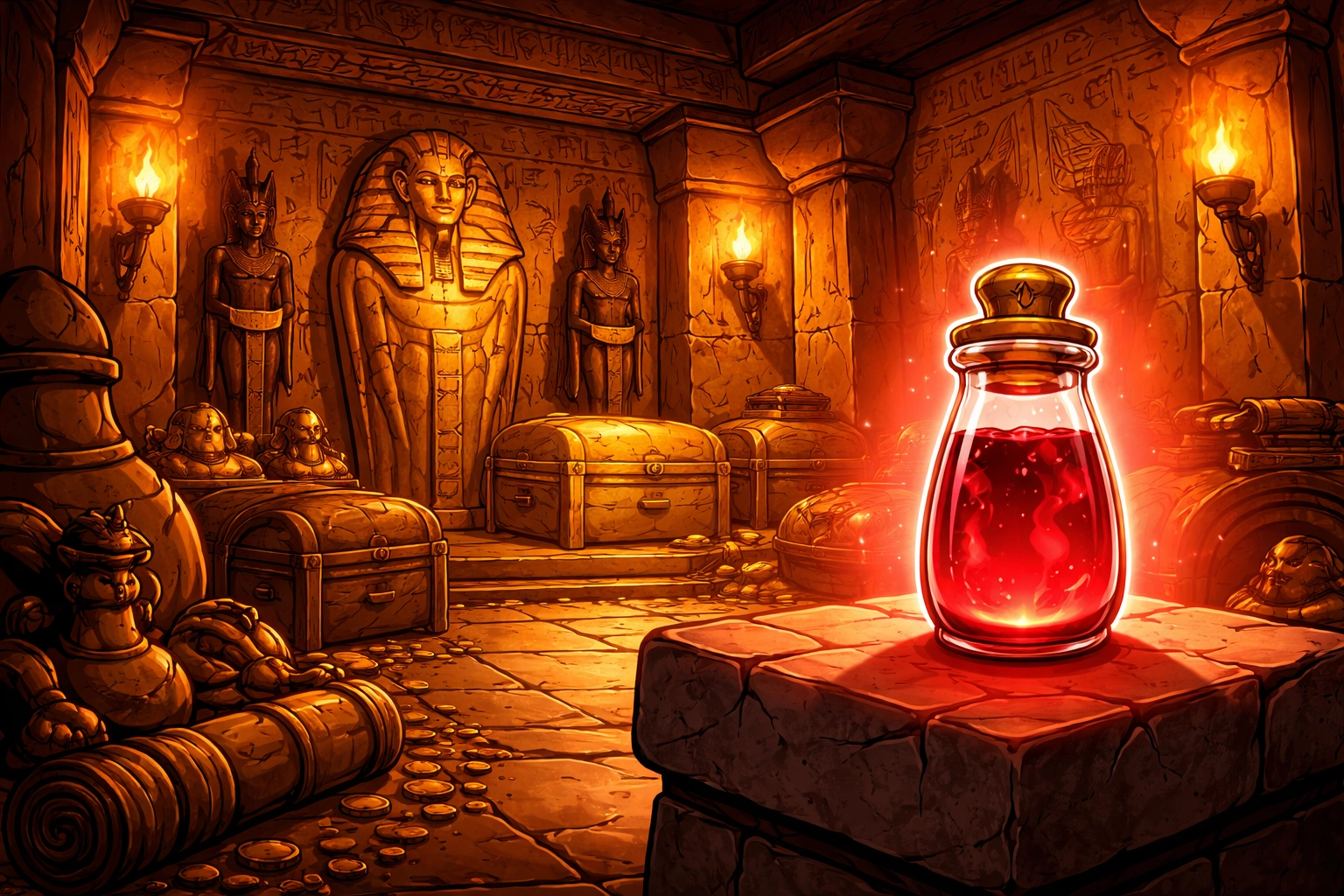
The earliest whispers trace back to the Middle East, where legends claimed that a mystical red substance could be harvested from the mouths of Egyptian mummies. This "red mercury" was supposedly a powerful healing elixir, capable of curing diseases, extending life, and generally doing all the things ancient alchemists dreamed about.
How it got from "mummy medicine" to "nuclear superweapon" is a testament to how conspiracy theories evolve. As Western archaeologists and traders made contact with these legends, the stories morphed. By the Cold War era, red mercury had shed its mystical origins and become something far more sinister:
A Soviet doomsday ingredient.
The Cold War Remix: Nukes, Spies, and Very Suspicious Briefcases
During the Cold War, rumors exploded that Soviet scientists had developed red mercury as a classified nuclear material. The claims varied wildly:
- Some said it was a compound of pure mercury and mercury antimony oxide
- Others claimed it could trigger fusion reactions without traditional nuclear components
- The wildest versions suggested it could fit a nuclear bomb inside a briefcase
Intelligence agencies investigated. Arms dealers tried to sell it. Sting operations nabbed people attempting to buy vials of mysterious red liquid for millions of dollars.
The problem? None of it ever checked out.
Every sample analyzed turned out to be a scam, red-dyed mercury, paint, or other worthless substances. The buyers were chasing a ghost. The sellers were running cons.
But here's the thing about great lies: they don't die just because they're debunked.
Red Mercury Today: Disinformation's Favorite Prop
Fast forward to the present, and red mercury is still making headlines, just not for the reasons you'd expect.

Modern intelligence agencies have tracked how disinformation campaigns weaponize the red mercury myth. According to Ukrainian intelligence reports, Russia has revived Cold War-era red mercury narratives as part of information operations, including:
- Fake "black boxes" with labeled capsules designed to suggest nuclear materials
- Planted evidence meant to implicate foreign officials in illegal arms trafficking
- Social media campaigns that spread fear and erode trust in institutions
The goal isn't to sell actual red mercury. It's to keep the myth alive, because a population that believes in shadowy nuclear threats is easier to manipulate.
It's the ultimate conspiracy feedback loop: the lie serves the purpose, so the lie keeps getting told.
Why Fiction Writers Can't Quit Red Mercury
Okay, so red mercury is probably fake, and definitely dangerous as a disinformation tool.
So why do thriller writers keep coming back to it?
Because it's perfect.
Think about it:
- ✅ Mysterious – Nobody can definitively prove OR disprove its properties
- ✅ High-stakes – Nuclear weapons make everything more tense
- ✅ Visually compelling – A glowing red vial? Come on. That's cinematic gold.
- ✅ Historically grounded – The Cold War connections give it weight
- ✅ Morally gray – Governments, arms dealers, and scientists are all implicated
Red mercury lets writers tap into real-world paranoia while building fictional stakes that feel earned. It's not magic: it's science that might exist. And that ambiguity is storytelling rocket fuel.
How The Rainsavers Uses Red Mercury (Without Spoiling Everything)

In The Rainsavers series, we don't shy away from real-world mysteries. Our villains at Mortalis aren't just cartoon bad guys twirling mustaches: they're connected to the same shadowy networks, conspiracy theories, and ancient mysteries that fuel real-world paranoia.
Red mercury fits right into their playbook.
Without giving too much away, let's just say that when Mortalis gets their hands on something that might be red mercury, our team faces some serious questions:
- Is it real this time?
- What happens if it works?
- And how do you stop a weapon that officially doesn't exist?
The Rainsavers blend eco-adventure with tech mysteries precisely because the real world is stranger: and scarier: than pure fiction. When your villains exploit the same disinformation tactics that real governments use, the stakes feel real.
The Takeaway: Why We Love Impossible Weapons
Red mercury represents something deeper than just a fictional MacGuffin. It's a mirror for our anxieties: about nuclear weapons, about government secrets, about the terrifying idea that somewhere, someone might have access to something truly catastrophic.
That's why the myth endures. That's why intelligence agencies still track it. And that's why fiction keeps returning to it.
Because the scariest stories aren't pure fantasy. They're the ones that make you wonder:
What if it's real?
Quick Reference: Red Mercury Facts vs. Fiction
| Claim | Reality |
|---|---|
| Ancient healing elixir from mummies | Legend with no scientific basis |
| Soviet nuclear booster compound | Unverified; no confirmed samples |
| Available on the black market | Scams and sting operations only |
| Used in modern disinformation | Confirmed by intelligence agencies |
| Makes fiction more terrifying | Absolutely, 100% true |
Ready to See What Mortalis Is Really Up To?
Red mercury is just one piece of the puzzle. The Rainsavers series digs into ancient tech, environmental threats, and shadowy organizations that make real-world conspiracies look tame.
Curious about what else Mortalis is hiding? Dive into the mystery at rainsavers.com.
