
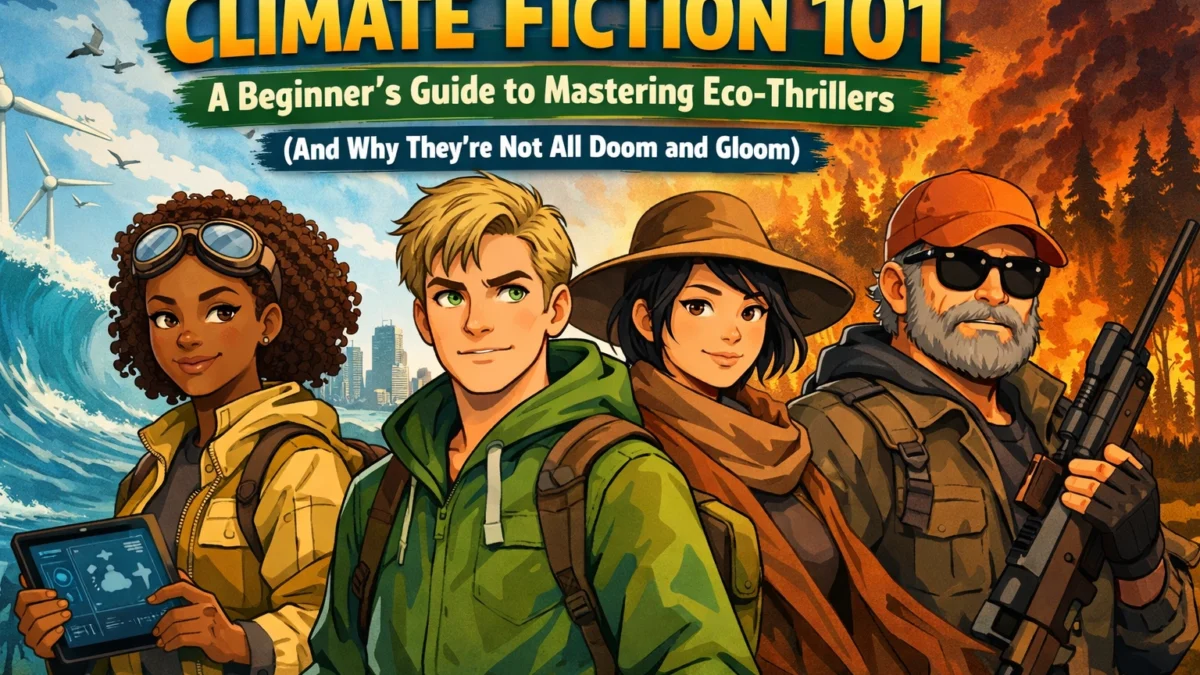
Meta Description: Discover why climate fiction isn't all apocalypse and despair. Learn how eco-thrillers like The Rainsavers blend action, hope, and real science to make climate stories thrilling, not depressing.
Let's get one thing straight: climate fiction (or cli-fi, if you're feeling fancy) doesn't have to be a bummer.
Sure, you've probably heard the term thrown around alongside words like "dystopian," "collapse," and "existential dread." And yeah, some cli-fi definitely leans into the apocalypse vibes. But here in 2026, eco-thrillers have evolved into something way more exciting, stories packed with adventure, clever problem-solving, and characters who actually do something about the mess we're in.
If you've been avoiding climate fiction because you thought it would feel like homework or leave you spiraling into eco-anxiety, this guide is for you. We're breaking down what makes eco-thrillers tick, why they're genuinely fun to read, and how series like The Rainsavers prove that climate stories can be thrilling, hopeful, and wildly entertaining.
What Even Is Climate Fiction?
Climate fiction centers on a changed or changing climate as a major plot point, not just a throwaway background detail. It's not about tossing in a random wildfire for drama. The climate itself has to matter to the story, the characters, and the choices they make.
Here's what sets cli-fi apart: human culpability. These stories recognize that climate change stems from human actions, which fundamentally shapes how characters respond. Instead of framing environmental disaster as some unstoppable force of nature (looking at you, random asteroid movies), eco-thrillers grapple with the fact that we created this problem, and that means we can be part of the solution.
The best part? Cli-fi isn't locked into one genre. You'll find dystopian thrillers, speculative adventures, realist dramas, and even utopian tales exploring what a better future could look like. It's a storytelling playground where science fiction meets action-adventure meets emotional depth.

Why Eco-Thrillers Aren't Just Dystopian Doomscrolling
Okay, let's address the elephant in the (overheating) room: yes, a lot of early climate fiction leaned hard into collapse scenarios. Flooded cities, resource wars, mass extinction, basically everything that keeps you up at night after reading too many IPCC reports.
But here's the thing: modern eco-thrillers have gotten way smarter. They balance the stakes with resilience, ingenuity, and hope. Instead of wallowing in despair, they ask a more interesting question: How do people adapt, innovate, and fight back when the planet is changing around them?
Think less "everyone dies in a flood" and more "tactical teams race to stabilize ecosystems before it's too late." That's where the thriller element kicks in. High-stakes missions. Time pressure. Characters with specialized skills working together to solve problems that feel impossible.
Take The Rainsavers, for example. The series follows a covert team of scientists, tacticians, and field operatives racing against ecological collapse in the Amazon rainforest. They're equipped with cutting-edge tech, high-tech field respirators, bio-monitoring gear, tactical expedition equipment, and they're facing real climate-driven threats. But the focus isn't on doom. It's on action, strategy, and the very real possibility that human ingenuity can turn things around.
The Emotional Core: Why Characters Matter More Than Catastrophe
Here's something most people don't realize about eco-thrillers: the drama rarely revolves around one hero saving the world. Climate change is too systemic, too global for a lone protagonist to fix. So instead, the tension comes from how characters cope, adapt, and navigate this reality.
That's what makes these stories emotionally potent. You're not just watching disasters unfold, you're following real people struggling with fear, hope, guilt, and determination. How do you keep going when the stakes feel overwhelming? How do you balance personal relationships with the weight of planetary survival? What does heroism even look like when the threat isn't a supervillain, but centuries of accumulated carbon?

This emotional accessibility is crucial. Climate change can feel abstract when you're reading stats about a 1.5-degree temperature rise. But when you're following a character navigating a collapsing ecosystem, someone who's scared, determined, and deeply human, it suddenly becomes real. That's the power of cli-fi: it makes the stakes feel urgent, not just intellectually understood.
In The Rainsavers, characters like Jungle Dart and Sunbyte aren't just archetypes, they're people with distinct personalities, expertise, and emotional arcs. Jungle Dart brings bio-tactical knowledge and field experience. Sunbyte handles tech, data analysis, and problem-solving under pressure. Their interactions, conflicts, and growth drive the story forward, even as they're racing against ecological tipping points.
Why Hope Isn't Naive, It's Strategic
Let's talk about hope for a second, because there's this weird assumption that "hopeful" climate fiction is somehow less realistic or watered down. That's nonsense.
Hope in eco-thrillers isn't about pretending everything will magically fix itself. It's about showing that human beings are capable of incredible things when we work together. It's about innovation, adaptation, and the sheer refusal to give up. That's not naive, that's strategic storytelling.
Contemporary cli-fi explores resilience in the face of real challenges. It imagines alternative futures where we actually responded to climate science in time. Where we invested in green tech, protected ecosystems, and built systems that prioritize people and planet over profit. Sure, the path is messy and fraught with setbacks, but the underlying message is clear: the future isn't written yet.
The Rainsavers leans into this balance. Yes, the team is fighting against ecological collapse. Yes, the threats are real and scientifically grounded. But the series also showcases ingenuity, teamwork, and the tangible impact of bold action. It's thrilling because the stakes are high: and because the characters are smart, capable, and determined to make a difference.
What Makes a Great Eco-Thriller?
So what should you look for if you're diving into climate fiction for the first time? Here are the hallmarks of a killer eco-thriller:
1. Accelerated pacing with real stakes. The best eco-thrillers don't drag. They move fast, with crisis moments that keep you turning pages.
2. Grounded science that feels real. You don't need a PhD to follow the story, but the environmental details should be rooted in actual science, not hand-waved away.
3. Character-driven drama. The plot might revolve around saving an ecosystem, but the emotional core is always about the people doing the saving.
4. Settings that transform. Eco-thrillers take place in environments undergoing dramatic change: rainforests under threat, coastlines vanishing, biomes shifting. The setting itself becomes a character.
5. A tone that balances urgency and hope. The story should make you care without leaving you despairing. The goal is to engage you emotionally, not crush your soul.
The Rainsavers nails every single one of these elements. It's fast-paced, scientifically grounded, emotionally compelling, and set in the rapidly changing Amazon rainforest. And crucially, it proves that eco-thrillers can be as entertaining as any spy thriller or action-adventure series: while also making you think about the real-world stakes.
Ready to Dive In?
If you've made it this far, you're officially ready to explore the world of eco-thrillers. And honestly? There's no better place to start than with a series that gets the balance just right.
The Rainsavers delivers tactical action, ecological intrigue, and characters you'll actually care about: all wrapped up in a story that feels urgent, hopeful, and wildly entertaining. No doom-scrolling required.
Read Book One now and see for yourself why climate fiction is way more thrilling than you thought.
