Meta description: Want to save the planet but don't know where to start? Learn how The Rainsavers built the ultimate eco-adventure team with these 5 essential roles, from field leaders to tech hackers to spiritual guides.
Look, we all know the solo hero thing is getting old. Whether you're planning a real-world conservation project or just obsessed with how fictional teams actually function, one thing's crystal clear in 2026: the best missions need diverse teams.
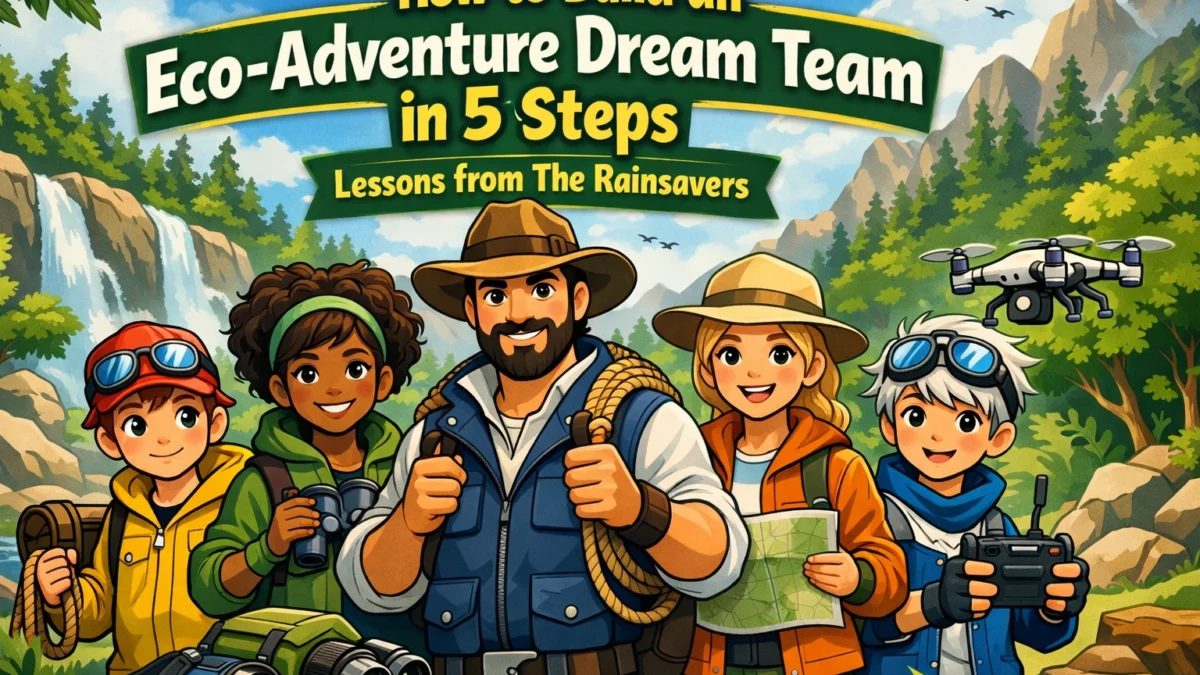
The Rainsavers didn't stumble into success by accident. They built a squad with complementary skills, deep respect for the environment, and zero tolerance for egos getting in the way of the mission. Here's how they did it, and what you can learn from their approach.
Step 1: Start with a Leader Who Actually Leads (Not Just Bosses People Around)
Every great team needs someone calling the shots, but here's the thing, leadership isn't about being the loudest or the strongest (though in Tom's case, he's definitely both).
Tom, known as Primal, leads The Rainsavers with a rare combination: superhuman strength, enhanced agility, heightened senses, and, most importantly, the humility to listen to his team. He doesn't steamroll over everyone's ideas. He takes responsibility when things go sideways. And when the team faces an impossible choice, he's the one who steps up to make it.

Your takeaway: Whether you're assembling a conservation nonprofit or a book club tackling climate fiction, your leader needs courage and emotional intelligence. The "lone wolf" archetype? Dead in 2026. Your leader should be the person everyone trusts to have their back, not the person who needs to prove they're the smartest in the room.
Step 2: Bring in the Brainy Ones (Science + Tech = Unstoppable)
You can't punch your way out of every problem. Sometimes you need someone who can analyze soil samples, hack into encrypted servers, or explain why that mysterious red mercury compound is way more dangerous than anyone realized.
Dr. Manaus is The Rainsavers' secret weapon. He's the scientific genius providing strategies, tools, and that crucial "wait, don't touch that" moment before someone makes a catastrophic mistake. Pair him with Lina, who brings elite hacking skills and advanced computer knowledge, and you've got a one-two punch of brains and tech savvy that can handle anything from bioweapon threats to digital surveillance.
Here's what's cool: neither of them tries to do the other's job. Dr. Manaus focuses on the environmental science and field research. Lina handles the tech infrastructure and digital trails. They complement each other instead of competing.
Your takeaway: Don't hire five versions of the same person. Find people whose expertise overlaps just enough to communicate, but who bring genuinely different skill sets to the table. In 2026, the best teams blur the lines between naturalist, technologist, and strategist, but they know their lanes.

Step 3: Someone on Your Team Needs to Actually Know the Land
This one's non-negotiable.
José was raised by the Solimoes Indian tribe, and his connection to the Amazon rainforest runs deeper than any textbook knowledge ever could. He developed heightened senses and exceptional jungle survival skills that make him an invaluable tracker and guide. When the team ventures into uncharted territory (which, let's be honest, happens constantly), José is the difference between life and death.
Indigenous knowledge isn't a nice-to-have. It's essential. The people who've lived in harmony with an ecosystem for generations understand things that take scientists decades to document. They know which plants heal, which rivers flood, which trails are safe, and which sounds mean "get out now."
Your takeaway: If you're working on environmental projects, real or fictional, center the voices of people who actually live in and understand the ecosystem. Don't parachute in with fancy degrees and zero local knowledge. Find your José. Learn from them. Respect their expertise. And for the love of the planet, pay them properly.
Step 4: Somebody Better Know First Aid (Because Things Get Messy)
Adventure sounds glamorous until someone's bleeding out in the middle of the jungle with the nearest hospital three days away.
Lina doesn't just hack databases, she's also a skilled nurse with serious medical expertise. Field injuries, tropical diseases, venomous bites, dehydration, she's seen it all and patched it all. While the rest of the team can focus on the mission, she's the safety net keeping everyone alive long enough to actually finish it.

This role often gets overlooked in team-building conversations, but it shouldn't. Physical endurance means nothing if you can't treat injuries on the fly. And in high-stakes environments (rainforests, mountaintops, disaster zones), professional medical training isn't optional, it's survival.
Your takeaway: Make sure someone on your team has practical health and safety skills. CPR certified? Wilderness first aid? Trauma response training? These aren't just box-checking exercises. They're the difference between a successful mission and a tragedy. In 2026, we're way past pretending everyone's invincible.
Step 5: Don't Forget the Wisdom Keeper (Yes, Really)
Okay, hear me out on this one.
Modern eco-adventure teams tend to over-index on tactical skills and under-value spiritual or holistic perspectives. That's a mistake. Senhor Selva serves as The Rainsavers' spiritual guide, providing both practical wisdom and mystical knowledge that grounds the team's mission in something bigger than just "stop the bad guys."
He's a healer, sure. But he's also the person who reminds everyone why they're fighting in the first place. When the team starts seeing the rainforest as a battlefield, he reframes it as a living system they're stewarding. When despair creeps in, he offers perspective that no amount of tactical planning can provide.
This isn't woo-woo nonsense. It's the recognition that environmental work requires meaning and connection, not just strategy and force. The best teams balance the material and the spiritual. They understand ecosystems and their place within them.
Your takeaway: Find someone who keeps your team grounded in values, not just objectives. Maybe it's a faith leader. Maybe it's an elder from the community you're serving. Maybe it's just the person on your team who asks "but should we?" when everyone else is asking "how fast can we?" Don't skip this role. You'll regret it.

Putting It All Together
Here's the thing about The Rainsavers: they work because they respect each other's expertise. Tom doesn't try to out-hack Lina. José doesn't pretend to understand chemistry better than Dr. Manaus. Senhor Selva doesn't muscle in on tactical decisions.
They built a team where every role matters. Where every voice gets heard. And where the mission: protecting the rainforest and stopping existential threats: stays front and center.
If you're building your own eco-adventure team in 2026 (literal or literary), this is your blueprint:
- Leader with courage + humility
- Science + tech expertise working in tandem
- Deep indigenous/local knowledge
- Medical and safety skills
- Spiritual wisdom and perspective
Get those five pieces right, and you've got a foundation that can handle anything: corporate greed, rogue scientists, ancient mysteries, or just the daily chaos of trying to protect the planet in an era of climate crisis.
Ready to See This Team in Action?
The Rainsavers isn't just a theoretical framework: it's a six-book adventure series where this team faces off against real threats, impossible odds, and the kind of page-turning action that makes you forget you're learning about rainforest ecology.
Start reading Book One now and watch how a perfectly-balanced team takes on villains, uncovers ancient secrets, and proves that saving the world takes more than just muscle: it takes a squad.
Because in 2026, we're done with solo heroes. We're here for the dream teams.
