Meta Description: Feeling overwhelmed by the headlines? In 2026, high-stakes action-adventure stories like The Rainsavers are the ultimate cure for climate doomerism. Discover how tactical heroics are replacing anxiety with action.
Let’s be real for a second: the "vibe" of 2026 can be a bit heavy. We’ve all seen the headlines, checked the heat maps, and probably spent a few too many late nights scrolling through "doomer" threads on social media. It’s easy to feel like the world is just one big, slow-motion disaster movie.
But here’s the thing: we’re tired of being sad. We’re tired of the "end of the world" being presented as a foregone conclusion. That’s why, over the last year, something has shifted in the way we consume stories. We don’t want a lecture; we want a mission. We don’t want to feel helpless; we want to see a team of experts with high-tech field respirators jumping out of a plane to fix the problem.
Enter the rise of the modern eco-adventure. At The Rainsavers, we believe that high-stakes fiction isn’t just an escape: it’s the antidote to climate doomerism.
The "Doomer" Trap and Why We’re Bored of It
Climate doomerism is that paralyzing feeling that it’s "too late" to do anything. In fiction, this usually manifests as bleak, post-apocalyptic stories where everyone is miserable and eating canned beans in a basement.
By 2026, audiences are officially over it. We’ve realized that doom-scrolling doesn’t lower carbon levels, and watching "sad" media just makes us want to take a three-year nap. People are pivoting toward stories that offer agency.
High-stakes adventure series take the very real threats we face and turn them into obstacles that can be overcome with a bit of grit, some cutting-edge tech, and a solid team. It turns a "global crisis" into a "tactical expedition." And honestly? That feels a whole lot better.

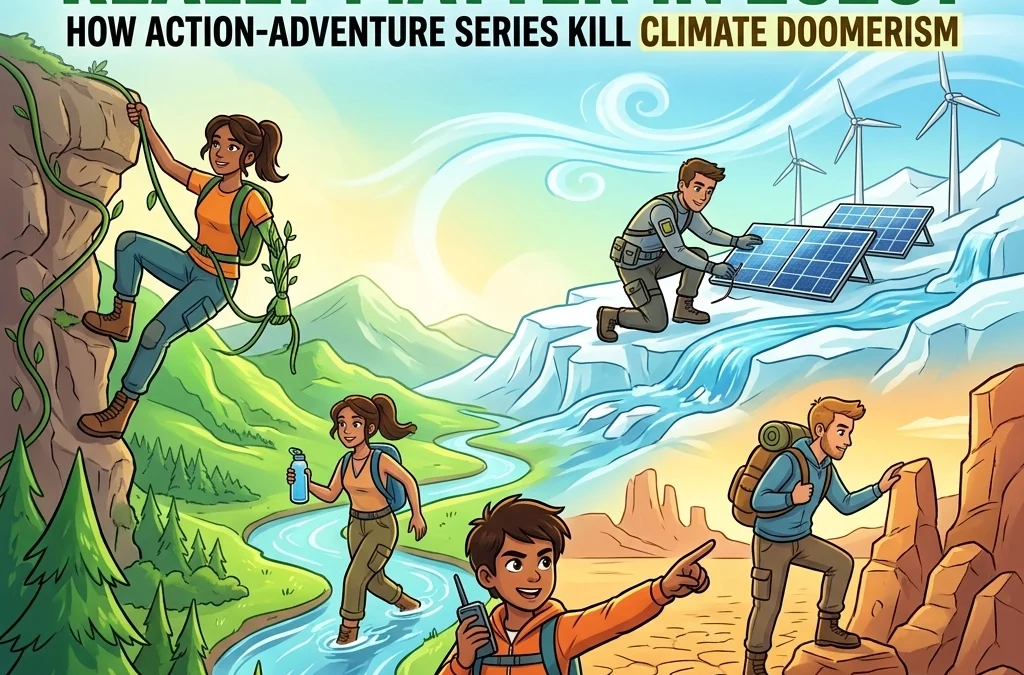
Alt text: A team of eco-adventure heroes standing on a rugged ridge, checking tactical maps on wrist-mounted displays.
Action is the Ultimate Anxiety Med
There’s a psychological reason why action-adventure is taking over the bestseller lists in 2026. When we read about characters like Leonard West or the rest of the Rainsavers crew facing down a high-stakes environmental threat, our brains shift from "freeze" mode to "fight" mode.
Action-adventure series provide:
- A sense of control: Seeing a problem solved through ingenuity and bravery.
- Visualizing the future: Showing a world where we actually fight back.
- Character-driven hope: It’s hard to feel doomed when you’re rooting for a team that refuses to give up.
If you’ve been struggling with climate anxiety, you know that the best way to snap out of it is to focus on a goal. Adventure fiction gives us those goals: even if they’re fictional: and reminds us that human ingenuity is a pretty powerful force.
Why 2026 Loves a High-Tech Field Respirator
You might have noticed that adventure gear has gotten a lot cooler lately. In the world of The Rainsavers, it’s all about the intersection of tactical utility and environmental necessity. We’re talking high-tech field respirators, advanced filtration systems, and survival gear designed for extreme weather events.
Why does this matter? Because it makes the "solution" look as cool as the problem is scary.
In 2026, we’re seeing a trend called "darecations": where people seek out high-stakes adventure travel. This desire for real-world adrenaline is spilling over into our reading habits. We want to see heroes who are prepared. We want to see the gear, the gadgets, and the tactical planning that goes into saving a watershed or stopping a rogue environmental threat. It’s not just about "saving the planet" in an abstract sense; it’s about a team-based adventure getting the job done.

Alt text: Close-up of a high-tech tactical field respirator with glowing HUD elements reflecting in the visor.
Breaking the "Science is Boring" Myth
One of the biggest hurdles for environmental fiction in the past was that it felt too much like school. You’d open a book expecting a thrill ride and end up with a 40-page essay on nitrogen cycles.
Action-adventure series in 2026 have killed that trope. Now, the science is the "weapon." Whether it's using ancient technology to fight modern threats or deploying high-altitude rain-seeding tech, the "how" is just as exciting as the "who."
By framing environmental solutions as high-stakes missions, series like The Rainsavers make the world-saving stuff feel like a heist or a spy thriller. It’s not a chore to learn about the planet when you’re wondering if the protagonist is going to make it out of a collapsing glacier cave in time.
Characters You Actually Want to Hang Out With
Let’s face it: a lot of "green" heroes of the past were a bit… preachy. They spent more time judging you for your plastic straw than they did actually doing cool stuff.
Modern adventure series have fixed this by focusing on relatable characters. The Rainsavers aren't perfect; they’re specialists, rogues, and scientists who happen to be the only ones standing between us and catastrophe. They have banter. They have "oops" moments. They get tired.
When the characters feel like real people, the stakes feel more personal. You aren't just reading about "The Environment™": you’re reading about your friends trying to keep their home from falling apart. That connection is what ultimately kills doomerism. It replaces the vast, empty feeling of a "dying planet" with the vibrant, noisy reality of a team that’s too busy working to worry about the odds.

Alt text: A candid shot of the Rainsavers team laughing around a portable stove in a high-tech field tent during a storm.
The Verdict: Does Adventure Matter?
So, back to the original question: Does high-stakes adventure really matter in 2026?
Absolutely. In fact, it might matter more now than it ever has before. We are at a crossroads in how we think about our future. We can either retreat into doomerism and give up, or we can embrace the spirit of adventure.
Fiction is the training ground for our collective imagination. If we can’t even imagine a world where we fight back and win, how are we ever going to build one? High-stakes series provide the blueprint for that fighting spirit. They remind us that even when the clouds are dark and the respirator is the only thing helping us breathe, there’s still a mission to complete.
And honestly, jumping into a story about a tactical expedition is way more fun than reading another "we’re all doomed" op-ed.
Ready to join the mission?
If you're tired of the doom and ready for some high-octane hope, it's time to dive in. The world needs Rainsavers; and maybe, you do too.
Want more behind-the-scenes looks at our tactical gear or team banter? Check out The Rainsavers Blog for more field notes and world-building leaks!
