Meta Description: In 2026, we're still ignoring scientists. That's why fiction needs heroes like Dr. Mubari, characters who prove listening to experts isn't boring, it's survival. The Rainsavers gets it right.

Here's a fun fact from 2026: we're still really bad at listening to scientists.
Politicians nod politely during briefings, then do whatever polls better. CEOs commission reports, then ignore them when quarterly earnings are on the line. And the rest of us? We scroll past climate data to watch videos of cats falling off counters.
Which is exactly why fiction needs more characters like Dr. Mubari.
The Expert We Don't Deserve (But Desperately Need)
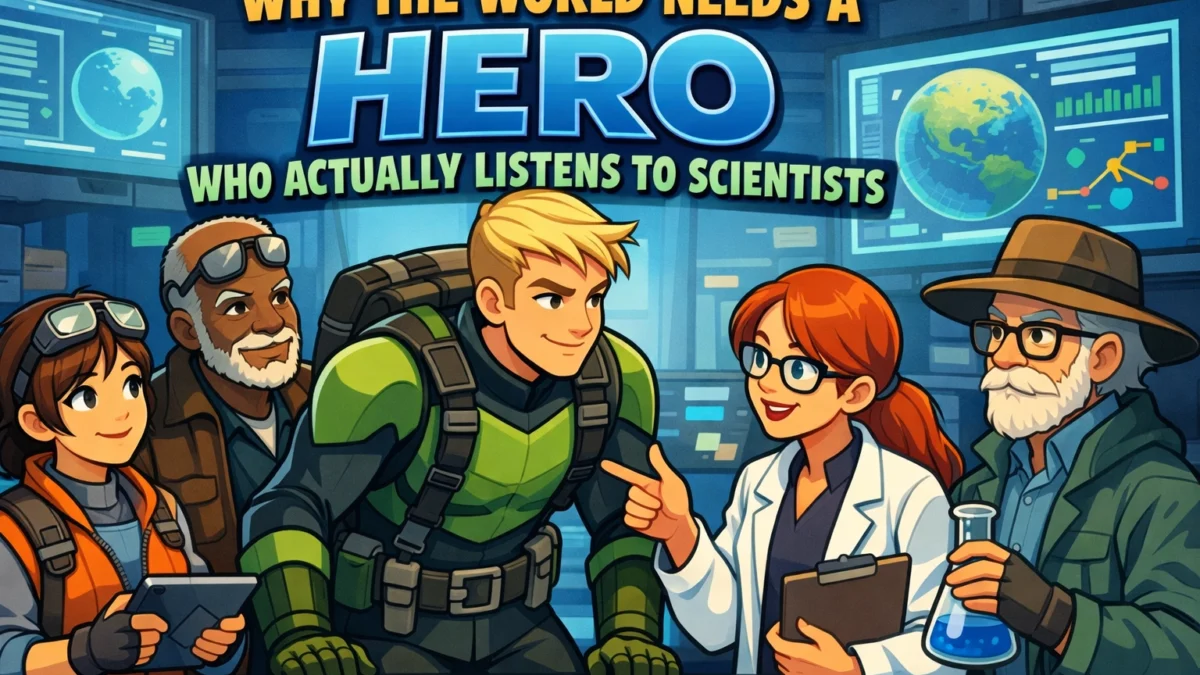
Dr. Mubari isn't your typical action-adventure scientist. You know the type, lab coat flapping dramatically while they shout jargon at the hero who's too busy punching things to listen. Nope. In The Rainsavers, Dr. Mubari is the person everyone actually listens to when environmental catastrophe comes knocking.
Imagine that. A story where the expert's advice isn't treated as optional background noise.
The character works because she represents something we're terrible at in real life: integrating scientific evidence into decision-making when it actually matters. Not later. Not "we'll circle back to that." Right now, in the moment, when lives hang in the balance.

When Fiction Gets It Right (And Reality Gets It Wrong)
Look, we've got decades of data showing what happens when governments ignore scientific advisors. Mercury contamination that costs billions to clean up. Public health policies based on "what plays well" instead of what actually works. FDA officials overruling their own scientific panels because… politics.
The pattern is exhausting. And preventable.
That's what makes Dr. Mubari's role so refreshing. She's not there to deliver exposition dumps that get immediately dismissed. She's integral to survival. The team doesn't humor her, they depend on her expertise about ecological systems, environmental threats, and how everything connects.
It's a radical concept in 2026: trusting the person who spent years studying the exact problem you're facing.
Why Dismissing Experts Makes for Bad Heroes (And Worse Policy)
Here's the thing about ignoring scientific advice, it doesn't just happen in stuffy government offices. It's everywhere:
We ignore it when it's inconvenient. Climate data suggests we change course? Nah, that's future-us's problem. Scientists warn about contamination? But the cleanup costs…
We ignore it when we don't understand it. Scientific methods feel complicated, so we default to gut feelings and vibes. Which works great until, you know, it absolutely doesn't.
We ignore it because we're overwhelmed. There's too much information, too many studies, too many experts saying contradictory things (spoiler: they're usually not contradictory, we just lack context).
Dr. Mubari cuts through all that noise. She translates complex ecological systems into actionable intelligence. She doesn't dumb things down, she makes them clear. There's a huge difference.

The Hero Who Actually Does Their Homework
What's brilliant about The Rainsavers approach is that respecting scientific expertise doesn't make the story boring. It makes it smarter.
Dr. Mubari brings knowledge that turns impossible situations into solvable problems. Understanding how ecosystems work reveals solutions that brute force never would. Recognizing environmental patterns predicts threats before they become catastrophes.
This is the hero we need in 2026, someone who proves that listening to experts isn't weakness, it's strategy.
Too many adventure stories treat intelligence and action like they're opposites. The brainy character stays back at base while the "real hero" charges forward. Dr. Mubari demolishes that false choice. Science is the action. Understanding the problem is the heroism.
Why This Matters Beyond Fiction
Fiction shapes how we see the world. When stories consistently portray scientific advisors as obstacles to overcome or boring sidekicks to tolerate, we internalize that. We start believing experts are buzzkills instead of essential team members.
The Rainsavers flips that script entirely.
By centering a character whose scientific knowledge drives the plot forward, the series does something quietly revolutionary, it makes evidence-based decision-making look exactly as cool as it should be.
Because here's the truth we keep forgetting: scientists aren't asking to be listened to because they're power-hungry or elitist. They're asking because ignoring evidence has catastrophic consequences. Lower IQs in children exposed to mercury. Billions in environmental cleanup costs. Entire ecosystems collapsing.
Fiction that shows characters listening to scientific expertise, really listening, not just nodding before doing whatever they wanted anyway, gives us a template. It demonstrates what functional decision-making looks like when the stakes are high.
The Difference Between Consulting and Actually Listening
There's a scene in Book One where Dr. Mubari presents her analysis of an environmental threat. The team doesn't just thank her and move on. They change the plan based on her findings. They adapt their entire strategy because the science says they have to.
That's not common in adventure fiction. Usually, the expert warns, the hero ignores them, everything goes wrong, and we're supposed to find it exciting. The Rainsavers recognizes that tension doesn't require stupidity.
Real stakes come from smart people making informed decisions that still carry enormous risk. That's way more compelling than watching characters ignore obvious red flags for plot convenience.
What We're Missing
In 2026, we're surrounded by complex, interconnected crises that require scientific understanding to address. Climate change, ecological collapse, public health emergencies, none of these respond to wishful thinking or charisma alone.
We need decision-makers who listen to experts. We need systems that prioritize evidence over expedience. We need cultures that value scientific literacy.
And yeah, we need stories that model what that actually looks like.
Dr. Mubari represents the hero we keep saying we want but rarely write: brilliant, essential, listened to. She's proof that you can create compelling adventure fiction where intelligence isn't the comic relief: it's the core competency that keeps everyone alive.
Read Book One Now
Want to see what happens when a hero actually takes scientific advice seriously? When expertise drives action instead of slowing it down? When understanding complex systems becomes the key to survival?
Read Book One now and meet the environmental expert who proves that listening to scientists isn't just smart: it's the most heroic choice you can make.
Because the world doesn't need another hero who ignores the experts until it's almost too late. We've got plenty of those in real life already.
