
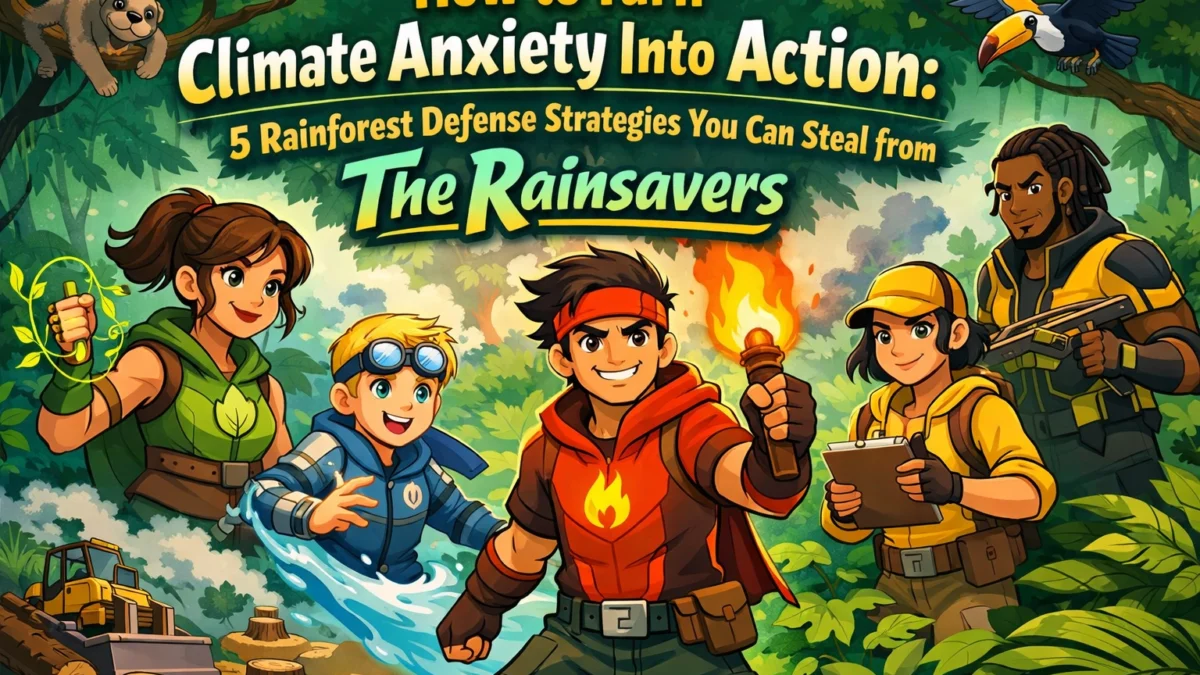
Meta Description: Feeling climate anxiety? Channel it into action with these 5 rainforest defense strategies inspired by The Rainsavers. Turn worry into real-world impact today.

Look, we get it. It's 2026, and every time you open your news feed, there's another headline about deforestation, climate disasters, or ecosystems collapsing. The anxiety is real. The doomscrolling is exhausting. And sometimes it feels like you're just one person watching the world burn while corporations make PowerPoint presentations about "sustainability initiatives."
But here's the thing: The Rainsavers didn't save the Amazon by having panic attacks (though, let's be honest, Manaus probably had a few). They turned fear into strategy, worry into weapons, and anxiety into actual change.
So let's steal their playbook. These five strategies come straight from our favorite eco-adventure team, adapted for you, yes, you, sitting there in your pajamas wondering if your reusable water bottle actually matters.
Spoiler: It does. But we're going way beyond water bottles.
Strategy #1: Pull a "Manaus" – Know Your Enemy (and Use Science as Your Superpower)
In The Rainsavers universe, Manaus is the team's scientific genius. She doesn't just feel bad about environmental destruction, she studies it. She knows the data, understands the ecosystems, and uses that knowledge to outsmart threats before they happen.
Your real-world move: Stop doomscrolling and start actually learning about one specific environmental issue that fires you up. Not everything. Just one thing. Maybe it's rainforest conservation, maybe it's ocean plastics, maybe it's your local watershed.

Spend 20 minutes this week diving deep into one organization working on that issue. What are they doing? What does the science say actually works? Who are the real villains in this story (hint: it's usually corporate interests, not individual consumers)?
Knowledge kills anxiety. When you understand the actual mechanisms of destruction and restoration, you stop feeling helpless and start seeing leverage points.
Strategy #2: Build Your Squad (The Rainsavers Didn't Work Solo)
Here's what makes The Rainsavers actually interesting: they're a team. Primal brings raw determination. Mortalis brings street-level knowledge. Manaus brings the science. Together, they're unstoppable. Separately? They'd probably be dead by chapter three.
Climate anxiety thrives in isolation. You're sitting alone, thinking you have to save the world by yourself with your tote bags and LED bulbs.
Your real-world move: Find your people. Join one local environmental group this month. Could be a tree-planting crew, a watershed cleanup team, a community garden, or even just a book club that reads eco-fiction (hey, might we suggest The Rainsavers?).

The point isn't to become an activist overnight. The point is to stop carrying this weight alone. When you show up with other people who give a damn, the anxiety shrinks and the action multiplies. Plus, you might actually have fun, which is suspiciously absent from most climate conversations.
Strategy #3: Go Guerrilla (Small Acts, Big Disruption)
The Rainsavers excel at guerrilla tactics: quick strikes, strategic interference, making a huge impact with limited resources. They don't wait for permission from authorities who are probably compromised anyway. They find the pressure points and push.
Now, we're not suggesting you do anything illegal (our lawyers made us say that). But we are suggesting you stop waiting for governments and corporations to give you permission to make a difference.
Your real-world move: Identify one system in your life where you can be a disruptor. Maybe it's:
- Organizing your workplace to switch to a green energy provider
- Starting a petition to stop a local development threatening green space
- Showing up at city council meetings to advocate for tree protection ordinances
- Using social media to call out greenwashing when you see it
Pick one thing that's slightly uncomfortable, slightly confrontational, and slightly outside your comfort zone. That's where change happens.
Strategy #4: Follow the Money (Like Mortalis Would)
Mortalis understands something crucial: follow the money, find the corruption. Environmental destruction isn't random: it's driven by profit margins and quarterly earnings reports.
Your anxiety about climate change? That's actually your instincts telling you something is deeply wrong with the system. Listen to that instinct.
Your real-world move: Do a 30-minute audit of where your money goes. Bank account, retirement fund, investments (if you have them), subscriptions, the whole thing.

Are you accidentally funding deforestation through your bank? Probably. Most major banks invest in fossil fuels and land exploitation. Switch to a credit union or a bank with actual environmental standards.
Do your investment accounts support industries destroying ecosystems? Divest and reinvest in funds that align with your values.
This isn't about individual guilt: it's about understanding the systems you're part of and strategically withdrawing your support. Money is power. Where you put it matters.
Strategy #5: Tell Better Stories (Because That's What The Rainsavers Is Really About)
Here's the meta move: The Rainsavers exists because stories shape reality. When we only hear stories about destruction, we learn helplessness. When we hear stories about eco-heroes fighting back and actually winning? We learn possibility.
Your climate anxiety is partially fueled by a narrative problem. The dominant story is: "Everything is screwed and there's nothing you can do."
Your real-world move: Become a storyteller. Share wins, not just doom.
When you see a local park cleaned up: post about it. When a company makes an actual (not greenwashed) change: celebrate it loudly. When indigenous communities win land rights: amplify their victory.
Start conversations about climate solutions instead of just climate problems. Recommend books, shows, and series (ahem) that feature environmental heroes instead of environmental apocalypse porn.

The narrative we tell ourselves determines the actions we take. Tell a story where people fight back and sometimes win. Tell a story where you're not a helpless victim but an active defender. Tell The Rainsavers story in your own life.
The Real Talk Section
Look, these five strategies won't single-handedly save the Amazon. You're not going to reverse climate change with a weekend book club and a credit union switch.
But that's not the point. The point is transforming anxiety: which is paralyzing: into agency, which is activating.
The Rainsavers aren't superheroes with magic powers. They're people who saw something worth defending and decided to defend it, strategy by strategy, fight by fight, small victory by small victory. They get knocked down. They make mistakes. They probably have existential crises during commercial breaks.
But they keep moving. And moving beats scrolling.
Your Mission (Should You Choose to Accept It)
Pick one of these five strategies. Just one. Do it this week. Not perfectly: just do it.
Then come back and pick another one next month.
Climate action isn't a sprint or even a marathon: it's a relay race that spans generations. Your job isn't to fix everything. Your job is to run your leg of the race as hard as you can, then pass the baton.
The Rainsavers would tell you: channel that anxiety into something useful. Study the problem. Build your team. Disrupt the system. Follow the money. Change the story.
And maybe, while you're at it, check out their adventures for a little inspiration between action items.
Because fiction isn't an escape from reality: it's a blueprint for what reality could become.
Now get out there and defend something worth defending. The rainforest isn't going to save itself, but maybe: just maybe: we can help save it together.
Ready to join the team? Dive into The Rainsavers universe and discover the full story of how a squad of eco-defenders takes on environmental threats with strategy, science, and a serious grudge against corporate greed. Your climate action journey starts here.
