Meta Description: Starting your first eco-thriller series in 2026? Here are 10 honest tips from readers who dove into environmental adventures unprepared, and what they wish they'd known about The Rainsavers before chapter one.
So you're about to start your first eco-thriller series. Maybe you're tired of formulaic superhero reboots, or maybe you saw "environmental fiction" trending on BookTok and thought, Why not? Either way, congrats, you're about to enter a genre that's way more addictive than you think.
But here's the thing: eco-thrillers in 2026 aren't your typical airport reads. They're not just "save the rainforest" fluff wrapped in a paperback. They're intense. They're twisty. And if you're diving into something like The Rainsavers, you're signing up for ancient mysteries, high-tech field gear, morally gray villains, and a six-book commitment that will absolutely consume your next month.
Don't say we didn't warn you.
Here are 10 things readers wish they'd known before starting their first eco-thriller series, straight from people who learned the hard way.
1. You're Going to Care About the Setting More Than You Expected
Most thriller readers go in for the plot twists and adrenaline. But eco-thrillers? The environment becomes a character. The Amazon rainforest isn't just a backdrop, it's a living, breathing, dangerous ecosystem that shapes every decision the characters make.
Expect to learn obscure facts about biodiversity, ancient civilizations, and survival tactics. By Book Three, you'll be Googling "can you actually purify water with tree bark?" at 2 AM. (Spoiler: sometimes, yes.)

2. The Villains Are Way Smarter Than You Think
Forget one-dimensional bad guys who twirl mustaches and monologue about world domination. Modern eco-thriller antagonists are funded by corporations, backed by legitimate science, and honestly? Sometimes their arguments almost make sense.
In The Rainsavers, Dr. Mubari isn't just some evil genius in a lab coat, he's a climatologist-turned-extremist with a high-tech respirator and a disturbingly logical plan. You'll spend half the series going, "Wait, is he… kind of right?" before remembering, Oh yeah, mass extinction is bad.
3. Team Dynamics Matter More Than Solo Heroes
If you're coming from traditional superhero fiction, brace yourself: eco-thrillers in 2026 are all about team-based action. No lone vigilantes punching their way to victory here.
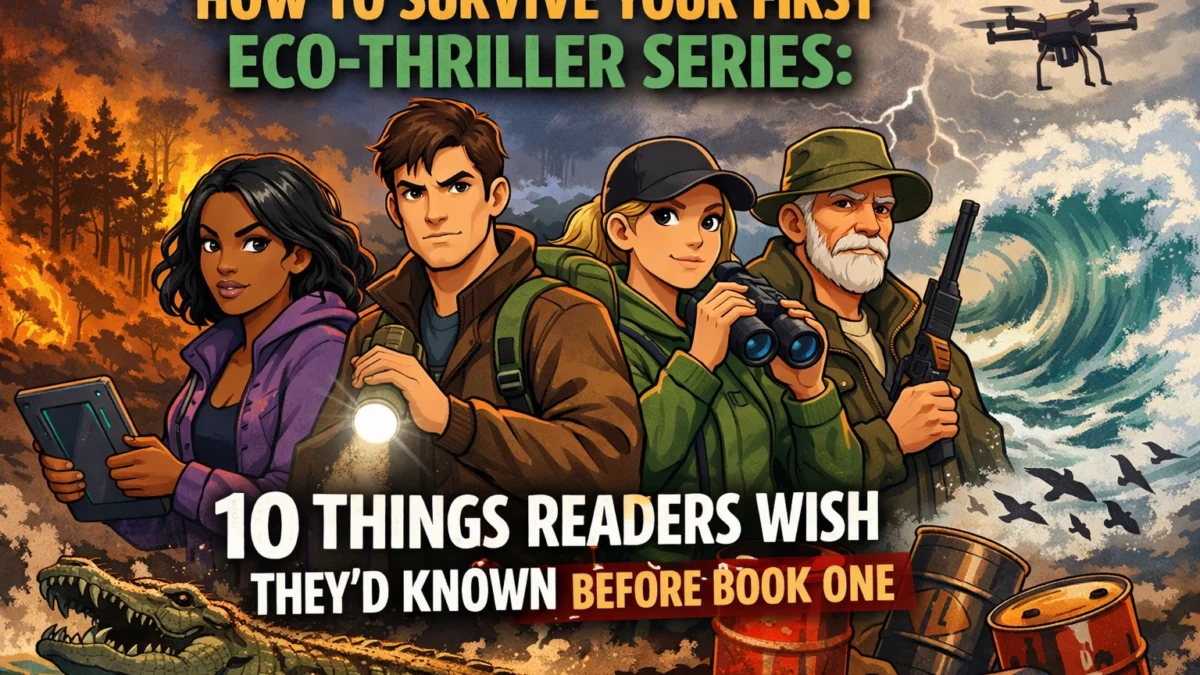
The best series give you a crew of specialists, scientists, tacticians, survivalists, diplomats, who actually need each other to survive. Solo heroics get you killed in the rainforest. Cooperation gets you through Book Six alive.
The Rainsavers nails this. Every character brings a unique skill set, and watching them figure out how to work together (while also dealing with their own baggage) is half the fun.
4. You Will Get Emotionally Attached to Equipment
This sounds ridiculous until it happens to you. But when your favorite character has been using the same tactical respirator for three books, surviving ambushes and jungle humidity and betrayals… yeah, you will panic when it gets damaged in Book Four.
Eco-thrillers love their high-tech field gear. Respirators, water purification kits, biodegradable climbing ropes, solar-powered comms devices, it all matters. And you'll care about it way more than you thought possible.

5. The Science Is Real (Mostly)
Here's the deal: good eco-thrillers in 2026 do their homework. The environmental threats are grounded in actual climate science. The survival techniques are legit. The ancient mysteries are based on real archaeological theories.
Yes, there's still fiction mixed in, like, say, a primal serum that enhances human strength, but it's plausible fiction. The kind that makes you think, "Could this actually work?" and then stay up Googling ethnobotany studies.
If you're the type who hates science exposition, don't worry, it's woven into the action. You'll learn without realizing you're learning. (And then you'll impress people at parties with your newfound knowledge of Amazonian plant compounds.)
6. Eco-Anxiety Is Part of the Experience (But So Is Hope)
Let's be real: reading about climate disasters and corporate greed and vanishing ecosystems can get heavy. Eco-thrillers don't shy away from the stakes, they lean into them.
But here's what makes 2026's eco-fiction different from earlier doomscrolling literature: these stories actually offer hope. Not naive, everything-magically-fixes-itself hope, but gritty, we're-going-to-fight-for-this hope.
The Rainsavers series balances the darkness with moments of genuine environmental wins, clever problem-solving, and characters who refuse to give up. It's cathartic, not crushing.
7. You'll Start Noticing Greenwashing Everywhere
Fair warning: once you've read a few eco-thrillers, you'll become that person who spots corporate greenwashing from a mile away.
"Carbon-neutral shipping!" a company will claim. And you'll squint at it like, Is it though? Or is this just offset theater?
Blame the genre. Eco-thrillers are designed to make you question surface-level environmental claims and dig deeper. You'll become way pickier about which "green" companies you actually trust.
8. Six-Book Series Are Worth It (If Done Right)
Look, we get it. Committing to six books feels like a lot in 2026 when everyone's attention span is fried. But when a series is good, when it's plotted out from the beginning, with real character arcs and mysteries that actually pay off, it's so satisfying.
The trick is making sure the first book hooks you hard enough to trust the journey. The Rainsavers does this by dropping you straight into a fieldwork disaster in the Amazon, introducing high stakes and compelling characters within the first 50 pages, and leaving you with just enough mystery to need Book Two immediately.
If Book One grabs you, the rest is a done deal.

9. You're Going to Want to Talk About It
Eco-thrillers have this sneaky way of making you want to discuss what you're reading. The ethical dilemmas are complex. The science is fascinating. The character choices are debatable.
You'll find yourself texting friends like, "Okay but WHAT would YOU do if a rogue scientist offered you a serum that could save the rainforest but also maybe turn you into a walking weapon?"
(Pro tip: Join The Rainsavers community before you start Book One. You'll want people to theorize with.)
10. You'll Never Look at Adventure Fiction the Same Way
Once you've experienced a well-crafted eco-thriller, it's hard to go back to generic action series that ignore environmental stakes. You'll start asking, "But what about the ecosystem impact? What about the local communities? Why is nobody addressing the actual threat?"
It's like getting glasses for the first time. You can't unsee it.
The Rainsavers is a gateway series for this shift. It's got all the adrenaline, mystery, and character development you'd expect from great adventure fiction, but it's also smart about the world those adventures happen in. And once you've tasted that combo, there's no going back.
Ready to Dive In?
If you made it through this list thinking, "Okay, that actually sounds awesome," then congratulations: you're ready for your first eco-thriller series.
Start with a story that balances action and intelligence. Look for characters you'll actually care about. Find a world that feels both urgent and hopeful.
And if you're not sure where to begin? Start Book One now at rainsavers.com and see what the hype is about. Just… maybe clear your calendar first. Six books go faster than you think.
You've been warned. Happy reading. 🌿
