Look, we get it. You're not about to grab a machete and trek through the Amazon rainforest to personally stand between a tree and a bulldozer. (Although if you were, that would be pretty epic.)
But here's the thing: in The Rainsavers universe, characters like Dr. Alina Mubari, brilliant scientist and team strategist, prove that some of the most powerful environmental action happens through smart, strategic moves that don't require you to leave civilization. Dr. Mubari's research into deforestation patterns and ecological systems helps The Rainsavers anticipate environmental threats before they happen. And guess what? You can channel that same energy from your couch.
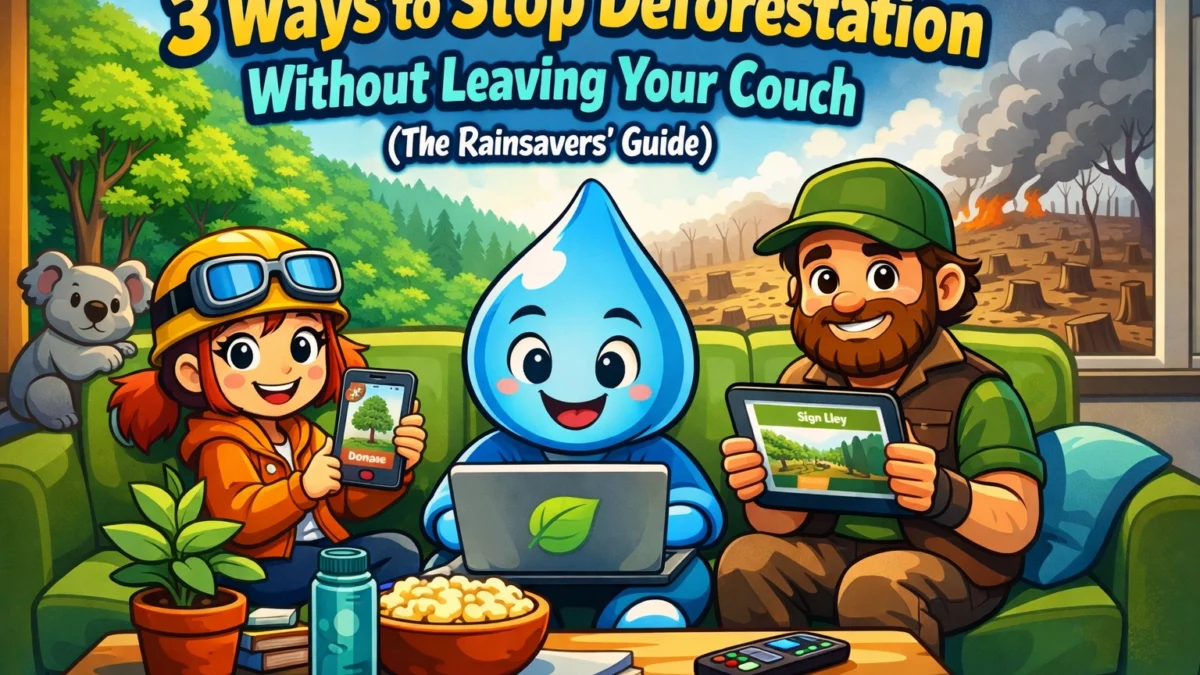
Welcome to 2026, where saving forests has never been more accessible. Whether you're between Netflix episodes or scrolling through your phone during lunch, you have real power to make a difference. Let's talk about three surprisingly effective ways you can fight deforestation without changing out of your sweatpants.
1. Sign Petitions Like Your Signature Actually Matters (Because It Does)
Remember when people said online petitions were basically digital dust? Yeah, they were wrong.

In March 2025, a petition to halt deforestation and mining in Red Jacket Valley Park gained over 2,500 signatures in just two weeks. Local officials actually listened and stopped the development plans. That's not a fluke, that's the power of collective digital advocacy.
Here's why petitions work: governments and corporations care about public perception. When thousands of people sign a petition demanding stronger forest protection laws, it creates political pressure that's hard to ignore. Companies committed to deforestation-free policies didn't just wake up one day feeling generous, they responded to public outcry.
Your action plan:
- Bookmark platforms like Change.org and check them weekly
- Share petitions on social media (yes, your posts actually reach people)
- Look for petitions targeting specific deforestation projects or demanding corporate accountability
- Don't just sign and vanish, comment, share, and amplify
Think of it like what The Rainsavers team does when they face a threat: they gather intelligence, rally support, and coordinate action. You're basically doing the same thing, except your battlefield is the internet and your weapon is… well, your keyboard.
2. Become a Conscious Consumer (Your Grocery Cart Is a Ballot)
Every product you buy tells a story. And honestly? Some of those stories are pretty dark.

When you pick up that cheap furniture or grab beef for dinner, you're potentially funding deforestation. Cattle ranching and agricultural expansion are massive drivers of forest destruction. But here's the empowering part: you can change that narrative with your purchasing decisions.
Look for FSC certification on wood products. The Forest Stewardship Council (FSC) label means the wood comes from responsibly managed forests. It's like a trust badge for trees. When you buy FSC-certified products, you're supporting sustainable forestry practices that protect forest ecosystems.
Reduce animal product consumption. You don't have to go full vegan overnight (no judgment if you do, though). Even cutting down meat consumption a few days a week creates ripples. Less demand for beef = less incentive to clear forests for cattle ranching. It's basic economics meets environmental action.
Support environmentally conscious brands. Companies that are serious about forest protection make it known. They brag about their sustainable practices because they should. Reward them with your money. Punish the sketchy ones by taking your business elsewhere.
Dr. Mubari would tell you that individual choices seem small, but ecosystems are built on small interactions that scale. Your consumer habits are your daily votes for the kind of world you want to live in.
3. Plant Trees Through Your Phone (Because There's an App for That)
Welcome to the future, where reforestation happens one tap at a time.

Apps like Treeapp let you plant a tree every single day in under a minute. And no, this isn't some feel-good scam: actual trees get planted by actual planting partners who work with local communities. The funding comes from eco-conscious organizations that advertise on the platform, so it's free for you.
Let's do some quick math: if you plant one tree daily for a year, that's 365 trees. If 1,000 people do it? That's 365,000 trees. The numbers scale beautifully.
Other digital forest-saving moves:
- Use search engines like Ecosia that plant trees with ad revenue
- Download browser extensions that support reforestation projects
- Set up recurring donations to forest conservation organizations (even $5/month adds up)
The Rainsavers team works together because they know that collective action creates change that individual heroics can't match. When millions of people plant trees through apps, we're creating a global reforestation movement that actually moves the needle.
Meet The Team: Why The Rainsavers Get It
Speaking of teams, let's talk about ours for a second.
The Rainsavers aren't your typical action heroes. They're not wearing capes or shooting laser beams from their eyes. They're a diverse group of specialists who understand that saving the planet requires brains, coordination, and strategy. Dr. Mubari brings scientific expertise. The team includes tech innovators, cultural experts, and field operatives who each contribute their unique skills.
Sound familiar? That's because it's basically what we need in real life.
You don't have to be a scientist or an environmental activist to make a difference. You just need to bring your unique contribution: whether that's signing petitions during your commute, making conscious choices at the grocery store, or tapping your phone screen to plant trees while you're waiting for your coffee to brew.
The Bottom Line: Small Actions, Massive Impact
Here's what The Rainsavers books understand that a lot of traditional adventure stories miss: the biggest threats aren't always defeated with dramatic confrontations. Sometimes they're beaten through consistent, strategic, everyday actions that pile up over time.

Deforestation is a massive problem: there's no sugar-coating that. But it's not unstoppable. Every petition signature adds pressure. Every sustainable purchase shifts market demand. Every tree planted (even digitally) contributes to reforestation.
You're not helpless. You're not too small to matter. You're part of a global movement of people who decided that comfort and environmental action aren't mutually exclusive.
So keep that couch warm. Just make sure you're saving forests while you're on it.
Ready for more eco-adventure inspiration? Dive into The Rainsavers series and follow a team that proves environmental heroes don't need superpowers: they need smarts, teamwork, and determination. Read Book One now and join the movement.
Saving the Earth, one adventure at a time.
