Meta Description: Is environmental protection still a thing in 2026? Heck yes. See why The Rainsavers believe pulp fiction and high-stakes adventure are the secret weapons to saving our planet.
Look, I get it. It’s Tuesday, March 10, 2026. You’ve probably already seen three headlines today about the new vehicle emission standards or the latest updates on the High Seas Treaty. Between the UN conferences and the EPA's long-term performance goals, the word "environmentalism" can start to feel a little bit like a homework assignment.
Nobody likes homework. But everybody loves a good story.
At The Rainsavers, we’ve noticed a bit of a problem. People are tired of being lectured. They’re tired of charts, graphs, and doom-scrolling through climate data. If we want to save the world: and let’s be real, it’s a world worth saving: we need to stop staring at spreadsheets and start looking at heroes.
That’s where pulp adventure comes in.
Why 2026 is the Year of Action (And Why We’re Bored)
We are currently living through a pivotal moment. The High Seas Treaty finally went into effect in January, and we’re all looking toward the UN Convention on Biodiversity this October. The goals are massive: protecting marine life, reducing greenhouse gases, and trying to stop ecosystems from collapsing.
But here’s the kicker: Knowing that the planet needs help is one thing. Feeling it is another.
When you read a dry report about "biodiversity loss," your brain processes it as data. When you read a Rainsavers adventure where Primal is racing through a crumbling jungle to stop a corporate shadow-group from poisoning a hidden water source, your heart rate goes up. You aren't just thinking about the environment; you're fighting for it.

ALT: A high-octane scene of an adventurer navigating a lush, dangerous rainforest.
The Power of the Pulp
"Pulp" used to be a dirty word in literature. It meant cheap paper, fast plots, and over-the-top action. But in 2026, pulp is exactly what we need.
Why? Because pulp is active. It’s about doing.
In our stories, we don't sit around debating the policy implications of a carbon tax for 300 pages. We put our characters in the middle of the mess. Whether it's dodging traps in ancient ruins or outrunning a tactical strike team in the desert, the environment isn't just a backdrop: it’s a character. It’s a living, breathing obstacle and an ally.
When the stakes are life and death, you realize how much the "setting" actually matters. If the air is toxic or the water is gone, there is no adventure. There’s just… nothing.
Character Spotlight: Primal and the Weight of the World
Let’s talk about Primal. If you’ve been following our characters page, you know he’s not your average hero. He doesn’t have a cape, and he certainly isn't flying around in spandex. He’s gritty, he’s tired, and he’s motivated by a raw, visceral connection to the earth.
Primal represents the 2026 ethos. He knows that the world is "broken" in many ways, but he refuses to let it stay that way. When he’s on a mission, the environmental protection aspect isn't a side-quest. It’s the main event.
By following a character like Primal, readers get to experience the urgency of conservation without the lecture. You see the beauty of the wild through his eyes, and you feel the rage when that beauty is threatened. That’s how you build a movement: one page-turner at a time.
Science Fiction Tech: Red Mercury and Beyond
It’s 2026, so we’ve got to talk about tech. In the world of The Rainsavers, we love playing with "what if" scenarios. Take Red Mercury, for example. Is it real? Is it a myth? In our universe, it’s the kind of high-stakes tech that could either save a civilization or level it.

ALT: A glowing, mysterious substance in a futuristic laboratory setting.
This kind of sci-fi tech serves as a metaphor for our real-world innovations. Just as the EPA is pushing for better vehicle standards and cleaner energy, our characters are often grappling with tech that is powerful enough to change the climate.
When we write about these things, we’re asking the big questions:
- Who gets to control the world’s resources?
- What happens when "progress" outpaces our ethics?
- How do we use technology to heal the earth rather than just exploit it?
By framing these questions inside a pulp adventure, they become accessible. You don't need a PhD in environmental science to understand that whoever controls the water controls the future. You just need to keep reading to see if Mortalis gets to the valve in time.
Is the "Solo Hero" Story Dead?
Actually, we wrote about this recently on our blog: check out why team-based adventure series are taking over.
Saving the environment in 2026 isn't a one-person job. It’s a team effort. The Rainsavers operate as a unit because the threats we face: both in fiction and in reality: are too big for one person to handle.
This mirrors the real-world climate action we see today. It’s not just about one person recycling; it’s about international treaties, community action, and corporate accountability. Our stories reflect that. When you see a team of specialists using their unique skills to protect a sanctuary, it reminds you that we all have a role to play in the real world.
Skimmable Lessons from the Wild
If you’re in a rush (because it’s 2026 and we’re all busy), here’s the "Field Notes" version of why pulp adventure is the best way to save the Earth:
- Empathy over Info-dumps: You’ll remember a character’s struggle long after you forget a statistic.
- Action-Oriented Thinking: Pulp fiction rewards characters who take action. We need that same "let’s go" energy for the planet.
- High Stakes: Adventure stories remind us that the environment is our life-support system. If it fails, the story ends.
- Accessibility: You don't need to be an "activist" to enjoy a Rainsavers book, but you might just end up being one by the time you finish.
Why Eco-Fiction Will Change Your Mind
If you’re still on the fence about whether "fiction" can actually help the planet, I highly recommend checking out our guide on how eco-fiction changes the way you think.
The stories we consume shape our worldview. If we only watch stories where the world is a dark, post-apocalyptic wasteland, we start to believe that’s inevitable. But if we read stories where heroes: flawed, messy, pulp-adventure heroes: fight tooth and nail to protect what’s left, we start to believe that it’s possible to win.

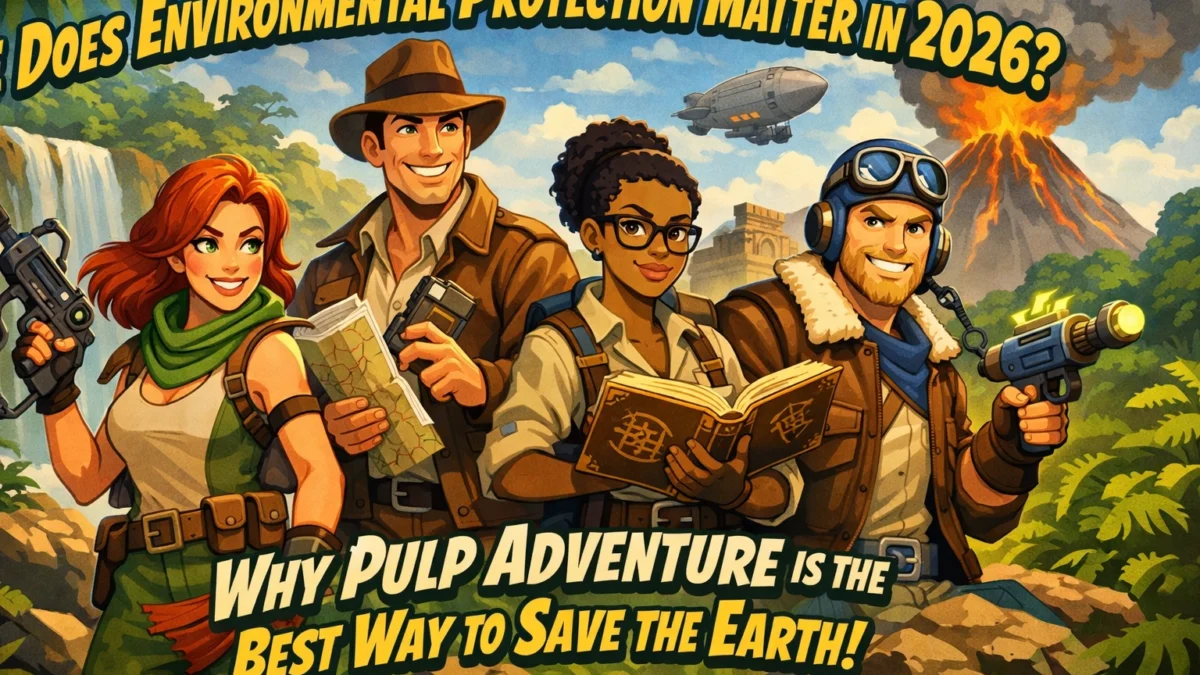
ALT: A group of diverse adventurers standing on a cliff overlooking a vibrant, healthy valley.
Join the Adventure
At the end of the day, environmental protection in 2026 is about love. It’s about loving the places we live, the air we breathe, and the stories we tell.
We aren't just publishing books here at The Rainsavers. We’re building a world where adventure and conservation go hand-in-hand. Whether you’re diving into our latest episodes or trying your luck in our Down the Rabbit Hole contest, you’re part of something bigger.
So, does environmental protection matter in 2026?
Absolutely. But maybe, just maybe, the best way to do it isn't by signing another petition (though you should do that too). Maybe the best way is to pick up a book, get lost in a world worth saving, and then walk outside and realize that this world is worth the fight.
Ready to start your next adventure?
Check out our shop for the latest pulp adventures that are making waves across the planet. Let’s save the earth, one explosion at a time.

ALT: The Rainsavers logo over a backdrop of a setting sun and a rugged landscape.
Explore more at The Rainsavers.
Want to stay updated on our latest missions and character spotlights?
Let's make 2026 the year we actually win.
