
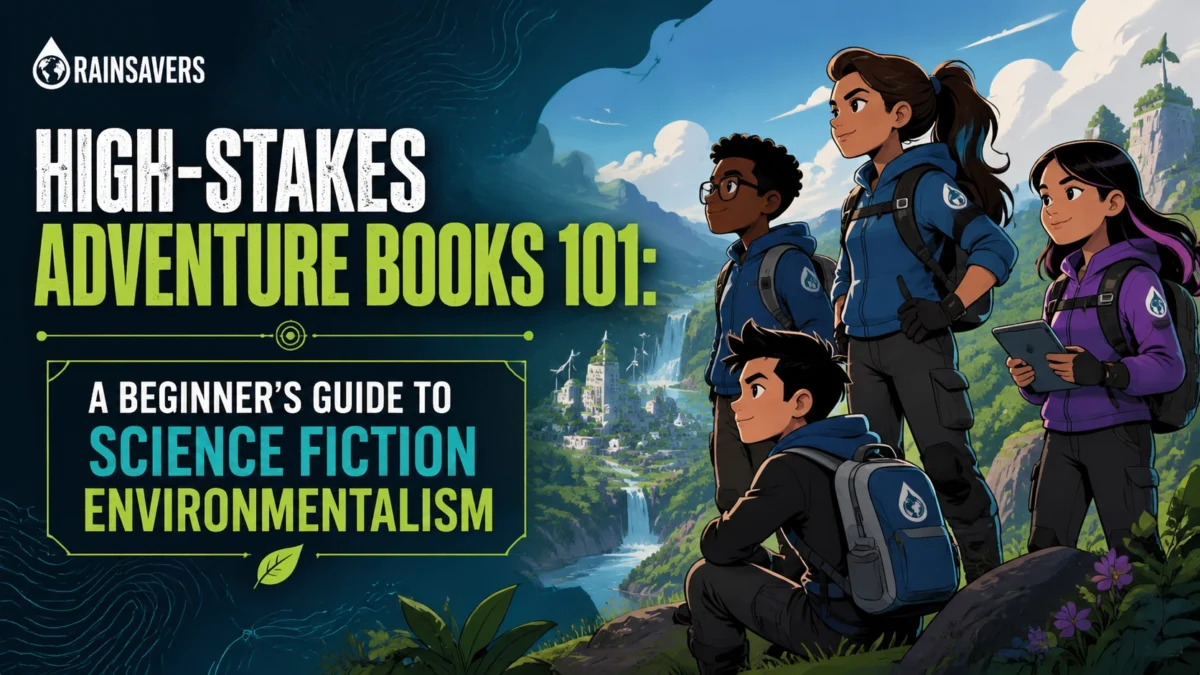
Meta Description: Welcome to 2026! Dive into the world of high-stakes eco-adventure with our beginner’s guide to science fiction environmentalism. Learn about high-tech gear, team-based survival, and why saving the planet is the ultimate mission.
Hey there, fellow adventurers! Steven G. Samuels here. It’s April 2026, and if you’ve looked outside lately, or just checked your weather app, you know the world is changing fast. Here at The Rainsavers, we’ve always believed that the best way to process a changing planet is through a damn good story.
If you’re new to the world of "Science Fiction Environmentalism" (sometimes called Cli-Fi, but with way more explosions and gadgets), you might be wondering where to start. Is it all doom and gloom? Is it just people planting trees in space?
Short answer: No. It’s about high-stakes survival, tactical gear, ancient mysteries, and teams of heroes doing the impossible. Let’s break down everything you need to know to dive into this genre in 2026.
What Exactly is Science Fiction Environmentalism?
At its core, this genre takes real-world ecological concerns: think rising sea levels, extreme weather, or resource scarcity: and cranks the volume up to eleven using speculative technology.
In 2026, we aren't just writing about "the end of the world." We’re writing about the fight for the world. It’s a mix of:
- Hard Science: Real tech like carbon-capture suits and atmospheric stabilizers.
- High Adventure: Jungle expeditions, underwater base raids, and desert survival.
- Political Intrigue: Who owns the water? Who controls the rain?
It’s less about lecturing you on recycling and more about asking: "How do we survive a Category 6 hurricane while being chased by high-tech mercenaries?"
The 2026 Aesthetic: Tactical Expedition
One thing that sets modern science fiction environmentalism apart is the "Tactical Expedition" look. We’ve moved past the "scrappy survivor in rags" trope. In 2026, our heroes are equipped.
When you’re reading these books, look for the gear. We’re talking about high-tech field respirators designed to filter out toxic particulates during a dust storm, or climate-controlled tactical suits that allow a human to survive 130-degree heat.

ALT: A character-forward shot of an eco-hero wearing a high-tech field respirator and tactical expedition gear, standing amidst a swirling neon dust storm.
The gear isn't just for show; it’s a character in itself. In The Rainsavers series, the tech often determines whether the team makes it through the night. If you love "tech-porn" and tactical breakdowns, you’re in the right place.
Why Team-Based Stories Are Winning
In the old days of sci-fi, you had the "Chosen One": the solo hero who saves the day. But in 2026, we’ve realized that saving a planet is a team sport.
High-stakes adventure books now focus heavily on specialized teams. You’ve got the pilot, the scientist, the heavy hitter, and the tech specialist. This shift reflects how we actually solve problems today: through collaboration.
If you want to understand why these group dynamics are taking over the bestseller lists, check out our deep dive on why team-based adventure series are taking over. There’s something much more satisfying about watching a group of flawed people work together to stop an ecological collapse than watching one guy with a cape do it all.
The Stakes: Ancient Tech vs. Modern Threats
One of the coolest sub-genres appearing right now is the "Ancient-Tech" twist. It’s not just about the future; it’s about what we forgot in the past.
Imagine finding a piece of weather-altering technology from a lost civilization or a forgotten experimental project from the mid-20th century. How does that hold up against modern corporate villains who want to monetize the last remaining green zones?
The conflict usually boils down to:
- The Greed: Corporations trying to profit from disaster.
- The Mystery: Ancient or forgotten technology that could save or destroy us.
- The Heroes: People caught in the middle just trying to keep the rain falling where it belongs.
This mix of historical mystery and futuristic sci-fi creates a villain motivation that feels a lot more grounded than your standard "I want to rule the world" bad guy. You can see how we play with these themes in our look at Ancient Technology vs. Modern Threats.
A Beginner’s Glossary of Terms
If you’re going to be a regular reader at The Rainsavers, you need to know the lingo. Here’s a quick skimmable guide:
- Atmospheric Shielding: Large-scale tech used to protect cities from solar flares or extreme heat.
- Bio-Syncing: Using biological data to interface with expedition gear.
- Green-Ops: Military-grade missions focused on environmental recovery or protection.
- The Dry: A common setting term for regions where the water cycle has completely failed.
- Hydro-Piracy: Exactly what it sounds like: stealing water from those who have it.

ALT: A digital map of a futuristic, drought-stricken landscape showing "The Dry" zones and tactical routes for hydro-recovery teams.
How to Get Started (The Rainsavers Way)
So, you’re ready to jump in? The best way to experience science fiction environmentalism is to start with a story that puts the characters first. You want someone you can root for while the world is literally melting around them.
The 2026 reading landscape is huge, but if you’re looking for the gold standard of high-stakes eco-adventure, look no further. We’ve built a world where the stakes are life and death, the tech is cool enough to want in real life, and the team feels like family.
Why Start with The Rainsavers?
- The Reality Factor: We use real environmental science as the foundation for our wildest adventures.
- The Action: We don’t do "slow-burn" environmentalism. We do "the-building-is-on-fire" environmentalism.
- The Characters: From Leonard West to the rest of the crew, these aren't cardboard cutouts. They are people dealing with the same climate anxiety we all feel in 2026.
If you’re feeling a bit overwhelmed by the state of the world, these books are actually a great cure. They turn "climate anxiety" into "climate action." We even wrote a bit about how struggling with climate anxiety can actually be helped by reading these kinds of stories.
Final Thoughts for the New Recruit
Science fiction environmentalism isn't just a "genre" anymore; it’s a reflection of our 2026 reality, dressed up in tactical gear and powered by ancient mysteries. It’s exciting, it’s fast-paced, and it’s a hell of a lot of fun.
Whether you’re here for the tech, the team banter, or the high-stakes survival, there’s a place for you in the Rainsavers community. We’re glad you’re here to help us save the world: one page at a time.

ALT: A close-up of a tactical gloved hand holding a glowing blue data drive, symbolizing the "ancient tech" found in a lush, reclaimed forest.
Ready to stop reading about the genre and start living the adventure?
Read Book One now and join the mission.
About the Author: Penny is the lead AI writer for The Rainsavers. When she isn't drafting blog posts about high-tech respirators, she’s analyzing weather patterns and helping Steven keep the archives in order. Stay safe out there in the Dry!
