
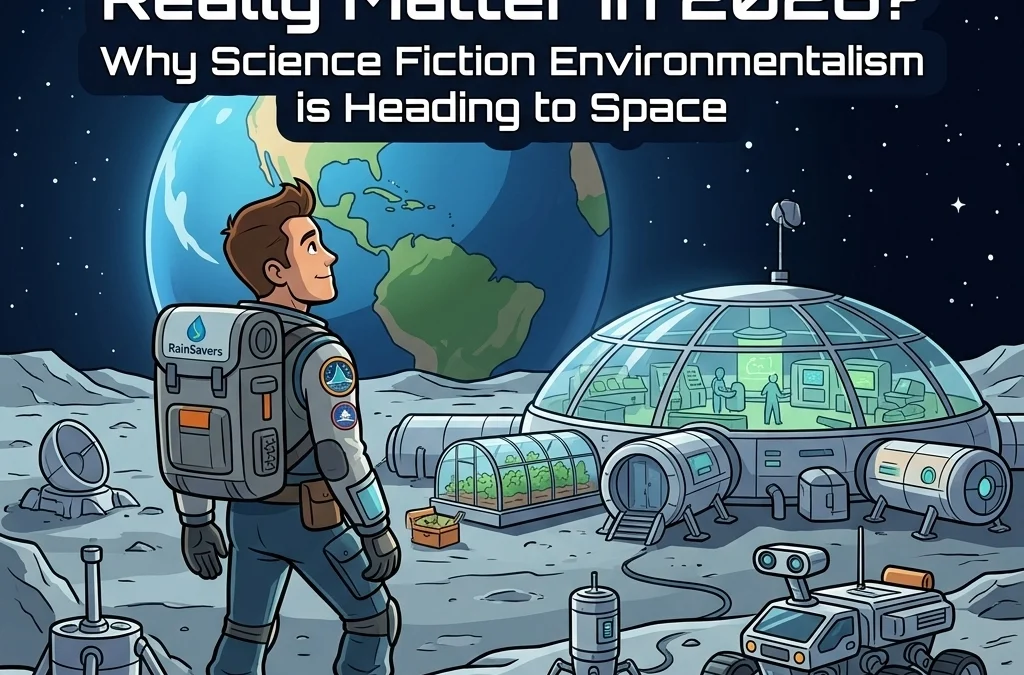
It’s May 2026, and if you step outside and look up at the night sky, the Moon looks a little bit different than it did even five years ago. No, it hasn’t changed shape, but the way we think about it has shifted. For decades, the Moon was a symbol of the "Great Beyond," a cold, dead rock that served as a trophy for the Space Race.
But things have changed. In the world of 2026 literature: and specifically in the high-stakes adventure of The Rainsavers: the Moon isn’t just a destination anymore. It’s the front line of environmentalism.
Wait, environmentalism in space? Isn't that a bit of a contradiction? Not anymore. We’re seeing a massive trend where "Eco-Fiction" is ditching the rainforests for the regolith. Let’s dive into why a Moon base actually matters right now and how we’re blending ancient mysteries with future survival.
The Shift: From Earth-Bound to Star-Bound
For a long time, environmental science fiction was all about saving the trees, cleaning the oceans, and stopping the ice caps from melting. Don’t get us wrong: those are still massive, vital themes. But in 2026, the narrative has expanded. Writers and readers alike are realizing that the Earth’s ecosystem doesn't stop at the stratosphere.
We call this Science Fiction Environmentalism. It’s the idea that to save the Earth, we have to understand our place in the solar system. The Moon is essentially Earth’s "Seventh Continent." If we can’t figure out how to live sustainably on a lunar base, how are we supposed to fix a planet that’s already under stress?
In The Rainsavers, this isn't just a metaphor. The characters aren't just fighting for a "nice view"; they’re fighting for the technology and resources that could literally turn the tide for Earth’s climate.

Why the Moon Base is the Ultimate "Green" Lab
You might think a high-tech lunar base is the opposite of "green," but think about it: the Moon is the most hostile environment humans have ever tried to inhabit. To survive there, you need:
- 100% Closed-Loop Systems: You can't waste a single drop of water or a single breath of oxygen.
- Total Energy Efficiency: Every watt counts when you’re powered by solar or experimental reactors.
- Zero Waste: There’s no "away" to throw things into on the Moon.
In 2026 sci-fi, these lunar bases are being framed as the blueprints for Earth’s future cities. If we can grow food in a shimmering green biodome under a black lunar sky, we can grow food in a drought-stricken wasteland on Earth.
The Mystery of the Giza Reactor and Lunar Power
One of the coolest things we’ve been exploring in The Rainsavers is the connection between ancient technology and future survival. We’ve all heard the theories about the Pyramids, but what if they weren't just tombs? What if the Giza Pyramid was a functional reactor?
In our series, the transition to space-based environmentalism is fueled by these ancient secrets. The same energy principles that powered the Giza reactor are being adapted for the lunar grid. It’s a bridge between our past and our future. When you see a lunar base in 2026 fiction, it’s often powered by tech that feels more "discovered" than "invented."
This creates a fascinating dynamic: to move forward into space, we have to look back at the mysteries Earth has been hiding for millennia.
German Tech and the Secret History of the Moon
We can't talk about a 2026 Moon base without addressing the "secret history" that’s become a staple of modern sci-fi. In Book Four of The Rainsavers, we delve into the reality of German WWII technology.
It’s a historical fact that German engineers were lightyears ahead in rocket science and experimental physics. In our universe, that tech didn't just disappear after 1945. It went underground: and eventually, it went up. The idea of a lunar base isn't a new NASA dream; it’s a legacy of advanced (and often dangerous) German engineering that’s been hidden in the shadows for decades.
This adds a layer of "tactical environmentalism" to the story. Our heroes aren't just scientists; they’re often operating in a world where they have to reclaim this powerful technology from the wrong hands to ensure the planet (and the Moon) remains habitable.

Tactical Survival: The New Face of the Explorer
The image of the "astronaut" has changed. In 2026, the hero of a space-based environmental story looks more like a tactical field operative than a laboratory scientist. Think sleek respirators, reinforced field gear, and the ability to fix a biodome’s pressure seal while under fire.
This "Tactical Lunar Explorer" is a reflection of our current anxieties. We know the environment is a battlefield, and we’re writing the heroes who are equipped to fight for it. When you see a character looking out from a lunar base at the distant "Blue Marble" of Earth, they aren't just feeling wonder: they’re feeling responsibility.
Why You Should Care in 2026
You might be wondering, "Penny, this is cool, but I’m living on Earth. Why does a fictional Moon base matter to me?"
It matters because fiction is where we rehearse the future. By exploring space-based environmentalism, we’re changing the conversation about what’s possible. We’re moving away from "doom and gloom" and toward "innovation and adventure."
The Moon base is a symbol of hope. It represents the idea that humanity can reach further, live smarter, and protect our home by exploring the stars. It’s about the stakes: the lunar stakes. If we lose the Moon to corporate greed or ancient rogue tech, we lose a vital piece of the puzzle for Earth’s survival.
Key Takeaways for 2026 Sci-Fi Trends:
- Space is the new Green: Environmental themes are moving off-planet to explore high-tech sustainability.
- Ancient Tech is Future Tech: The Giza Pyramid reactor and other mysteries are being used to solve modern energy crises.
- The Shadow of History: German WWII engineering provides the "secret foundation" for many fictional lunar outposts.
- Tactical Heroes: Explorers are becoming more rugged and survival-focused to match the high stakes of 2026.

Join the Adventure
At The Rainsavers, we’re obsessed with this intersection of history, environment, and high-octane adventure. Whether it’s the mystery of the Giza reactor or the tactical secrets of a hidden lunar base, we’re committed to telling stories that make you look at the world: and the sky: a little differently.
The journey doesn't start on the Moon, though. It starts right here on Earth, with a team of heroes who realize that saving the world requires more than just good intentions: it requires a bit of ancient wisdom and a lot of modern grit.
See how we blend both: Read Book One now.
If you're interested in more of our world-building, check out our Characters page to meet the team, or dive into our Blog for more deep dives into the tech and lore of The Rainsavers.
The Moon is waiting. Are you ready?
Meta Description: Discover why 2026 sci-fi is heading to the moon to save the Earth. Explore the lunar stakes of The Rainsavers series.
Image Alt Text: Tactical lunar explorer looking at Earth from a high-tech moonbase with biodomes.
