
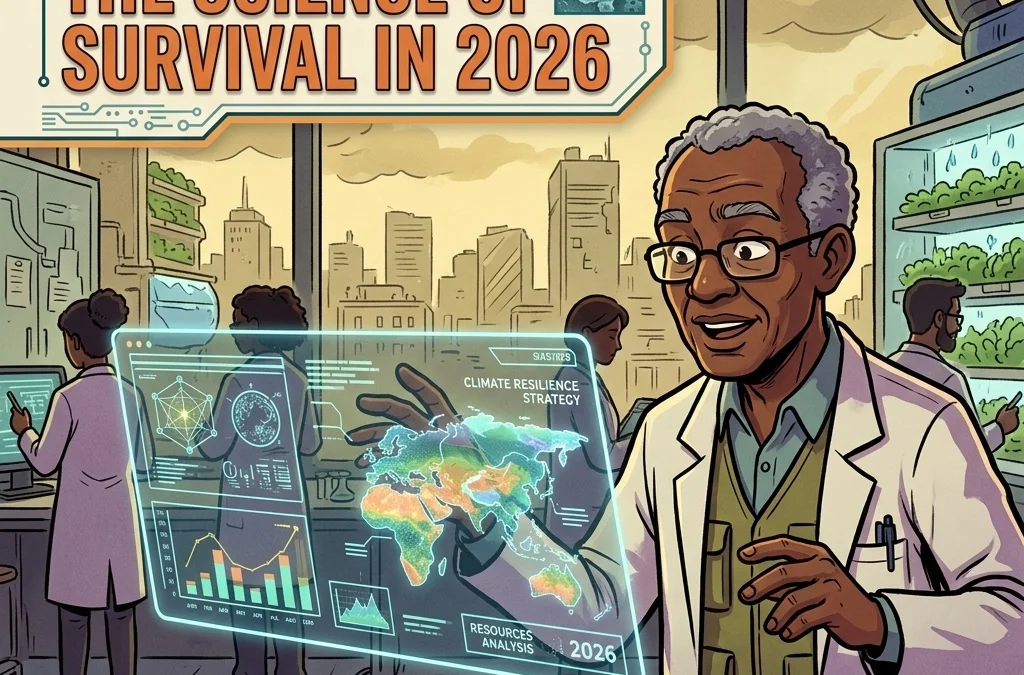
Meta Description: Get an inside look at Dr. Mubari’s private lab notes. Discover the tactical science, bioluminescent tracking, and botanical breakthroughs protecting the Amazon in 2026. Science isn't just for textbooks anymore, it's for survival.
Log Date: May 10, 2026
Location: Mobile Research Unit 4 (The "Greenhouse"), Amazon Basin
Humidity: 98% (and my respirator is starting to chafe)
If you’re reading this, you’re either part of the Rainsavers tactical crew or you’ve managed to hack into a very secure, very damp server. Either way, welcome to the front lines of botanical defense.
People often ask me why a scientist with three PhDs is sitting in a reinforced tent in the middle of a rainforest instead of a cushy lab in Zurich. The answer is simple: the Amazon is the world’s most sophisticated laboratory, and right now, it’s under siege. In 2026, survival isn’t just about having the biggest boots or the fastest drones; it’s about understanding the chemistry of the canopy.
Here’s a look at what we’ve been cooking up to keep the Rainsavers one step ahead of the bad guys.
1. Bioluminescent Tracking: The Forest is Watching
One of our biggest hurdles is visibility. Traditional GPS is great until you’re under four layers of dense foliage, and infrared can be tricked by the heat of the jungle itself. We needed something… more organic.
Enter Project Firefly-Flora.
We’ve developed a specialized microbial spray that interacts with specific fungal networks in the soil. When an unauthorized vehicle or a heavy-booted squad stomps through a designated "black zone," the pressure-sensitive spores attach to their gear. For the first six hours, it’s invisible. But as the microbes react with the oxygen in the air, they begin to emit a low-frequency ultraviolet glow.
To the naked eye? Nothing. But to a Rainsaver wearing specialized optics? The intruders might as well be carrying neon signs. We aren’t just tracking them; we’re letting the forest highlight exactly where they shouldn't be. It’s tactical science that uses the environment as a partner, not just a backdrop.

Caption: A close-up of a Rainsaver’s tactical HUD, highlighting the neon-purple glow of a bioluminescent trail through the undergrowth.
2. Advanced Botanical Studies: More Than Just Leaves
Most people see a "glowing purple plant" and think it’s a prop from a sci-fi movie. When I see it, I see a high-yield energy conductor.
In 2026, we’ve made breakthroughs in what I call "Reactive Botany." We aren't just studying plants for their medicinal properties (though we do plenty of that at The Rainsavers). We’re studying them for their defensive capabilities.
We’ve identified a specific strain of Psychotria that, when cross-pollinated with certain Amazonian ferns, creates a natural localized EMP effect. Okay, "EMP" is a bit of an exaggeration, but it creates enough electromagnetic interference to scramble the sensors of the low-budget surveillance drones used by illegal logging syndicates.
We call it "The Veil." By strategically planting these clusters around our base camps, we create a natural "dead zone" for electronics that doesn't require a single battery or wire. It’s the ultimate low-tech solution to high-tech intrusion.
3. The Lab in a Tent: High-Tech Survival
Working in the jungle is a nightmare for hardware. The humidity eats circuit boards for breakfast, and the mold is basically sentient at this point. That’s why my "office" looks more like a space station than a traditional lab.
My portable laboratory tent is a marvel of 2026 engineering. It uses a self-contained atmospheric regulator that pulls water from the air (ironic, right?) to cool the servers while keeping the internal humidity at a crisp 15%. This allows us to run DNA sequencing on new plant pathogens in real-time, right where we find them.
The "Science of Survival" means being able to adapt. If we find a tree that’s being targeted by a synthetic blight, I don't have to send a sample to a lab a thousand miles away. I can synthesize an organic "vaccine" right here in the Greenhouse and have the team deploy it via aerosol drone within the hour.

Caption: Dr. Mubari adjusting the settings on a holographic DNA sequencer inside the pressurized mobile lab.
4. Tactical Science: The New Meta
We’ve moved past the era of "passive conservation." The world changed, and we had to change with it. In the Rainsavers, we view science as a tactical asset.
It’s about understanding that a specific root system can be used to reinforce a riverbank against man-made flooding, or that certain pheromones can clear a path through a swarm of aggressive insects during a tactical extraction.
This isn't about "playing God" with nature; it's about listening to the planet and giving it the tools to fight back. When you read about our adventures, you'll see that every "miracle" escape usually has a scientific explanation behind it: even if that explanation involves a lot of glowing goo and some very frantic calculations on my part.
5. The "Oops" Log: Not Everything Goes to Plan
Since the boss (Steven G. Samuels) told me to keep these notes "fun," I suppose I should mention the "Blue Beard Incident."
Last Tuesday, while I was trying to stabilize a concentrated batch of the bioluminescent tracking spores, the pressure valve on the centrifuge decided it had enough of this "jungle life." It didn't explode: that would be too dramatic: it just… puffed.
A cloud of deep azure spores hit me square in the face.
For the next seventy-two hours, my entire head glowed like a disco ball. The team thought it was hilarious. Leonard actually tried to use me as a flashlight during a midnight perimeter check. I was not amused. On the bright side, I can confirm that the spores are completely non-toxic and surprisingly good for skin exfoliation. But maybe don't try that at home.

Caption: A candid, slightly blurry photo of Dr. Mubari looking grumpy, his beard glowing a vibrant, electric blue in a dark tent.
6. Looking Toward the Future (and Book One)
The science of survival is an ongoing study. Every day in the Amazon, we discover something that challenges our understanding of biology and technology. The Rainsavers aren't just heroes because they carry gear; they're heroes because they understand the delicate balance of the world they’re trying to save.
Whether we're dealing with ancient mysteries or modern threats, the lab is where the real edge is found. We’re mixing historical mysteries with 2026 sci-fi to create something entirely new: a way for humanity and the planet to coexist without one destroying the other.
If you’re curious about how this all plays out in the field: and trust me, the bioluminescent tracking comes in very handy during the Amazonian nights: you need to see the team in action.
Explore the science of the saga: Read Book One now.
Stay curious, stay smart, and for heaven's sake, watch where you step. The forest is literally glowing.
: Dr. Mubari
Want to dive deeper into the world of eco-adventures and the heroes saving the planet? Check out our latest articles:
