
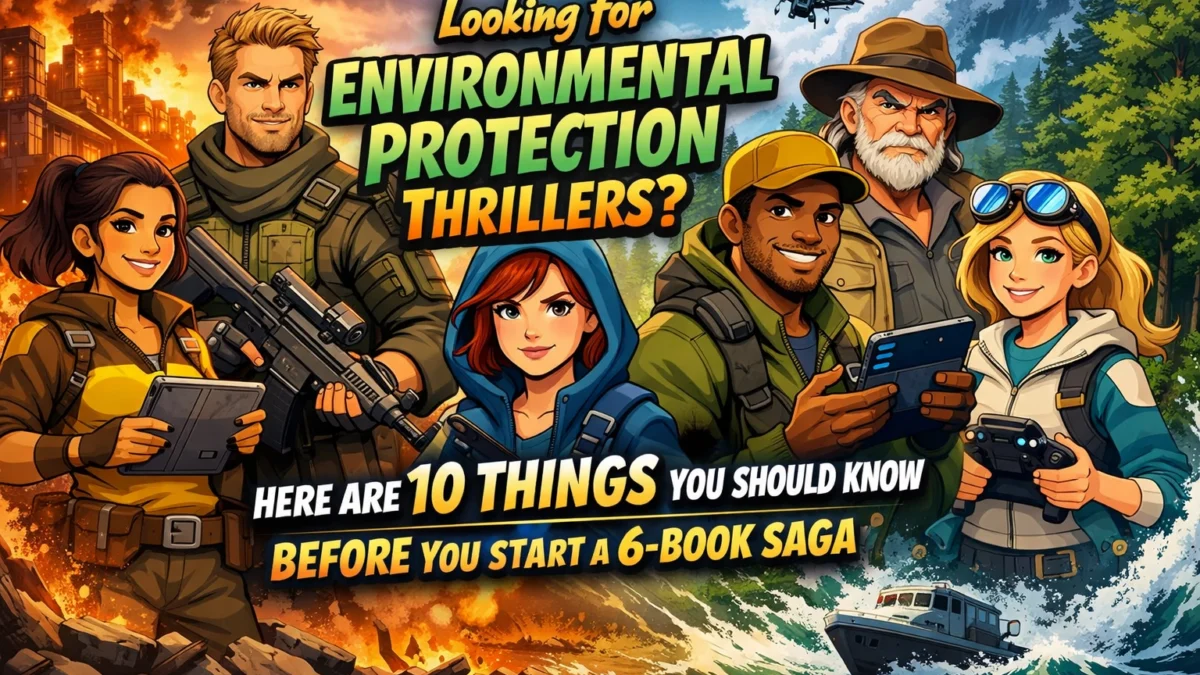
Hey there, adventure seekers. Steven G. Samuels here, CEO of The Rainsavers. It’s March 13, 2026, and if you’ve been keeping an eye on the bestseller lists lately, you’ve noticed that eco-fiction isn't just about "saving the whales" anymore. It’s gotten gritty, tactical, and, honestly: a lot more fun.
We’re seeing a massive shift in how people consume stories. People aren't just looking for a quick afternoon read; they want to get lost in a world for months. That’s why the 6-book saga has become the gold standard for environmental protection thrillers. It gives us the room to breathe, the space to build a world, and the time to let the stakes get high enough to actually matter.
But before you dive headfirst into a massive series like The Rainsavers, there are a few things you should know. This isn’t your average weekend thriller. Here are 10 things to keep in mind before you start your next epic eco-saga.
1. It’s Not Just About the Trees (It’s About the Tech)
In 2026, the best environmental thrillers are as much about high-tech gear as they are about the great outdoors. We’re talking about atmospheric water generation, advanced tactical drones, and biological sensors that feel like they’re pulled from next year’s headlines. When you commit to a 6-book series, you’re going to see that technology evolve. What starts as a simple drone in Book 1 might be a fleet of AI-driven protectors by Book 6.

ALT: A rugged tactical expedition kit laid out on a weathered wooden table, including a high-tech compass, a solar-powered satellite phone, and heavy-duty hiking boots. No superhero logos.
2. The Mystery Goes Deeper Than You Think
One of the coolest parts about long-form sagas is the ability to weave in historical mysteries. Many modern thrillers are digging into the past to explain the crises of the present. You might find yourself tracking down hidden laboratories or forgotten engineering projects from the German WWII era. These historical threads aren't just filler; they’re often the key to solving the modern environmental threat. Seeing how ancient technology vs. modern threats collide is what keeps readers turning pages at 2:00 AM.
3. Solo Heroes Are Out; Teams Are In
The lone wolf archetype is a bit tired, don't you think? In the real world, you don't solve a global water crisis by yourself. You need a team: engineers, hackers, tactical experts, and scientists. A 6-book saga allows for deep character development across a whole squad. You’ll see friendships test, romances bloom (and crash), and the group dynamic shift as the pressure builds. We’ve found that team-based adventure series are what readers are really craving right now.
4. Prepare for the "Slow Burn" That Turns into a Wildfire
When you start Book 1, you’re just scratching the surface. A well-crafted saga is designed to build tension incrementally. You might think the villain is just a corrupt corporate CEO in the beginning, but by Book 4, you realize there’s a much larger, much more terrifying conspiracy at play. The "slow burn" is a feature, not a bug. It makes the payoff in the final chapters of Book 6 feel absolutely earned.

ALT: A group of explorers in tactical gear standing on a ridge, looking out over a vast, misty valley where a massive, futuristic dam is under construction. No superhero logos.
5. The Science is (Mostly) Real
The best part about environmental thrillers is the "what if" factor. Most authors in this space spend a massive amount of time researching climate science, hydrology, and geography. While there’s obviously a layer of fiction, the most terrifying parts are usually the ones grounded in reality. Reading these stories can actually change how you look at the world around you. If you’re curious about the intersection of fiction and reality, see how we blend both.
6. You’ll Need to Manage Your "Climate Anxiety"
Let's be real: reading about environmental collapse can be stressful. We live in a world where these headlines are popping up every day. A good 6-book saga doesn't just lean into the doom and gloom; it offers a sense of agency. It’s about people taking action, fighting back, and finding solutions. If you’re struggling with climate anxiety, these stories can actually be quite cathartic because they provide a roadmap for heroism in the face of overwhelming odds.
7. The Global Scope is Massive
In a standalone novel, you might stay in one city or one forest. In a saga, the world is the playground. You might start in the droughts of the American Southwest, move to the melting glaciers of the Arctic, and end up in the heart of the Amazon. These stories reflect the reality that environmental issues don't care about borders. Expect to travel: a lot: without ever leaving your couch.

ALT: An old, leather-bound journal open to a page showing a hand-drawn map of a secret underground facility from the German WWII era, with modern tactical coordinates overlaid in red ink.
8. The Villains Aren't Just "Evil"
In a long-form series, the "bad guys" have to be more than just caricatures. Often, the best villains are the ones who think they’re the heroes of their own stories. They might be trying to save the planet, too: just through methods that are absolutely chilling. Exploring ancient mysteries vs. modern threats helps us understand what drives someone to become an environmental antagonist in the first place.
9. Community is Part of the Experience
When you’re six books deep into a series, you’re going to have theories. You’re going to want to talk about that Book 3 cliffhanger. The 2026 reading experience is all about community. Whether it's joining a contest like our Down the Rabbit Hole contest or hanging out in fan forums, being part of a saga means being part of a group of people who are just as obsessed as you are.
10. You’ll Probably Become a "Rainsaver" Yourself
Once you start seeing the world through the lens of an environmental thriller, you can’t unsee it. You start noticing the way water flows, the way the weather is changing, and the way technology can either save us or sink us. These books don't just entertain; they activate something in the reader.

ALT: A specialized tactical drone with four rotors hovering over a dense, vibrant rainforest canopy, equipped with advanced scanning cameras. No superhero logos.
Why the 6-Book Journey Matters
You might ask, "Steven, why six books? Why not three? Why not one?"
The answer is simple: Depth.
In a world of 15-second videos and headlines that disappear in an hour, there is something incredibly powerful about a story that demands your attention for thousands of pages. It’s a commitment, sure, but it’s one that pays off in a way a single book never can. By the time you finish the final page of a saga, those characters aren't just names on a page: they’re people you’ve bled with, fought with, and cheered for.
At The Rainsavers, we’re obsessed with that journey. We want to take you from the edge of your seat to the depths of the ocean and back again. We want to show you that while the challenges we face in 2026 are huge, the human spirit (and some really cool tactical gear) is bigger.
If you’re ready to start your journey, don’t say I didn’t warn you: it’s a long way down the rabbit hole, but the view from the bottom is worth it.
Ready to see the future of eco-adventure?
See how we blend both at The Rainsavers and join the mission today. Whether you're here for the tactical expeditions, the deep-seated mysteries, or the quest to save the world's most precious resource, we’ve got a seat on the transport for you.
Just remember: pack light, stay sharp, and always keep an eye on the horizon. The rain is coming, and we’re the ones who are going to save it.

ALT: A silhouette of a team of four specialists walking toward a rugged, off-road expedition vehicle as the sun sets over a desert landscape. No superhero logos.
