Meta Description: Eco-thrillers are officially having their moment in 2026. Here's why readers everywhere are obsessed with saving the world one page-turning chapter at a time.

Look, I'm not here to lecture you about carbon footprints or make you feel guilty about that plastic straw you used last Tuesday.
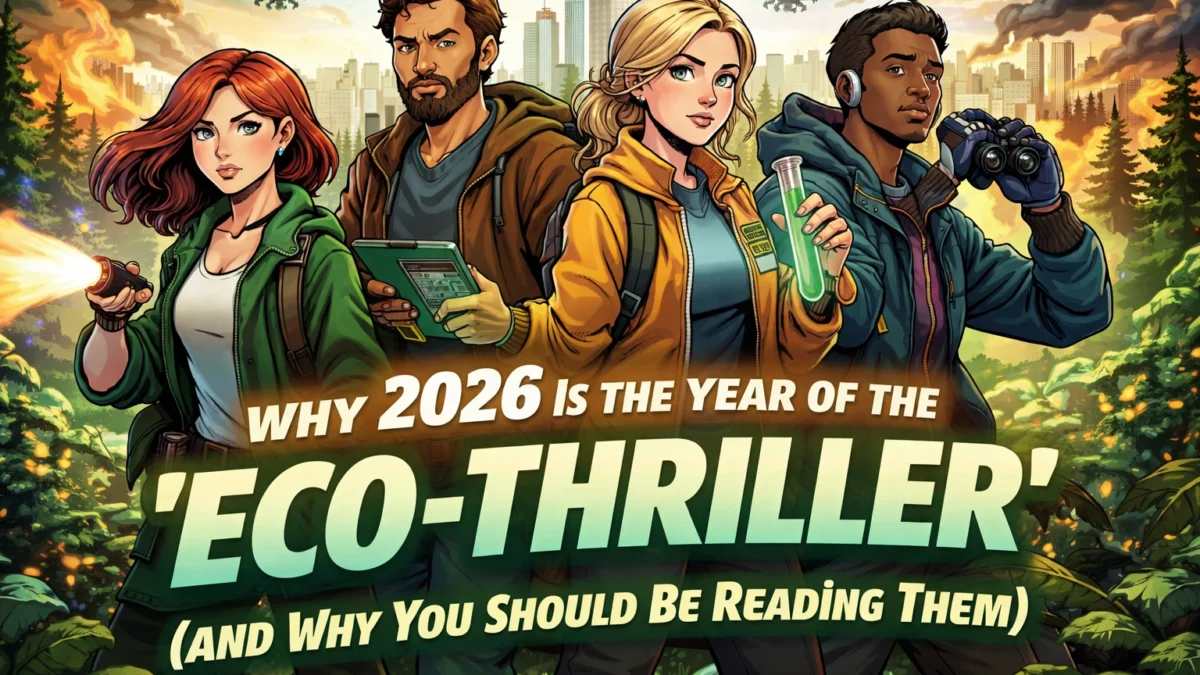
But I am here to tell you something exciting: eco-thrillers have officially taken over, and 2026 is shaping up to be the year they dominate your reading list, your streaming queue, and probably your group chat too.
So grab your metaphorical field respirator. We're diving in.
Wait, What Even Is an Eco-Thriller?
Great question. Let's break it down real quick.
An eco-thriller is basically what happens when you take the white-knuckle pacing of a spy novel, the high-stakes tension of an action blockbuster, and then throw in… the actual planet as a character.
We're talking bioweapons. Rainforest conspiracies. Shadowy corporations doing Very Bad Things to ecosystems. Heroes who aren't just saving the love interest, they're saving entire species.
It's thrilling. It's ecological. Hence the name.
And in 2026? These stories aren't just popular. They're everywhere.
The Numbers Don't Lie (And They're Kind of Wild)
Here's a stat that made me do a double-take:
Climate fiction now makes up 3.5% of all published books.
That might not sound like a lot until you realize it was only 0.6% back in 2011. We're talking almost six times the growth in just over a decade.
And it's not slowing down.
Publishers have figured out something important: readers, especially younger ones, want stories that feel real. Not "realistic" in a boring way. Real in a "this could actually happen and that's terrifying and also kind of exciting" way.
Eco-thrillers deliver exactly that.

Why 2026 Specifically? (Timing Is Everything)
Okay, so climate fiction has been growing for years. Why is this year the tipping point?
A few reasons:
1. Gen Z and Millennials Are Running the Show
If you were raised during the era of climate strikes and viral documentaries about melting ice caps, you don't see environmental themes as "niche." You see them as baseline.
For these readers: and let's be honest, they're buying a LOT of books: eco-conscious storytelling isn't a nice-to-have. It's expected.
2. Thriller Fans Want Something Fresh
The spy-catches-the-bad-guy formula is timeless, sure. But readers are hungry for villains with real-world stakes. A shadowy biotech company poisoning water supplies? That hits different than Generic Evil Mastermind #47.
3. Hope Is Making a Comeback
Here's the thing about eco-thrillers in 2026: they're not all doom and gloom.
The genre has shifted toward what some folks call "hopepunk" or "solarpunk": stories that acknowledge the crisis but focus on resilience, adaptation, and characters who actually do something about it.
It's empowering instead of paralyzing. And honestly? We needed that.
The Rainsavers: Your Gateway Drug to the Genre
Speaking of characters who do something about it…
If you haven't discovered The Rainsavers yet, consider this your formal introduction.
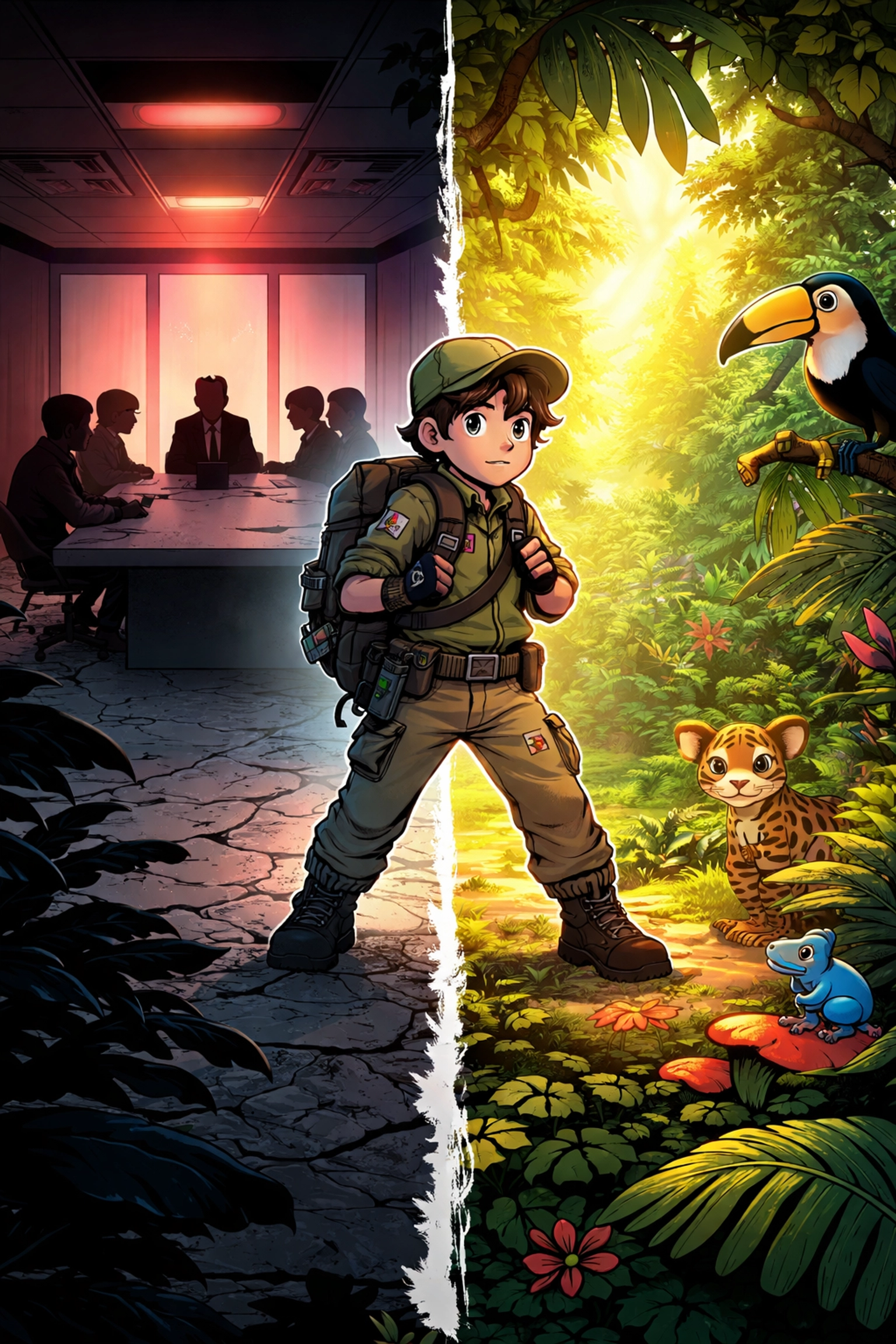
Picture this: a team of unlikely heroes. A rainforest under siege. Tactical tech, high-stakes missions, and villains whose motivations are terrifyingly grounded in reality.
It's got everything an eco-thriller should have:
- Page-turning pacing (we're talking "one more chapter" syndrome)
- Characters you'll genuinely root for (check out the full character roster)
- Real environmental stakes that make the action feel urgent
- A tone that balances serious themes with adventure-forward fun
Basically, if you're looking for a 2026 eco-thriller that gets it, this is your starting point.

"But I Don't Usually Read Environmental Stuff"
Heard. Totally heard.
Here's the beautiful thing about eco-thrillers: you don't have to be an environmentalist to enjoy them.
You just have to like:
- ✅ Suspense
- ✅ Action
- ✅ Teams of ragtag heroes
- ✅ Villains with actual motivations
- ✅ Plot twists that make you audibly gasp on the subway
The environmental angle isn't there to preach at you. It's there to raise the stakes. Because when the threat isn't just "one person might die" but "an entire ecosystem might collapse," suddenly everything feels more urgent.
And urgency? That's the secret ingredient in every great thriller.
What Makes a Great Eco-Thriller? (A Totally Scientific Checklist)
Not all eco-thrillers are created equal. Here's what separates the "meh" from the "GIVE ME THE SEQUEL NOW":
☑️ Stakes that feel tangible
Abstract threats are hard to care about. The best eco-thrillers make you see what's at risk: specific places, specific species, specific communities.
☑️ Villains with actual logic
Mustache-twirling evil is out. Corporations cutting corners for profit? Governments looking the other way? That's the stuff that keeps you up at night.
☑️ Heroes who aren't perfect
Nobody wants to read about Captain Perfect McDoesEverythingRight. Give us flawed, messy, relatable characters who grow along the way.
☑️ Pacing that doesn't let up
An eco-thriller should still be a thriller. That means tension, cliffhangers, and chapters that end exactly when you were about to put the book down.
☑️ Hope woven into the chaos
Not toxic positivity. Not "everything will be fine" vibes. But genuine moments of resilience and human connection that remind you why fighting matters.
The Best Part? You're Right on Time
Here's the thing about jumping into a genre moment: timing matters.
If you'd discovered superhero comics in 1962, you'd have been riding that wave for decades. Same with fantasy after a certain ring-related trilogy. Or dystopian YA in the early 2010s.
Eco-thrillers are having that moment right now.
And the best part? The genre is still evolving. Writers are experimenting. New voices are entering the space. The conventions are still being written.
Which means if you start reading now, you're not just catching a trend: you're shaping what becomes the canon.
Pretty cool, right?
So Where Do You Actually Start?
Look, I could give you a massive list and overwhelm you completely.
But let's keep it simple.
Start with The Rainsavers.
It's designed to be accessible. The characters are compelling from page one. The action is immediate. And it captures everything that makes 2026 eco-thrillers so magnetic: without requiring you to have a degree in environmental science to follow along.
From there? You'll know if the genre clicks for you. (Spoiler: it probably will.)
And if you're already a fan? Dive into the episodes and get caught up on what the team has been up to. Trust me: it only gets wilder.
Your Move, Reader
2026 is officially the year of the eco-thriller.
The stories are here. The characters are waiting. The stakes have never felt more real; or more thrilling.
So what are you waiting for?
