Meta Description: Not sure if you're in the mood for climate doom, solar-powered utopias, or rebellious hope? Here's your guide to cli-fi, solarpunk, and hopepunk, plus which eco-fiction genre fits your current vibe.

So you want to read some eco-fiction, but the genre landscape looks like a jungle with too many trails. Do you want collapse? Hope? Solar panels and rooftop gardens? Angry rebels planting trees while the world burns?
Good news: there's literally a genre for every mood.
Let's break down the three big players in environmental fiction right now, cli-fi, solarpunk, and hopepunk, so you can match your current emotional state to the perfect read.
Spoiler: one of them involves genius orangutans. But we'll get there.
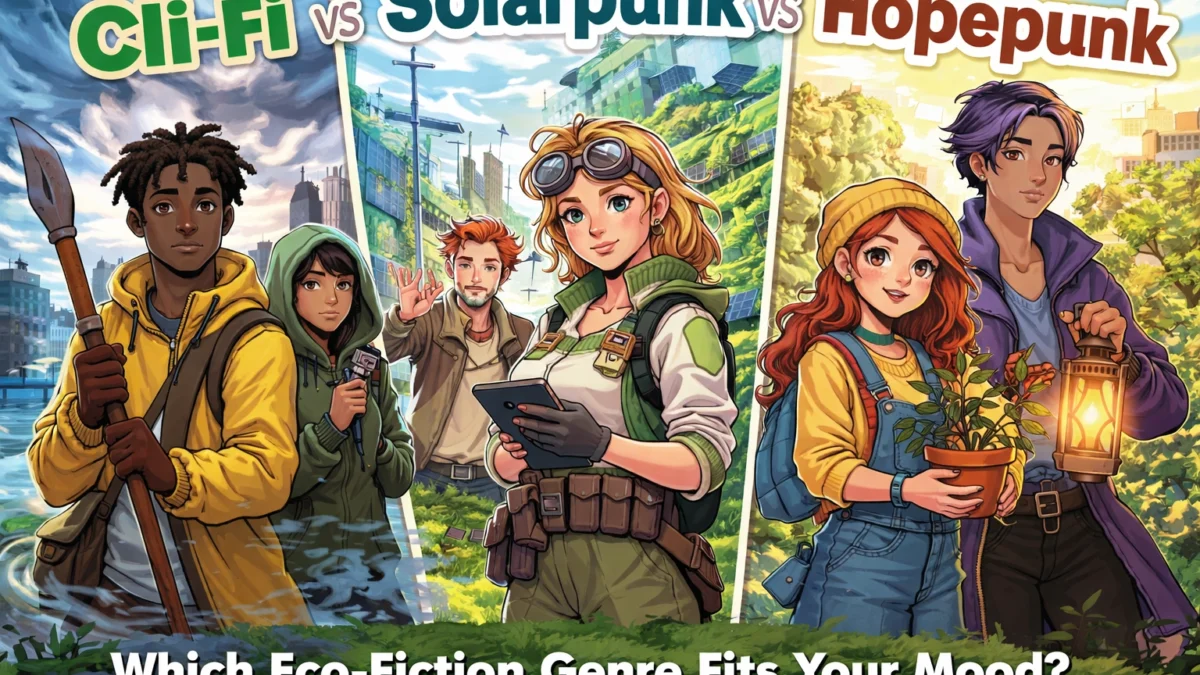
🌪️ Cli-Fi: For When You Want to Feel Things (Intensely)
Vibe check: Anxious. Melancholy. A little bit "I'm not okay and neither is the planet."
Cli-fi, short for climate fiction, is the genre that looks climate change dead in the eye and says, "Okay, let's explore how bad this could get."
These stories feature worlds already changed (or actively changing) due to environmental collapse. Think rising seas, extreme weather events, resource wars, and characters navigating emotional arcs as heavy as the storms outside.

What cli-fi does best:
- Emotional depth. You'll feel connected to characters dealing with loss, displacement, and survival.
- Realistic stakes. The consequences feel tangible, even when speculative.
- Crisis-driven plots. Fast pacing, high tension, plenty of "oh no" moments.
Who should read cli-fi:
- People processing climate anxiety through fiction
- Readers who want stories that don't sugarcoat reality
- Anyone who finds catharsis in a good fictional apocalypse
The catch? Cli-fi can be heavy. If you're already doom-scrolling climate news, this genre might pile on rather than lift you up.
☀️ Solarpunk: For When You Need a Vision of What Could Be
Vibe check: Optimistic. Creative. "What if we actually fixed this?"
Solarpunk is the genre that asks: what happens after we get our act together?
These stories imagine futures where humanity has embraced renewable energy, sustainable living, and communities built around cooperation rather than competition. Think rooftop gardens, wind turbines that look like art installations, and characters solving problems through ingenuity rather than violence.
What solarpunk does best:
- Hopeful world-building. The settings themselves feel like a blueprint for better futures.
- Tech optimism. Innovation is part of the solution, not the problem.
- Community-focused. Collective action beats lone wolf heroics.
Who should read solarpunk:
- People who want inspiration, not just warnings
- Readers tired of dystopia after dystopia
- Anyone who wants to imagine solutions alongside the story
The catch? Solarpunk can sometimes feel… a little too utopian. If you crave conflict and tension, some solarpunk can feel like wandering through a really nice farmer's market. Pleasant, but low-stakes.
✊ Hopepunk: For When You Want to Fight Back (With Heart)
Vibe check: Defiant. Determined. "Hope is an act of rebellion."
Hopepunk sits somewhere between cli-fi's anxiety and solarpunk's optimism. It acknowledges that things are hard: maybe even terrible: but insists that choosing hope, kindness, and resistance anyway is the most radical thing you can do.
These stories feature characters who fight not because they're sure they'll win, but because giving up isn't an option. The world might be on fire, but they're still planting trees. They're still building community. They're still showing up.

What hopepunk does best:
- Emotional resilience. Characters model how to keep going when things look bleak.
- Active hope. This isn't passive optimism: it's hope that requires work.
- Found family energy. Teams, crews, and communities matter more than solo heroes.
Who should read hopepunk:
- People who want realism and hope
- Readers who love ensemble casts and team dynamics
- Anyone who believes small acts of defiance add up to something bigger
The catch? Hopepunk can still be emotionally intense. The hope is hard-won, and you'll feel the weight of the struggle along the way.
🧠 Quick Mood Quiz: Which Genre Fits Right Now?
Answer honestly:
1. How are you feeling about the state of the world today?
- A) Overwhelmed. I just want fiction that gets it.
- B) Ready for something that shows me a better way.
- C) Determined. I want characters who fight even when it's hard.
2. What kind of ending do you prefer?
- A) Bittersweet or ambiguous. Realistic.
- B) Genuinely happy. I want to feel good.
- C) Earned. Hope that didn't come easy.
3. How do you feel about technology in fiction?
- A) Often part of the problem.
- B) Could be part of the solution if we do it right.
- C) It's complicated: depends on who's using it.
Mostly A's: You're in a cli-fi mood. Lean into it.
Mostly B's: You need solarpunk energy in your life.
Mostly C's: Hopepunk is calling your name.
🦧 Where The Rainsavers Fits In
Here's the thing: the best eco-fiction doesn't always fit neatly into one box.
The Rainsavers pulls from all three traditions. There's real environmental stakes (cli-fi energy), but also a team of heroes: including a genius orangutan named Alpha: who refuse to give up (hopepunk vibes). And the underlying message? That collective action and ingenuity can make a difference (solarpunk at its core).
It's eco-adventure fiction for people who want their environmental themes wrapped in action, mystery, ancient secrets, and characters you'll actually root for.

If you've ever wanted:
- ✅ Climate stakes that feel urgent but not hopeless
- ✅ A found-family team of heroes with distinct personalities
- ✅ Ancient mysteries colliding with modern threats
- ✅ Adventure pacing that keeps you turning pages
- ✅ An orangutan who's smarter than most humans (honestly, same)
Then you might want to check out The Rainsavers.
🌿 The Real Takeaway
Eco-fiction isn't one thing. It's a whole spectrum of ways to process, imagine, and engage with our relationship to the planet.
Some days you need cli-fi's catharsis. Some days you need solarpunk's vision. And some days you need hopepunk's defiant heart.
The point isn't to pick one forever. It's to find what fits your mood right now: and let fiction do what it does best: help you feel something, imagine something, and maybe even believe something new is possible.
Ready to dive into eco-adventure that blends all three?
