Meta Description: Level up from reader to Eco-Hero! Join Tom "Primal" Swift in this 2026 field guide. Discover 5 practical steps to protect the Amazon rainforest, use the latest eco-tech, and support reforestation while diving into the world of The Rainsavers.
Field Notes by: Tom "Primal" Swift
Date: May 12, 2026
Location: Sector 7, Central Amazon Basin (Signal is spotty, blame the canopy!)
Hey there, Eco-Heroes!
Tom Swift here: though most of the team just calls me "Primal" because I prefer the smell of damp earth over air conditioning any day of the week. I’m currently hunkered down under a giant Kapok tree, adjusting my tactical respirator. The humidity today is sitting at a crisp 98%, and my bioluminescent seedling kit is glowing like a neon sign in the twilight.
Being part of The Rainsavers isn't just about high-stakes missions and outrunning corporate "extraction teams." It’s about the dirt under our fingernails and the future of the lungs of our planet. Steve (the big boss) asked me to put together a field guide for those of you following our adventures from the safety of a dry couch.
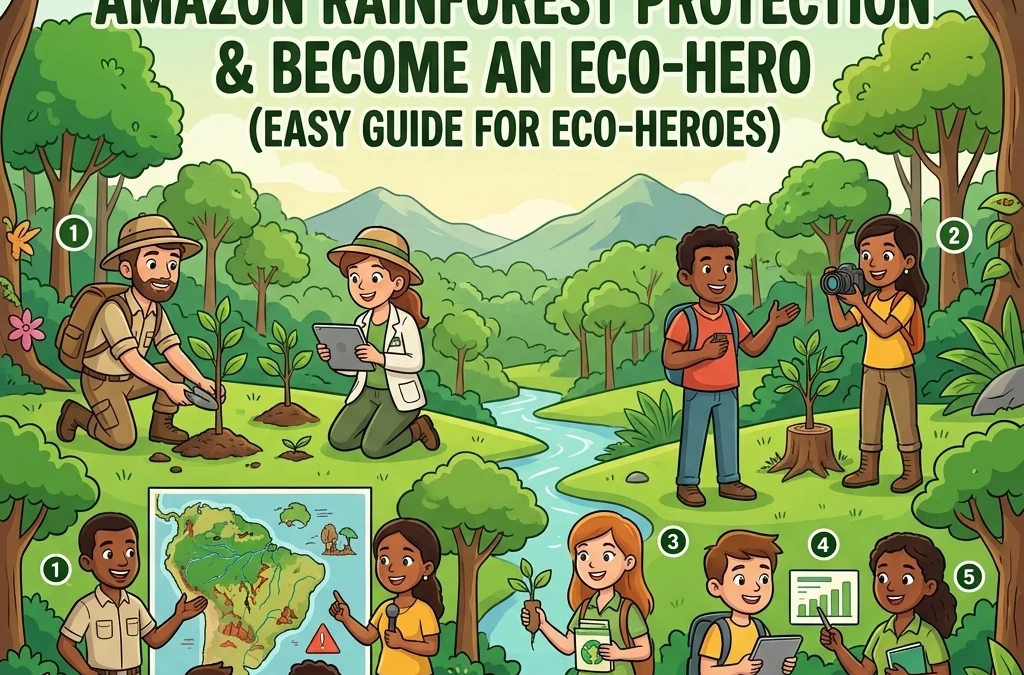
You don't need a tactical respirator or a background in guerrilla reforestation to be a hero in 2026. You just need a plan. Here is my "Primal" guide to becoming an Eco-Hero in five easy steps.
Step 1: Hack Your Grocery Run (Bio-Conscious Shopping)
In the field, we use AR-scanners to detect illegal logging equipment. At home, your smartphone is your best weapon. By 2026, we’ve seen a massive surge in "Ghost Ingredients": stuff hidden in your food that's quietly destroying the Amazon.
The Mission:
- Scan for Palm Oil: It’s in everything from your morning cereal to your favorite shampoo. If it’s not certified sustainable, it’s likely coming from a place that used to be a lush forest. Use an app to scan barcodes and find "Deforestation-Free" brands.
- Beef with a Conscience: Large-scale cattle ranching is one of the biggest drivers of Amazon clearing. I’m not saying you have to eat synthesized protein bars like we do on long treks, but reducing your beef intake: or choosing local, grass-fed options: starves the demand for cleared rainforest land.
- The Wood Check: If you’re buying a new desk or a guitar, check for the FSC (Forest Stewardship Council) seal. Avoid mahogany, rosewood, and ebony unless you know exactly which patch of earth they came from.

Caption: Tom "Primal" Swift scanning a product label with his tactical wrist-com, highlighting "Rainforest Safe" certification.
Step 2: The "No-Trace" Gear (Digital & Material Minimalism)
When I’m moving through the jungle, I carry everything I need on my back. If I leave a single piece of plastic behind, I’ve failed. You can apply that same "extraction" mindset to your daily life.
The Mission:
- The Paperless Revolution: It’s 2026; why are we still using dead trees for grocery lists? Switch to digital note-taking. When you absolutely must use paper, hunt for "Tree-Free" alternatives. We’re talking paper made from hemp, bamboo, or even agricultural waste like sugarcane stalks (bagasse).
- Recycled is the Minimum: Don’t just look for the recycling symbol; look for "Post-Consumer Recycled" (PCR) content. It means the material has actually lived a life and been brought back from the brink, rather than just being "recyclable" in theory.
- Choose the Gear that Lasts: Eco-Heroes don't buy fast fashion. We buy gear that can handle a Category 4 storm and still look good. Support companies that offer repair programs rather than replacements.
Step 3: Eco-Mobility & Kinetic Energy
In the series, our team often uses low-acoustic, electric skiffs to navigate the river systems without disturbing the local jaguars. In your world, the "urban jungle" has its own set of rules.
The Mission:
- Kill the Idle: Carbon emissions don't just warm the planet; they mess with the delicate rainfall cycles that the Amazon relies on. If you can’t walk or bike, use the 2026 mass-transit apps to carpool.
- Support Local Infrastructure: Become a "Bike Lane Warrior." Use your voice to advocate for better public transit in your city. The less oil we demand, the less pressure there is to drill in protected areas.
- Kinetic Tech: Check out the new 2026 wearable chargers that juice up your phone just from the movement of your walking. It’s small, but every milliamp of green energy counts.

Caption: A high-tech, solar-powered Rainsavers drone hovering above the canopy, monitoring forest density.
Step 4: Support the Real Sentinels (Indigenous Communities)
If there’s one thing I’ve learned while working alongside the characters you’ve met in our character logs, it’s that the Indigenous peoples are the true guardians of the forest. They’ve been doing this for millennia, long before we showed up with our fancy drones and bioluminescent seeds.
The Mission:
- Direct Support: Look for organizations like the "Protect-an-Acre" initiatives. These programs put money directly into the hands of Indigenous-led conservation efforts. They know the land better than any satellite ever could.
- Advocacy: Use your platform to support land rights. When Indigenous communities have legal titles to their land, deforestation rates drop significantly.
- Learn the History: Dive into why these cultures are so vital. Understanding the "why" makes you a much more effective advocate when someone asks why you care so much about a forest thousands of miles away.
Step 5: Join the Rainsavers Community
Being a solo hero is a myth. Even the toughest explorers need a team. That’s why we built the "Rabbit Hole": a place for fans and activists to converge.
The Mission:
- Enter the Contest: We’re always running events like the Down the Rabbit Hole Contest. It’s a way to engage with the story and the real-world science behind it.
- Spread the Word: Share our blog-page with your friends. The more people who understand the stakes, the harder it is for the "villains" of the real world to operate in the shadows.
- Read the Field Reports: Our books aren't just entertainment; they’re meant to change the way you see the world. Check out our thoughts on why eco-fiction is the future of adventure.
Why We Plant the Glowing Seeds
I mentioned the bioluminescent seedlings earlier. In the world of The Rainsavers, we use these genetically modified plants to track reforestation progress in real-time from orbit. Each glowing leaf represents a victory against the darkness of deforestation.
Every time you choose a sustainable product, or support an NGO, or even just share a story about the Amazon, you’re planting a metaphorical seed. It might seem small, but when a million people do it, the forest starts to glow.
You don't need to be a character in a book to save the world. You just need to decide that the world is worth saving.
I’ve got to pack up now: my respirator is chirping, and I think I hear a heavy rain coming. And in this part of the world, when it rains, it really pours.
Stay wild, stay green, and stay heroic.
Join the fight: Read Book One now.
https://rainsavers.com
