Meta Description: As the 2026 Climate Fiction Prize heats up, we explore why eco-thrillers are the most relevant genre of the year. From high-stakes adventure to hope-filled narratives, see why Cli-Fi is more than just a trend, it’s a movement.
Hey there, fellow readers and adventure seekers! Steven G. Samuels here, CEO of The Rainsavers.
It’s Tuesday, April 21, 2026, and if you’ve been anywhere near a bookstore, a literary blog, or even a news feed lately, you’ve probably noticed something: Climate Fiction, or "Cli-Fi", is absolutely exploding. It’s not just a niche category anymore; it’s the conversation everyone is having.
But the big question I keep hearing at conferences and in our own community is: Does it really matter? In a world where we’re already seeing real-time shifts in our environment, why do we want to spend our downtime reading about it?
Well, pull up a chair. I’ve got some thoughts on why the "new buzz" behind eco-thrillers is more than just a passing phase, it’s actually the most exciting thing happening in publishing right now.
The "Climate Fiction Prize" Fever
First off, let’s talk about the elephant in the room: The Climate Fiction Prize.
In its second big year, the buzz around this award has reached a fever pitch. We’re seeing submissions double compared to last year, and what’s really interesting is who is writing these stories. It’s no longer just environmental activists; we’re seeing major thriller novelists, sci-fi giants, and even romance writers pivoting toward eco-centric themes.
The Prize has put a spotlight on the fact that these stories aren't just "educational", they’re pulse-pounding entertainment. It’s validated the idea that you can have a story with world-ending stakes that still feels deeply personal, human, and, dare I say it, fun to read.

Why 2026 is the Year of the Eco-Thriller
Back in the early 2020s, a lot of climate fiction was, well, pretty depressing. It was all "the world is ending and there’s nothing we can do about it." It was dystopian with a capital D.
But things have changed. In 2026, readers are looking for something different. They’re looking for Eco-Thrillers.
An eco-thriller takes those massive environmental stakes and wraps them in a high-octane plot. Think ancient mysteries, high-tech gadgets, and heroes who aren’t just trying to survive the apocalypse, but are actively fighting to prevent it. This shift is why why eco-fiction will change the way you think about adventure stories.
We’ve moved from "the sky is falling" to "let's go save the sky."
What makes an Eco-Thriller work in 2026?
- The stakes are real: We don’t need to imagine a fake monster when the loss of a rainforest or a rising tide provides all the tension we need.
- The technology is cool: From solar-powered drones to genetic engineering, the "sci" in this "sci-fi" is closer to home than ever.
- The heroes are relatable: They aren't just guys with capes; they’re scientists, hackers, and even a certain genius orangutan.
Breaking the "Doom and Gloom" Cycle
One of the reasons Cli-Fi matters so much right now is that it provides a space to process "climate anxiety" without being overwhelmed by it.
I’ll be the first to admit it: the news can be a lot. But fiction allows us to explore these themes through the lens of adventure. When you’re reading a series like The Rainsavers, you aren't just sitting there worrying about the future. You’re embarking on a mission. You’re solving puzzles. You’re winning.
Fiction gives us a rehearsal for reality. It shows us that even when the odds are stacked against the planet, a dedicated team (and maybe some cutting-edge tech) can make a difference.

The Blur Between Reality and Fiction
As I look at the headlines this April, it’s getting harder to tell where the book ends and the real world begins. We’ve seen historical sites threatened by weather and ancient technologies being rediscovered to solve modern energy problems.
This is exactly why mixing genres is so popular right now. Readers love the "what if" factor. What if an ancient German secret from WWII held the key to modern carbon capture? What if a forgotten civilization knew how to manage water better than we do today?
We’ve found that our readers are particularly obsessed with how modern eco-heroes are saving both fiction and the planet. They want stories that feel like they could happen next week.
It’s All About the Team
In 2026, the "lone wolf" hero is out. The eco-hero team is in.
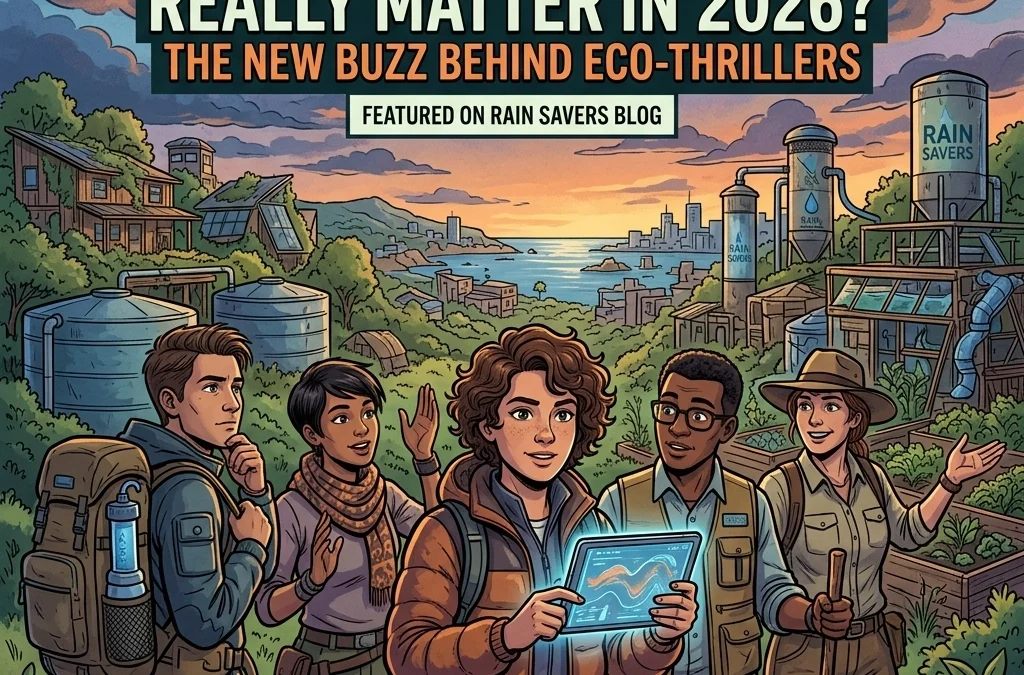
Why? Because solving global problems requires collaboration. You need the muscle, the brains, the tech expert, and the person who knows the land better than anyone else. This shift is something we’ve leaned into heavily at The Rainsavers.
Whether it's the hacking skills of Sunbyte or the raw power of Primal, it takes a village: or at least a very specialized squad: to take on the modern threats facing our environment.
This team dynamic makes for better storytelling, too. More banter, more conflict, and more "oops" moments when the plan goes sideways in the middle of a torrential downpour.

So, Does It Really Matter?
The short answer? Yes.
The long answer? Climate fiction matters because it changes the narrative from one of inevitable loss to one of active protection. It takes the biggest challenge of our generation and turns it into the biggest adventure of our lives.
When you read an eco-thriller, you’re not just killing time. You’re engaging with the world. You’re seeing possibilities. And honestly, you’re probably having a lot more fun than you would reading a standard, run-of-the-mill detective story.
At The Rainsavers, we’re committed to pushing the boundaries of what this genre can be. We want to give you stories that make you stay up until 2 AM turning pages, but also make you look at the trees in your backyard a little differently the next morning.
The Final Verdict
If the buzz around the Climate Fiction Prize has taught us anything, it’s that the world is ready for stories that matter. We want thrillers with heart, adventures with stakes, and heroes who look like us (or, you know, much cooler versions of us with better gadgets).
The eco-thriller isn't just a sub-genre anymore. It’s the main event.
Are you ready to join the mission?
See how we blend both high-stakes adventure and environmental heart at https://rainsavers.com. Trust me, the rainforest has never looked this intense.

Stay curious, stay adventurous, and maybe keep an umbrella handy: it’s raining save-the-world vibes over here.
: Steven G. Samuels, CEO of The Rainsavers
