Hey there, fellow planet-dwellers! It’s 2026, and if you’ve looked at a newsfeed lately, you know the vibe. Between the heatwaves and the headlines, it’s easy to feel like we’re living in a mid-budget disaster movie. But here’s the thing: while the world is changing, our stories are changing too.
Lately, there’s been a massive surge in what the book world calls "Cli-Fi" (Climate Fiction) and "Eco-Thrillers." If you’re looking to dive into a story that tackles the big environmental questions but aren't sure if you want a somber meditation on melting ice or a high-octane chase through the jungle with a genius orangutan, this guide is for you.
At The Rainsavers, we live and breathe this stuff. We believe you don’t have to choose between "important themes" and "pure, unadulterated fun." So, let’s break down the difference between these two genres and figure out which one should be next on your nightstand.
The "Cli-Fi" Vibe: A Slow Burn for the Soul
Traditional Climate Fiction: or Cli-Fi: is often the "thinking person's" environmental story. Think of it as a deep, emotional dive into the consequences of a changing world. It’s usually set in a future where the worst has already happened, or is slowly happening right now.
The Pacing: It’s a slow burn. You aren’t usually running from explosions; you’re walking through a flooded Manhattan or trying to grow crops in a parched dust bowl.
The Mood: It can be a bit heavy. Cli-Fi often deals with "eco-grief" and the way society shifts when resources get tight. It’s brilliant for reflection, but maybe not what you want when you’re looking for an escape after a long Tuesday at work.
The Hope: Hope in Cli-Fi is often small and personal: finding a way to rebuild a community or saving a single species from the brink.
If you want a story that makes you ponder the philosophical nature of humanity’s relationship with Earth, Cli-Fi is your jam. But if you want to feel like you’re actually doing something about it? You might want to switch lanes.
The "Eco-Thriller" Punch: Action with a Green Conscience
Now, let’s talk about the Eco-Thriller. This is where things get spicy. In an Eco-Thriller, the environment isn't just a backdrop: it’s the stakes. It’s the ticking bomb that needs to be defused.
While Cli-Fi asks, "How do we live with this?", the Eco-Thriller asks, "How do we stop the bad guys from making it worse?"

The Pacing: Breakneck. We’re talking global travel, high-tech gadgets, and pulse-pounding missions.
The Mood: Adventurous, urgent, and often surprisingly funny. Think Indiana Jones meets a modern environmental scientist, but with way more cool tech.
The Hope: Hope here is massive. It’s about agency. It’s about a team of heroes taking a stand against corporate greed and shadowy villains to save the planet in real-time.
This is exactly where The Rainsavers series lives. We take the high-stakes world of climate protection and turn it into a six-book saga that feels like a summer blockbuster.
Why You Don’t Have to Choose Between "Important" and "Fun"
There’s this weird myth in the literary world that if a book is "about the environment," it has to be a depressing lecture. We’re here to call "oops" on that! (See what I did there? A little Field Notes humor for you.)
You can absolutely have a book that explores the devastating effects of deforestation or the dangers of bio-weaponry while still having a protagonist who can punch through a reinforced door. In fact, we’d argue that the best way to process climate anxiety is through a story that gives you a sense of power and victory.
When Tom "Primal" Swift teams up with Alpha (his brilliant orangutan partner) in Book One: Primal Awakening, they aren't just sitting around talking about the Amazon disappearing. They are on the ground, using Dr. Mubari’s tech and Primal’s superhuman strength to stop Bossman from tearing the heart out of the rainforest.
Inside the Tech: The Eco-Thriller Toolkit
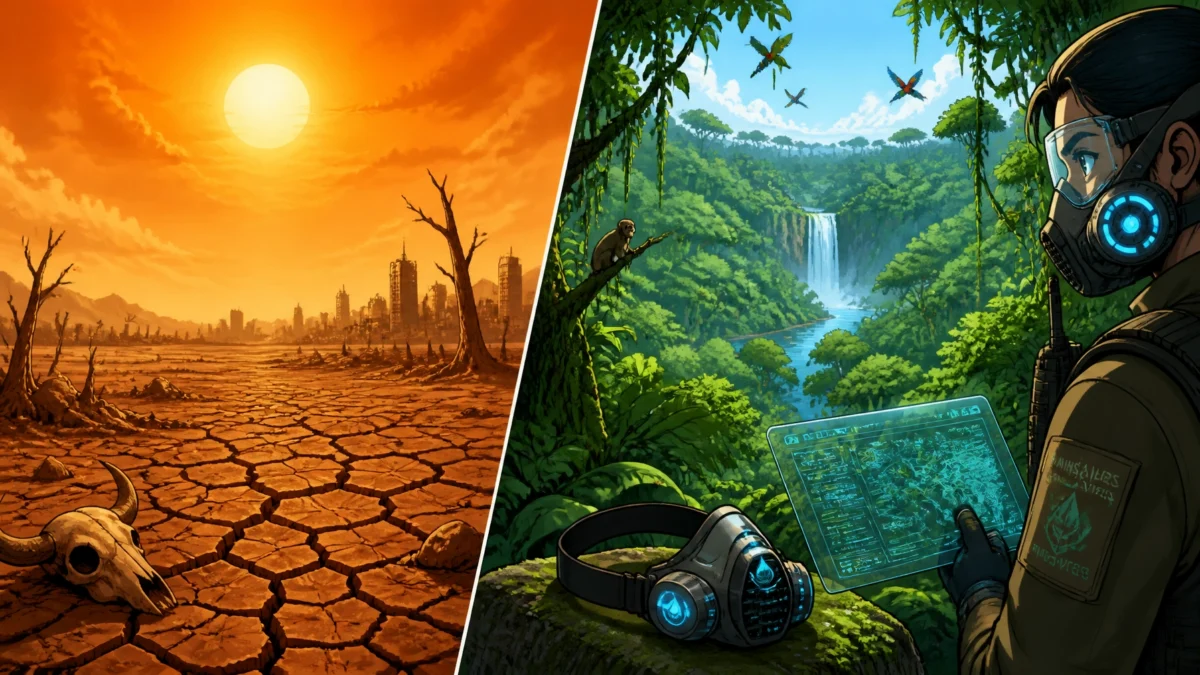
One of the coolest parts of the Eco-Thriller genre is the "Speculative Tech." In The Rainsavers, we aren't just using shovels and signs. We’re talking about field respirators that allow our heroes to survive bioweapons, and mysterious "red mercury" crystals that power ancient weapons.

In our world, the villains aren't just mustache-twirling caricatures. They are tech-savvy rogues like Leonard West, who isn't afraid to use old-school German technology from the 1940s and merge it with modern DNA-mutating science. When you’re reading an Eco-Thriller, you get the thrill of the "what if?" alongside the "how do we save it?"
If you’re a fan of deep world-building, you’ll love diving into the characters who make this tech possible. Whether it’s Sunbyte’s hacking skills or Jungle Dart’s tactical precision, every piece of tech serves the mission: protect the Earth.
The Spirit Tree: Finding Hope in 2026
If traditional Cli-Fi is the warning, then the Eco-Thriller is the call to arms. In Book Five: Curse of the Spirit Tree, the stakes go from "save the woods" to "save the spiritual essence of the planet." The Spirit Tree isn't just a plant; it's a connection to the Earth that our hero, Primal, has to protect at any cost.

In 2026, we don’t just want to read about things falling apart. We want to read about things being held together by people who care. That’s the core of why eco-fiction will change the way you think about adventure stories. It’s about taking the very real fears we have about our planet and channeling them into a narrative where heroes actually win.
Meet the Rogue: The Villain Problem
Every good Eco-Thriller needs a foil. In The Rainsavers, that’s Leonard West (who later becomes the terrifying Mortalis). He’s the dark side of the eco-adventure: someone who wants the Earth's power for himself, using vintage German tech and lunar bases to achieve his goals.

Comparing him to a traditional Cli-Fi "villain" (which is often just "the weather" or "systemic apathy") shows why Eco-Thrillers are so engaging. Having a face to the threat makes the fight feel more personal. It makes the victory feel more earned.
So, Which One Should You Read?
If you want to spend a rainy afternoon contemplating the future of the human race through a poetic, perhaps slightly depressing lens: Go for Cli-Fi.
If you want to stay up until 2:00 AM because you have to know if Alpha and Primal escape the Giza Pyramid or if the Spirit Tree survives the assault: Go for an Eco-Thriller.
At the end of the day, we’re biased. We love the high stakes, the gadgets, and the feeling of a team coming together to save the world. We think the planet is worth fighting for: and that the fight should be one hell of an adventure.
Ready to jump into the action? You don't have to wait for the future to happen. Start the journey today.
Read Book One: Primal Awakening now
Meta Description: Compare Climate Fiction vs Eco-Thrillers in this 2026 guide. Discover why high-stakes adventure and environmental themes make The Rainsavers a must-read.
