Meta Description: Tired of dry, preachy eco-fiction? Avoid these 7 common mistakes when picking environmental protection thrillers and discover how to find high-stakes adventure that actually keeps you up at night.
Let’s be honest: the "environmental thriller" genre has a bit of a reputation problem. For years, if you picked up a book about saving the planet, you were just as likely to get a 400-page lecture on carbon footprints as you were a gripping story. We’ve all been there: settling into a chair expecting an adrenaline-pumping ride, only to find ourselves drowning in dry data and "educational" dialogue.
But it’s 2026, and the game has changed. High-stakes science fiction and eco-adventures are becoming the go-to for readers who want tactical action mixed with meaningful consequences. At The Rainsavers, we live and breathe this stuff. We know that saving the world shouldn't be boring.
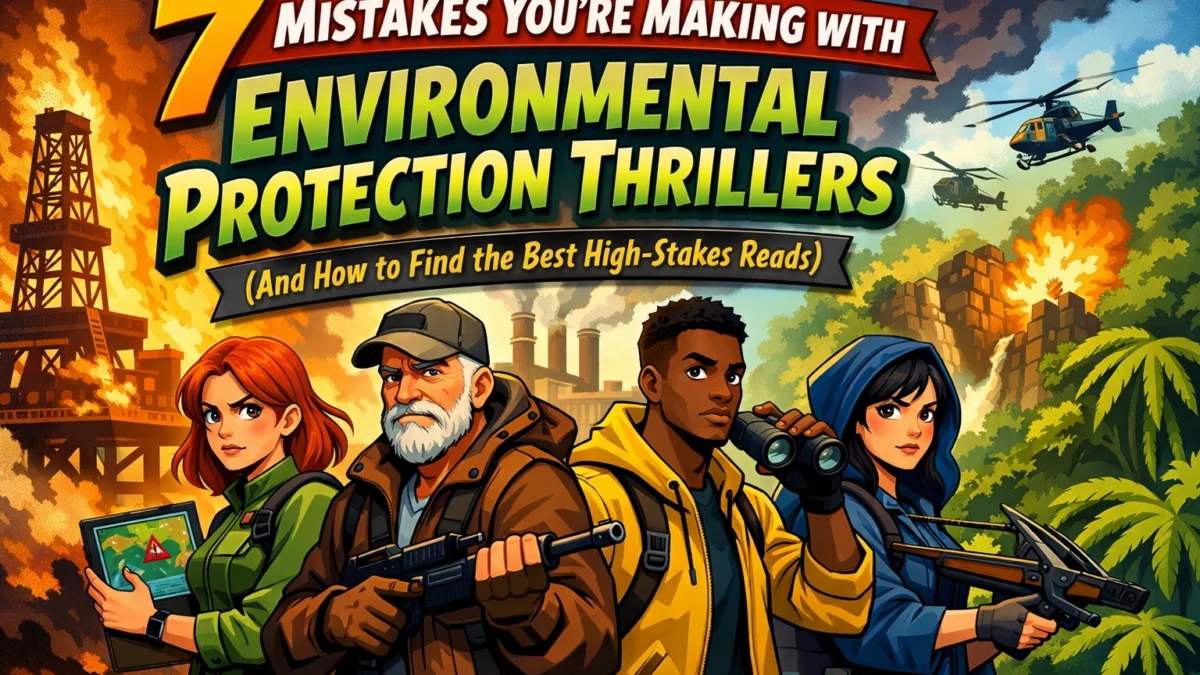
If your reading list has been feeling a little dusty lately, you might be falling into some common traps. Here are the 7 mistakes you’re making with environmental protection thrillers: and how to fix them so you can find the high-octane reads you actually deserve.
1. You’re Mistaking "Importance" for "Entertainment"
This is the biggest hurdle. Just because a topic is globally significant: like climate change or resource depletion: doesn’t mean the book is automatically good. A lot of readers feel a sense of "obligation" to read "important" books, even if the prose is as dry as a drought-stricken riverbed.
The mistake here is choosing a book based solely on the message rather than the craft. A great environmental thriller should be a thriller first. If you aren't gripping the edge of your seat during a high-speed chase involving Black Rain technology, then the "importance" of the message doesn't really matter: you’ll probably stop reading by chapter three anyway.

Alt-text: A high-tech tactical team navigating a dense, bioluminescent jungle during a storm.
2. Settling for the "Lone Wolf" Protagonist
We get it. The brooding, solitary hero is a classic trope. But in the world of environmental protection, the "lone wolf" is often a mistake. Environmental threats are massive, systemic, and complex. One guy with a handgun and a grudge isn't going to stop a global ecological collapse.
When you’re looking for a top-tier read, look for team-based adventures. There is something much more realistic: and exciting: about a specialized group of experts working together. Whether it’s a tactical lead, a tech genius, or a biological specialist, the chemistry between a crew makes the stakes feel higher. If you're wondering why this works so well, check out our take on why team-based adventure series are taking over.
3. Ignoring the "German WWII" Connection
You might be thinking, "What does history have to do with environmental science fiction?" A lot, actually. One of the biggest mistakes readers make is sticking to "pure" contemporary thrillers. Some of the most fascinating high-stakes reads involve secret histories.
Think about it: what if the environmental threats we face today were actually accelerated by lost German WWII technology? Or what if an ancient occult object was the key to a modern bioweapon? When a thriller blends historical mystery with modern sci-fi, the villain’s motivation becomes much more terrifying. It adds a layer of "pulp adventure" energy that keeps the story from feeling like a news report.
4. Accepting "Cartoon" Villains
If the bad guy’s only motivation is "I want to destroy the earth because I’m greedy," put the book down. Real-world villains: the ones that actually keep us up at night: usually think they’re the heroes of their own stories.
In a high-stakes read, the antagonist should have a plan that almost makes sense. Maybe they believe that destroying one ecosystem is the only way to save another. Or perhaps they are using ancient technology to "reset" the planet. When the villain is smart, tactical, and slightly relatable, the hero's job becomes ten times harder: and the book becomes ten times better.

Alt-text: A shadowy antagonist in a high-tech lab overlooking a vast, mysterious forest.
5. You’re Skipping the Tactical Details
A "thriller" that skips the "how" isn't really a thriller. If a character "hacks the mainframe" or "saves the forest" in two sentences without any explanation of the tech or the tactics involved, the tension evaporates.
The best environmental protection stories treat the environment itself as a tactical battlefield. How does the humidity affect the equipment? How does the local flora interfere with satellite tracking? We love stories where the characters have to use their wits and their gear to survive. If you want to see how we handle the "nitty-gritty" of tactical eco-adventures, take a peek at our Characters page to see the kind of specialists we're talking about.
6. Falling for the "End of the World" Fatigue
Mistake number six: thinking every environmental thriller has to be a post-apocalyptic wasteland. We’ve all seen the "everything is gray and everyone is hungry" trope. It’s exhausting.
The most refreshing thrillers are the ones that take place now (or in the very near future) where there is still something beautiful left to fight for. Instead of a dead world, look for stories featuring lush, high-stakes environments like the Amazon or hidden ancient groves. The stakes are higher when the beauty of the planet is still visible on the page. It transforms the story from a "survive the end" tale into a "prevent the end" adventure. You can find more about this shift in why eco-fiction will change the way you think about adventure.
7. You’re Searching in the "Mainstream" Only
If you only look at the best-seller endcaps at the airport, you’re going to find the same three plots over and over again. The best, most creative high-stakes environmental thrillers are often found in the world of independent publishing and specialized series.
The "hidden gems" of the genre are often those that aren't afraid to get weird. They mix pulp adventure, secret German WWII history, and cutting-edge bioweapons. They don't follow the "rules" of traditional publishing, which means they can take bigger risks with their plots and characters.

Alt-text: A stack of action-adventure novels with vibrant covers showing high-tech gadgets and ancient symbols.
How to Find the Best High-Stakes Reads
So, how do you actually find these books? Here’s a quick tactical guide:
- Check the "Tech" to "Talk" Ratio: Read the first chapter. If there’s more dialogue about policy than there is action or technical setup, move on.
- Look for "Secret Histories": Search for keywords like "Ancient Mystery," "German WWII Tech," or "Occult Science" alongside "Environmental Thriller." This is where the real fun is.
- Prioritize Character Growth: Ensure the characters aren't just mouthpieces for an ideology. They should have flaws, secrets, and personal stakes.
- Follow the Series: Environmental plots are often too big for a single book. A series: like the 6-book adventure we’ve built: allows for much deeper world-building and more satisfying payoffs.
Why The Rainsavers Might Be Your Next Binge-Read
If you’re tired of making these mistakes and just want a story that hits hard, moves fast, and treats the environment like the ultimate high-stakes playground, you’re in the right place. We specialize in exactly the kind of "tactical eco-adventure" we've been talking about.
Our stories don't lecture; they launch you into the middle of the action. Whether it's stopping a bioweapon derived from German WWII experiments or protecting the mysterious Spirit Tree from those who would exploit its power, we keep the tension high and the characters front and center.
If you’re ready to stop settling for mediocre reads, come see what we’re building at The Rainsavers. You can dive into our episodes, learn about the characters, or even enter our latest contest to get closer to the action.
Stop reading boring books. The planet is worth fighting for, and the stories about it should be worth reading.
Ready for a real adventure?
Visit The Rainsavers Shop and start your journey into high-stakes environmental fiction today!
