
Meta description: Meet the characters of The Rainsavers, a six-book eco-adventure series where Amazon rainforest protection, sci-fi technology, and high-stakes teamwork collide.
What happens when the fight for the Amazon rainforest needs more than one brave hero?
You build a team with different skills, different perspectives, and at least one genius orangutan.
That is the heart of The Rainsavers: a six-book adventure series where rainforest conservation meets espionage, ancient mysteries, fictional sci-fi technology, and very bad decisions made by people who should absolutely know better.
The team’s mission begins with Amazon rainforest protection, but the stakes grow quickly. Deforestation leads to corporate conspiracies. Biogenetic experiments lead to global threats. Red mercury technology leads to ancient weapons, hidden reactors, and villains who really should stop touching mysterious glowing objects.
Through it all, the characters keep the story grounded. Each Rainsaver sees the rainforest differently, and that is exactly why they work so well together.
Mission briefing: the rainforest is not a backdrop
In The Rainsavers, the Amazon is more than a dramatic setting for jungle chases. It is a living system connected to wildlife, communities, rivers, climate, and the future.
That makes every threat personal.
When Bossman targets the forest for profit, the damage is not just about trees disappearing. It affects habitats, local communities, clean water, and the wider climate. When villains attempt to weaponize biology or ancient energy, the team must ask a bigger question:
Can advanced technology protect nature, or will it simply give destructive people bigger tools?
The answer depends on who is holding the controls.
Here are five characters who give the series its environmental heart.
Alpha: the rainforest’s most important strategic thinker
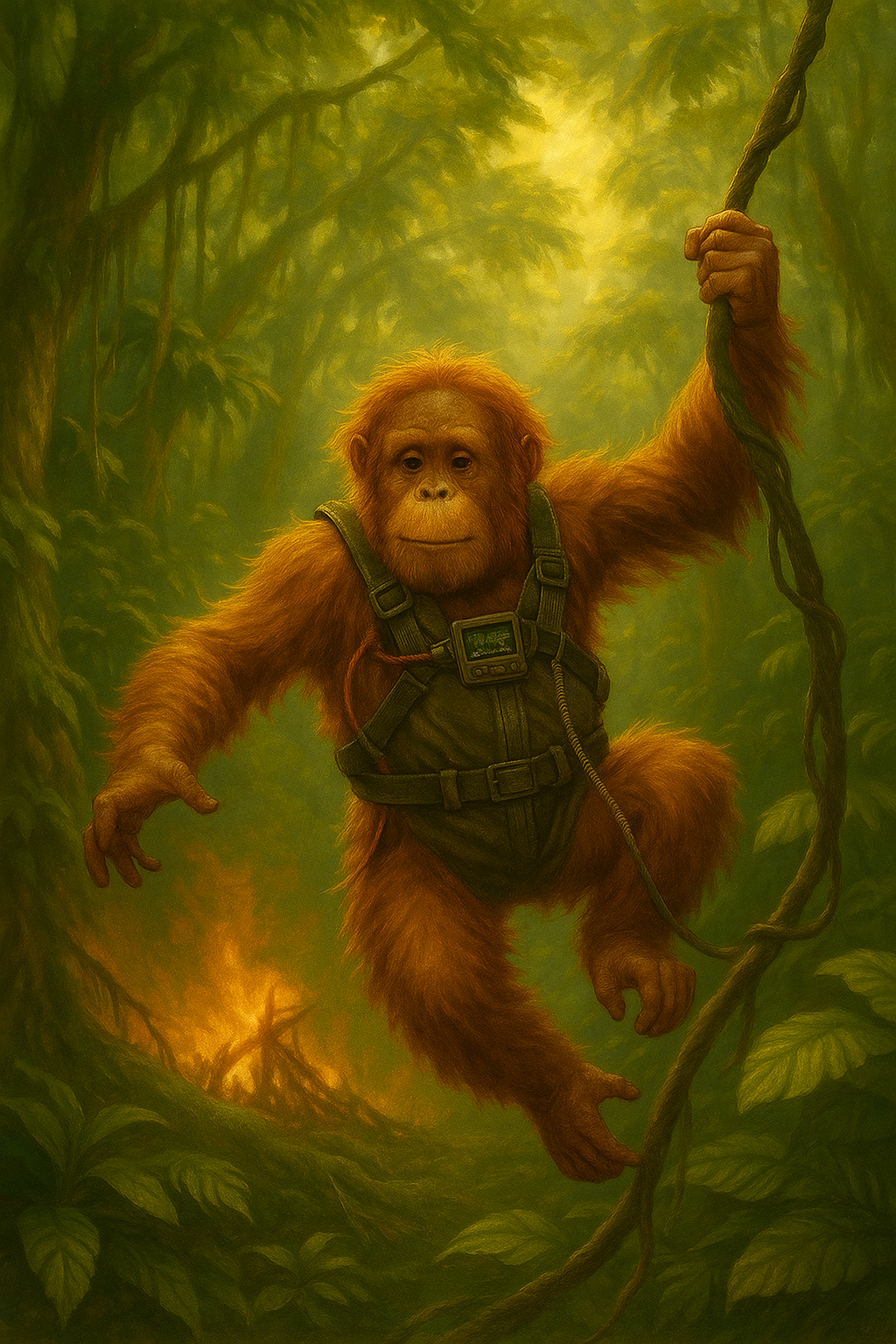
Alpha is not just the team’s resident genius. He is a reminder that intelligence does not belong to humans alone.
After being subjected to dangerous experiments, Alpha develops human-level intelligence and becomes an essential member of the Rainsavers. He communicates through sign language and Morse code, using a specialized harness to send messages across difficult terrain.
That fictional technology gives Alpha a practical role during missions, but his greatest strength is the way he sees connections. He understands patterns in the forest, notices changes in animal behavior, and recognizes danger before it becomes obvious to everyone else.
Alpha also brings a different emotional perspective to environmental protection. To him, the rainforest is not an abstract “resource.” It is home.
That perspective matters in a story about deforestation and climate change. A forest can be measured in acres, carbon storage, biodiversity, or satellite data, but it is also a network of living relationships. Alpha understands that network instinctively.
He is clever, curious, loyal, and occasionally very interested in snacks at inappropriate moments. Strategic brilliance does not prevent snack-related distractions. It merely makes them more elaborate.
Sunbyte: hacking the systems behind deforestation

Carolina “Lina” Solimar, known as Sunbyte, proves that environmental action does not happen only on the ground.
It also happens inside databases, communication networks, corporate files, and satellite systems.
Sunbyte is a hacker and a nurse, which means she can expose a corrupt operation and patch up the team afterward. Ideally, she gets to do the first part before anyone needs the second.
Her technology-focused role connects the fictional world of The Rainsavers to real conversations about conservation. In the series, data can help track illegal logging, identify threatened areas, and reveal how powerful organizations attempt to hide environmental damage.
But Sunbyte is not written as a machine that happens to have a person attached. Her passion comes from a strong sense of environmental justice. She understands that information can protect communities: or be used to exploit them.
That makes her especially important in a world where climate change, deforestation, and corporate power are closely connected. A satellite image may show where trees are disappearing, but someone still has to decide what happens next.
Sunbyte is usually ready with a plan, a keyboard, and a medical kit. She is less enthusiastic about people ignoring her plan and then requiring the medical kit.
Jungle Dart: the team’s connection to the ground
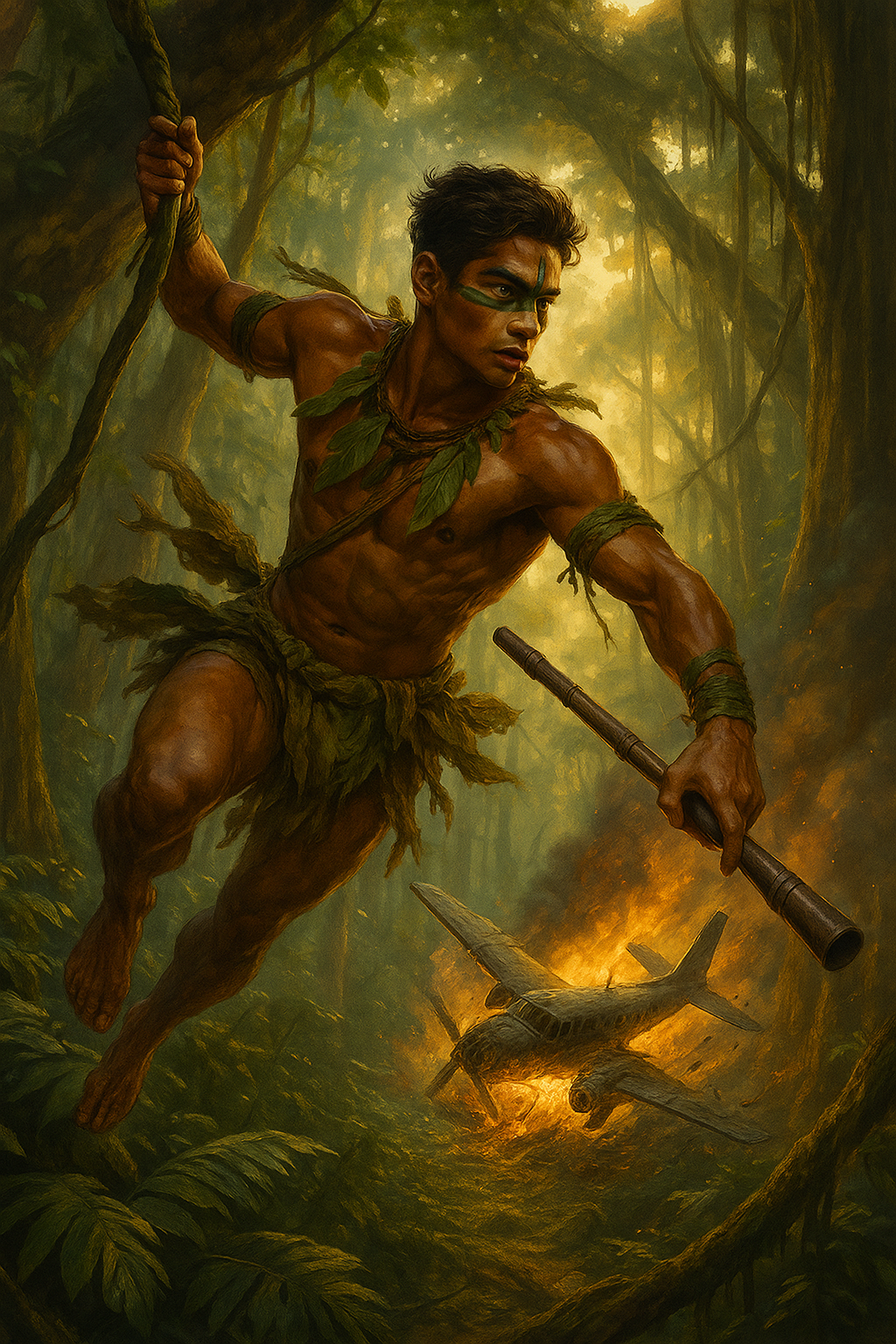
José Verdura, or Jungle Dart, brings something no satellite, laboratory, or encrypted database can replace: detailed knowledge of the rainforest itself.
Raised by the Solimoes tribe, José understands the jungle’s pathways, plants, animals, sounds, and warning signs. He is an agile tracker and a skilled blowgun user, but his greatest advantage is awareness.
Jungle Dart knows when the forest feels wrong.
That makes him invaluable when the Rainsavers are facing illegal operations, hidden facilities, or enemies who assume technology can solve every problem. A map may show the route. José knows whether that route is safe, flooded, watched, or occupied by something with a very bad attitude.
His character also reinforces an important idea about rainforest conservation: protection works best when it includes local knowledge and respects the people who live in the ecosystem.
José is young, brave, and playful when the situation allows it. Then danger appears, and his focus sharpens instantly. He can move through the canopy like a shadow, although the team would probably appreciate it if he stopped appearing silently behind them during lunch.
Dr. Mubari: science with a conscience
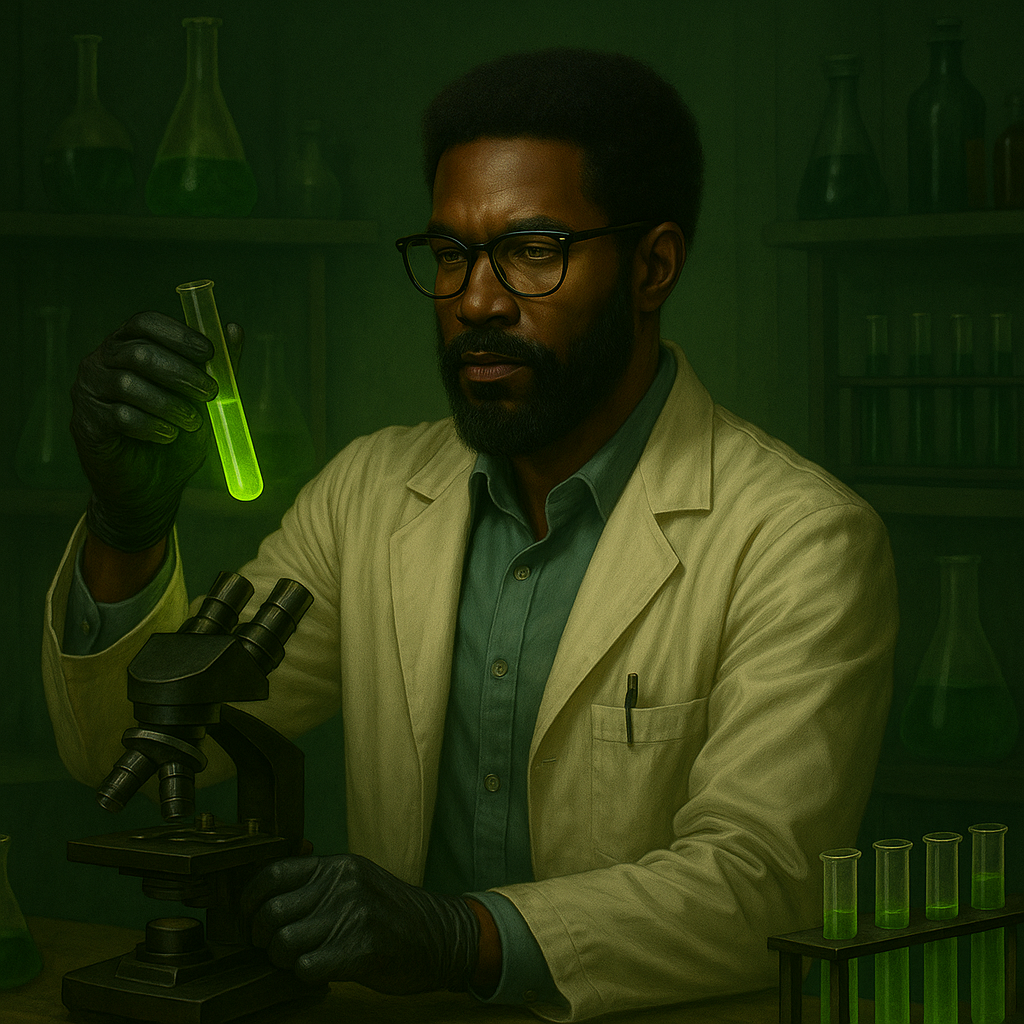
Dr. Manelo Mubari is the team’s scientist, biogeneticist, researcher, and professional asker of uncomfortable questions.
His work focuses on healing, biodiversity, natural cures, and life-extension research. But unlike the villains who see biology as something to control, Dr. Mubari treats science as a responsibility.
That distinction drives much of the series.
The fictional technology in The Rainsavers can be spectacular: enhancement serums, biogenetic experiments, red mercury crystals, ancient energy systems, and advanced communication tools. Yet the story keeps returning to a simple question:
Just because something can be done, should it be done?
Dr. Mubari understands that scientific progress without ethics can become another form of exploitation. His research is connected to the rainforest, but he does not treat its plants, animals, or communities as supplies waiting to be collected.
He also helps connect the series’ science-fiction ideas to real-world concerns. Responsible research, biodiversity protection, sustainable living, and conservation all depend on thinking beyond short-term gain.
Dr. Mubari is the person most likely to explain the consequences of a dangerous experiment while everyone else is already running away from it. This is not always appreciated in the moment. It is usually appreciated later.
Primal: strength used for protection
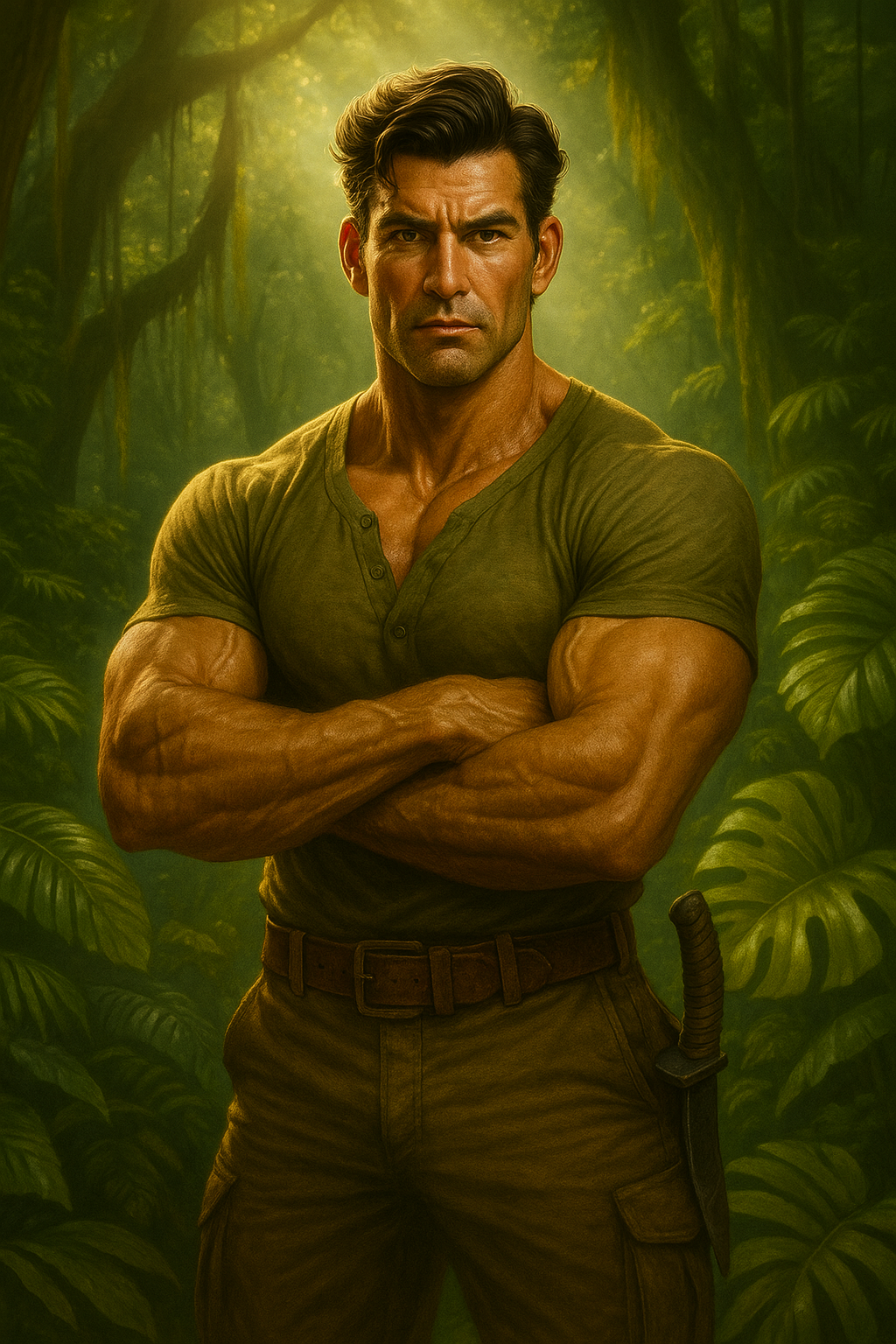
Tom “Primal” Swift begins as a pilot flying supplies and equipment through the Amazon. After a crash and a series of extraordinary events, he gains superhuman strength, agility, and heightened senses.
But his real transformation is not physical.
Tom becomes a leader because he chooses to use his abilities to protect people, wildlife, and the rainforest. His strength gives the team a way to confront bulldozers, enforcers, experimental threats, and villains who believe power automatically equals permission.
Primal represents the action-adventure side of the series, but his mission is rooted in responsibility. He is not trying to conquer the jungle or claim its secrets. He is trying to keep others from destroying it.
That makes him a useful counterpoint to characters like Bossman and Mortalis. They see the rainforest as something to possess. Tom learns that protecting an ecosystem means serving something larger than yourself.
He is also the team member most likely to solve a delicate problem by lifting something extremely heavy. Fortunately, Dr. Mubari, Sunbyte, Alpha, and Jungle Dart are usually nearby to suggest a less destructive option.
Why the team matters
Each Rainsaver represents a different approach to environmental action:
- Alpha sees the living connections others miss.
- Sunbyte uses technology to expose hidden damage.
- Jungle Dart brings local knowledge and field awareness.
- Dr. Mubari keeps science ethical.
- Primal gives the team courage and physical protection.
Together, they show why rainforest conservation cannot depend on one solution. It takes science, community knowledge, technology, leadership, and a willingness to change how we use the natural world.
That idea also connects to sustainable living. Most of us will never chase a secret weapon through the Amazon or disable a red mercury reactor. We can still make choices that reduce waste, support responsible products, learn about conservation, and pay attention to the environmental impact of everyday decisions.
The Rainsavers simply turn those questions into a larger, faster, stranger adventure: with more jungle peril and considerably fewer sensible office meetings.
Ready to join the mission?
From Primal Awakening to Wrath of Mortalis, The Rainsavers follows one continuous six-book adventure across the Amazon, Antarctica, ancient sites, hidden technology, and beyond.
Visit The Rainsavers to explore the series, meet the full team, and start the mission to protect the rainforest: one thrilling chapter at a time.
