

Picture this: the Amazon rainforest is under attack, ancient tech threatens global climate systems, and someone needs to save the world. Do you send one super-powered individual, or do you assemble a team?
If you're thinking "obviously the team," you're onto something. But if you're leaning toward the lone wolf approach, you've got good reasons too. The truth is, both strategies have their place in environmental action: but when the stakes get really high, teams tend to come out ahead.
Why Complex Threats Need Complex Teams
Research backs up what we see in The Rainsavers: when environmental challenges get complicated, teams consistently outperform solo efforts. Studies show that groups handle complex tasks faster and more efficiently than even the most capable individuals working alone.
Think about what Primal, Alpha, Dr. Mubari, Jungle Dart, and Sunbyte face in their adventures. They're not just dealing with one threat: they're juggling ancient Nazi technology, modern eco-villains, global climate manipulation, and jungle warfare all at once. No single hero, no matter how gifted, could master all those domains simultaneously.

Dr. Mubari brings scientific expertise and analytical thinking. Primal offers raw power and survival instincts. Alpha provides tactical leadership and strategic planning. Jungle Dart contributes stealth and reconnaissance skills. Sunbyte handles technology and digital warfare. Each team member covers gaps that would leave a solo hero vulnerable.
This isn't just fiction: it mirrors real-world environmental work. Large-scale cleanup efforts, for instance, can tackle bigger debris and more comprehensive restoration projects when organized groups coordinate their efforts. Individual cleanups are great for daily maintenance, but when you need to remove tons of waste or restore entire ecosystems, you need a team.
What Solo Heroes Bring to the Fight
But let's not dismiss the solo approach entirely. Individual environmental warriors have some serious advantages that teams can't match.
Speed and flexibility top the list. A solo hero doesn't need to coordinate with four other people before making a move. They see a problem, they act. No committee meetings, no strategic planning sessions, no waiting for everyone to agree on the plan. Sometimes that immediate response capability makes all the difference.
Solo heroes also have deeper personal investment. When you're working alone, every victory is yours, every failure hits personally. That creates an intensity and dedication that can drive incredible achievements. Plus, solo heroes can focus entirely on their strongest skills without compromise.

In The Rainsavers universe, we occasionally see individual team members working alone: and they're formidable. Alpha's tactical brilliance shines when he's operating independently. Primal's raw power doesn't need team coordination to be effective. But notice what happens: even when they start solo missions, they inevitably reconnect with the team when the stakes escalate.
The Rainsavers Team Advantage
What makes The Rainsavers team particularly effective isn't just their individual abilities: it's how those abilities multiply when combined. This reflects something researchers have found in environmental activism: organized efforts generate broader impact and visibility that individual efforts simply can't match.
When the team faces Mortalis and his fusion reactor beneath the Giza Pyramid, they're not just fighting one villain. They're dismantling a complex network of threats that spans ancient mysteries, cutting-edge technology, and global environmental destruction. Dr. Mubari analyzes the scientific implications while Sunbyte hacks enemy systems. Primal and Alpha handle direct confrontation while Jungle Dart gathers crucial intelligence from the shadows.
This kind of simultaneous multi-front engagement is impossible for solo heroes. By the time one person addresses all these angles sequentially, the mission would be over: and not in the good way.
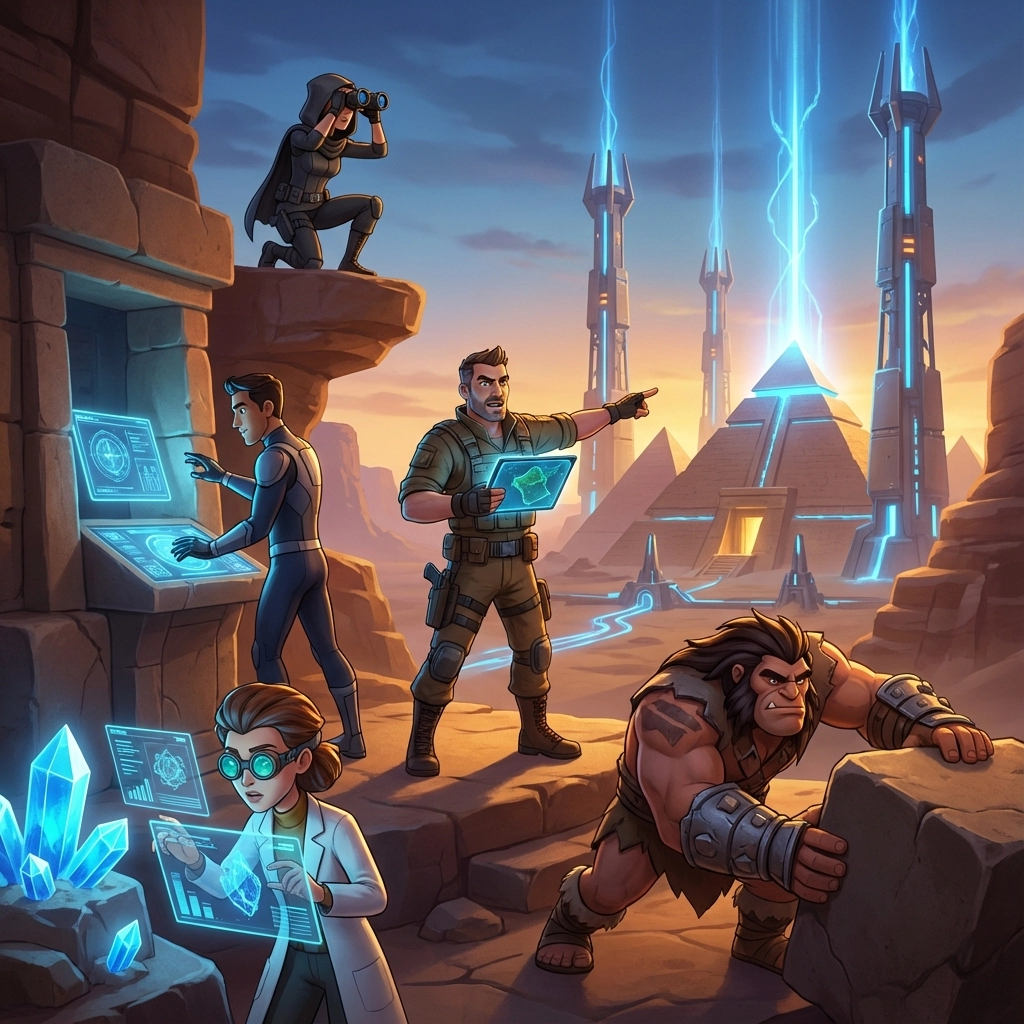
Teams also create accountability and resilience. When one Rainsaver gets overwhelmed, injured, or makes a mistake, the others compensate. Solo heroes don't have that safety net. One bad day, one moment of exhaustion, one miscalculation can end everything.
When Going Solo Makes Sense
Despite team advantages, certain situations actually favor the solo approach. Quick reconnaissance missions, for example, work better with one person who can move undetected. Individual team members often handle these effectively in The Rainsavers stories.
Solo efforts also excel in personal commitment and specialized focus. If you're dealing with a very specific environmental issue that matches your exact expertise, going solo can be more efficient than assembling a team. Less coordination overhead, faster decision-making, more direct action.
The research supports this: simple, straightforward environmental tasks don't benefit much from team coordination. Individual efforts work great for routine maintenance, personal responsibility, and immediate responses to small-scale problems.
Why The Combo Approach Wins
Here's where The Rainsavers really gets it right: they use both strategies strategically. The team handles complex, large-scale threats that require multiple skill sets and coordinated action. Individual members take point on specialized missions that match their unique abilities.
This mirrors the most effective real-world environmental movements, which combine organized collective action with empowered individual responsibility. Large-scale climate activism benefits from community organizing and coordinated campaigns, but it also depends on individuals taking personal environmental responsibility in their daily lives.

The research confirms this hybrid approach works. Organized environmental efforts can tackle larger-scale issues and generate broader community engagement, while individual efforts provide the foundation of personal responsibility and immediate response capability. Together, they create a comprehensive approach that addresses environmental challenges at multiple levels simultaneously.
Beyond Saving the Planet
The team vs. solo debate reveals something deeper about environmental heroism. It's not really about which approach is "better": it's about matching strategy to challenge complexity and scale.
Simple problems? Individual action works great. Complex, interconnected threats that span multiple domains? You need a team. Most importantly, you need both operating in coordination, each handling what they do best.
The Rainsavers demonstrates this perfectly. Their individual skills are impressive, but their coordinated team efforts tackle threats no solo hero could handle. They save more than just the planet because they understand that complex problems require complex solutions: and complex solutions require diverse skills, perspectives, and approaches working together.

That's the real lesson here. Environmental challenges, whether fictional or real, rarely have simple solutions. They require the quick response capability of individual action combined with the comprehensive approach that only teams can provide.
Ready to see how team-based environmental heroes tackle impossible odds? Discover how Primal, Alpha, Dr. Mubari, Jungle Dart, and Sunbyte combine their unique abilities to face ancient mysteries and modern threats in The Rainsavers.
Check out their adventures at rainsavers.com and see why some battles are worth fighting together.
