
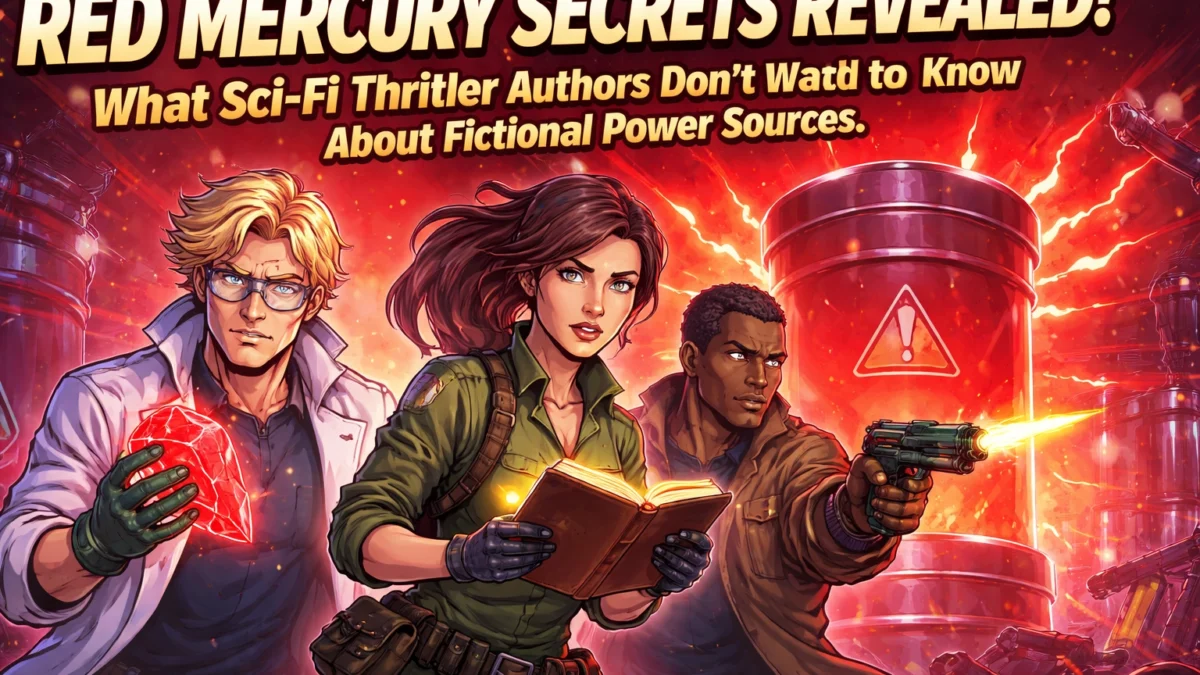
Meta Description: Is Red Mercury real? We look at the history and the hype behind the fictional power source fueling the Rainsavers' enemies.
🔴 CASE FILE: RED MERCURY
Status: Declassified (sort of)
Threat Level: Depends who you ask
Reality Check: Buckle up
Look, we need to talk about red mercury.
If you've ever fallen down a late-night rabbit hole of conspiracy theories, Cold War espionage stories, or just really weird thriller novels, you've probably bumped into this mysterious substance. It glows. It's dangerous. It can supposedly power weapons that would make even the most unhinged supervillain blush.
But here's the thing nobody wants to admit: red mercury doesn't actually exist.
At least, not in the real world.
In fiction? Oh, it's everywhere. And honestly? That's what makes it so fun to write about.
The Origin Story Nobody Expected
Here's where it gets weird.
The legend of red mercury didn't start in some Soviet bunker or secret government lab. Nope. It started with Egyptian mummies.

Yeah, you read that right.
Centuries ago, Middle Eastern folklore spread stories about a powerful red substance found inside ancient Egyptian tombs, a healing elixir supposedly hidden in the throats of mummified pharaohs. People believed this "red mercury" could cure diseases, grant power, maybe even cheat death.
Was any of it true? Absolutely not. But legends don't need to be true to spread like wildfire.
Fast forward a few hundred years, and the myth got a serious upgrade.
When the Cold War Got Involved
By the time the Soviet Union was doing Soviet Union things in the mid-20th century, red mercury had transformed from mystical elixir to nuclear boogeyman.
Suddenly, whispers circulated that Russian scientists had developed a secret compound, some described it as a lattice-shaped isomer of mercury antimony oxide, enhanced with radioactive elements, that could be used to trigger nuclear weapons without traditional fissile material.
Scary stuff, right?
Except… scientists have never verified any of this. Not once. Not ever.
The supposed chemical composition? Never proven to exist.
The smugglers claiming to sell it? Running scams.
The terrorists reportedly seeking it? Chasing ghosts.
As one researcher put it, the whole red mercury phenomenon emerged from "the hothouse world of smuggling and corruption" during the Brezhnevite era. It was the perfect storm: real fears about nuclear proliferation, shadowy black markets, and a substance mysterious enough that nobody could definitively prove it didn't exist.
And that ambiguity? That's thriller-writer gold.
Why Fiction Writers Can't Resist It
Here's the thing about red mercury: it's the perfect fictional MacGuffin.

A MacGuffin, if you're not familiar with the term, is any object that drives a plot forward, something characters chase, fight over, or die protecting, even if its actual nature doesn't really matter. The Maltese Falcon. The briefcase in Pulp Fiction. The Infinity Stones.
Red mercury fits the bill perfectly because:
- It sounds scientific enough to be believable. Mercury is real. Red things exist. Slap them together and your brain fills in the gaps.
- It has built-in mystery. Nobody can agree on what it actually does, which means writers can make it do anything.
- It carries Cold War baggage. Instant tension. Instant stakes. Instant "oh no, the wrong people have this."
You've seen variations of red mercury in sci-fi and thrillers for decades. Remember "red matter" in the Star Trek reboot? That physics-breaking substance that could create black holes? Same energy. Different name.
The beauty of a fictional power source like red mercury is that it lets writers explore big questions, about power, about ethics, about what happens when technology outpaces humanity's ability to use it responsibly, without getting bogged down in real-world physics.
The Psychology of Believing the Impossible
Okay, but why do people actually fall for red mercury scams?
Because the myth taps into something deeper than logic.
Urban legends like red mercury spread because they confirm anxieties we already have. We want to believe that secret government programs exist. We suspect that powerful people have access to technology the rest of us can't imagine. We fear that somewhere, someone has figured out how to weaponize the impossible.
Red mercury is the physical manifestation of that fear.

And that's exactly why it makes such compelling fiction. When a villain in a thriller gets their hands on red mercury, we don't need a detailed explanation of how it works. We just need to feel that primal "oh no" in our gut.
The best sci-fi thrillers understand this. They don't waste time with technobabble. They use mysterious substances like red mercury to raise the stakes emotionally, not scientifically.
How We Use Red Mercury in The Rainsavers
Full transparency: we love this trope.
In The Rainsavers series, red mercury isn't just a random plot device: it's baked into the lore. The shadowy forces our heroes face aren't just after money or political power. They're after capability. The ability to reshape the world according to their vision, no matter the cost.
Red mercury, in our world, represents that temptation. It's the promise of unlimited power. The shortcut that seems too good to be true (because it is). The thing that makes otherwise rational people do irrational things.
And when it falls into the wrong hands?
Well. That's when our team has to step up.
We blend the real history of the red mercury myth: the Egyptian origins, the Cold War paranoia, the black market scams: with fictional stakes that feel grounded and urgent. Because the best adventure fiction doesn't just make things up. It takes the weird, wonderful, terrifying stuff that already exists in our world and asks: what if?
The Takeaway (If You Need One)
Red mercury is fake. Scientists agree. The evidence isn't there. Never was.
But the idea of red mercury? The fears it represents? The storytelling potential it unlocks?
That's very, very real.
Next time you're reading a thriller and some mysterious substance shows up that can power weapons, open portals, or destroy cities: take a second to appreciate the lineage. You're experiencing a myth that's been evolving for centuries, from ancient Egyptian tombs to Soviet smuggling rings to the pages of your favorite adventure series.
It's all connected. And honestly? That's pretty cool.
Want to See What Red Mercury Does in the Wrong Hands?
We've barely scratched the surface here.
If you're curious how The Rainsavers team handles threats like weaponized red mercury: and the morally gray forces willing to use it: there's only one way to find out.
See how we blend fact and fiction at https://rainsavers.com.
The first book is waiting. The clock is ticking. And red mercury isn't going to contain itself.
Posted in: Lore & Science | January 21, 2026
