Meta Description: Planning to binge all 6 Rainsavers books? Audiobook or print, which format wins for eco-adventure marathons in 2026? We break down the truth (and surprise you at the end).

You've decided to dive into The Rainsavers series. All six books. The whole eco-adventure saga from Amazon rainforests to Nazi moonbases to ancient Egyptian mysteries. But here's the question keeping you up at night: should you read them or listen to them?
It's 2026, and honestly, both camps are pretty loud about this. The audiobook people swear by their multitasking superpowers. The print readers claim nothing beats flipping pages and feeling the paper between their fingers (even though half of them are reading on tablets, but whatever).
Let's settle this once and for all.
The Case for Audiobooks: Adventure On the Go
Here's the thing about audiobooks, they turn dead time into reading time. Commuting? That's Book 2. Folding laundry? Book 3. Walking your dog? Book 4, easy.

For a six-book adventure series like The Rainsavers, audiobooks have a sneaky advantage: a great narrator makes the action scenes hit harder. When the team is rappelling down a cliff face in the Amazon or decoding ancient hieroglyphics under pressure, voice inflection and pacing add layers that your internal reading voice just can't match.
Research backs this up, too. Audiobook listeners show about 28% better content retention compared to ebook readers, probably because you can't skim when someone's reading to you. You're locked in. You hear every word about the red mercury conspiracy, every character beat, every twist.
Plus, let's be real: if you have a 45-minute commute five days a week, you can crush the entire series in about two months without adding a single extra minute to your schedule. That's the dream.
The audiobook win: Efficiency without sacrifice. Perfect if your lifestyle is already packed and you need to steal reading time from the margins.
The Case for Print: Deep Dives and Dog-Eared Pages
Now, print readers have a point too, and it's a good one.
When you're dealing with a sprawling eco-adventure series that weaves together environmental science, historical mysteries, and high-tech vigilante action across six books, sometimes you need to flip back. Wait, who was that scientist in Book 2? What was the connection between the artifact in Cairo and the one they found in Brazil?
With print (or ebooks with good navigation), you can jump around. You can highlight. You can dogear the page where you realized the whole red mercury thing was a setup. You can't really do that when you're listening at 1.5x speed while doing dishes.

Print also demands your full attention, which is either a pro or a con depending on your week. If you have actual dedicated reading time and you want to sink into the world of The Rainsavers, there's something immersive about sitting down with a book and shutting everything else out. No notifications. No multitasking. Just you and the story.
Plus, for some people, the physical act of reading improves focus and comprehension. It's sensory. It's deliberate. It's the opposite of the way we consume most content in 2026 (scrolling, skimming, half-listening to three things at once).
The print win: Total immersion and easy reference. Perfect if you've got the time and want to catch every detail across all six books.
But Wait, What If the Answer Is Both?
Here's where it gets interesting.
A lot of people in 2026 are mixing formats mid-series, and it's working. They'll listen to Books 1–3 on audiobook to build momentum and get hooked, then switch to print for Books 4–6 when the plot gets dense and they want to savor the final act.
Or they go the other way: start with print to get grounded in the world and characters, then switch to audio to speed through the rest during their morning runs.
There's no rule that says you have to pick one. The story is the same. The eco-adventure team saving the planet from corporate greed and ancient conspiracies? That's there no matter how you consume it.

And honestly, for The Rainsavers specifically, the series is designed to work in both formats. The pacing is tight. The chapters are structured so you can binge or you can take your time. The world-building is clear enough that you won't get lost if you're half-distracted folding laundry, but layered enough that a focused read rewards you with extra connections.
The Real Question: What's Your Marathon Style?
Forget the format war for a second. Ask yourself this: How do you actually plan to read six books in the next few months?
- If you've got 20 minutes before bed and that's it, print might be your move.
- If you've got two hours a week of commute time you're currently wasting on true crime podcasts, audiobook is calling.
- If you've got both? Congrats, you're living in the future. Do both.
The truth is, comprehension studies show no significant difference between reading and listening when it comes to retention. Your brain processes the story either way. What matters is whether you're actually engaged, and that depends way more on your environment and attention level than the format itself.
So if you're going to listen while doing something that requires 60% of your brain (cooking a complicated recipe, working out, etc.), you might miss stuff. But if you're walking, commuting, or doing low-key tasks? You'll be fine. Same goes for print, if you're reading in a noisy coffee shop while checking your phone every two minutes, print won't save you.
Why The Rainsavers Works in Either Format
Here's the fun part: The Rainsavers was written by someone who loves both formats, so it's built to work either way.
The dialogue is punchy and natural, it sounds great out loud. The action scenes have rhythm and momentum that translates beautifully to narration. But the mysteries and world-building are also structured so you can revisit sections, trace clues across books, and dig deeper if you want.
Whether you're hearing about the team's expedition into the Amazon rainforest or reading about their high-tech field gear and ancient artifact discoveries, the story pulls you in. The eco-adventure stakes are real. The characters are memorable. The villains, corporate executives, rogue scientists, literal Nazis on the moon, are just ridiculous enough to be fun without losing the serious environmental message underneath.
And yeah, that's kind of the magic of it. It's a series that doesn't take itself too seriously but also doesn't treat the planet like a joke. It's pulp adventure with purpose. See how we blend both when you dive into Book 1.

The Verdict
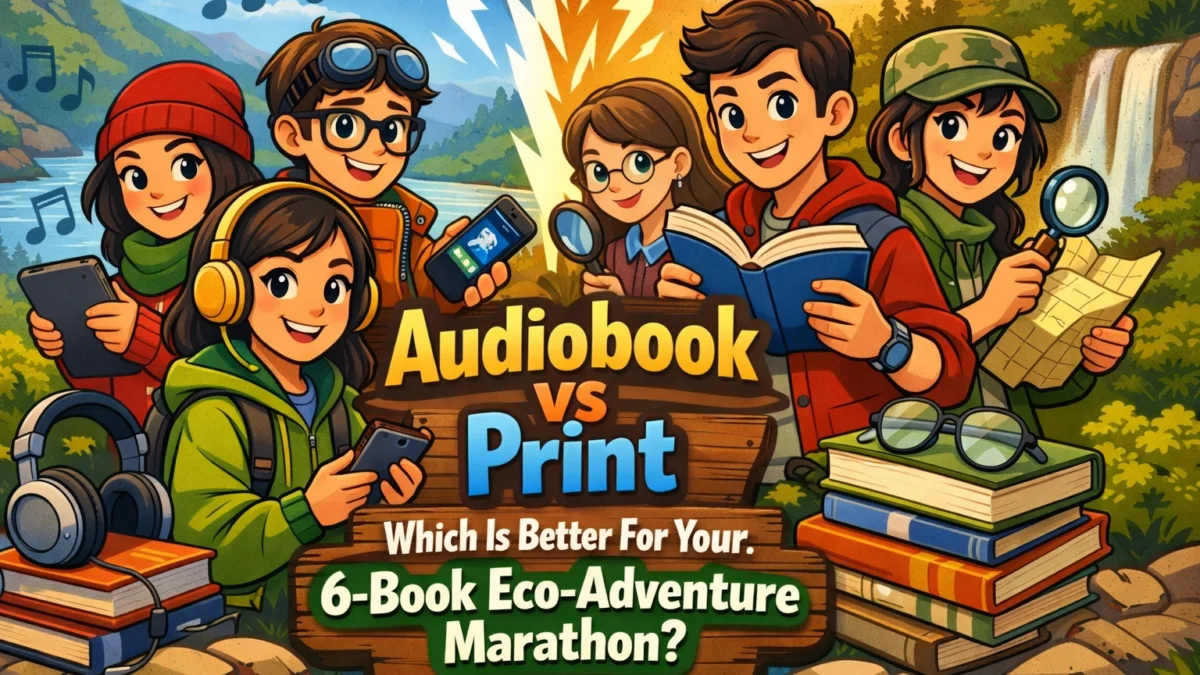
So which is better for your six-book eco-adventure marathon: audiobook or print?
Audiobook if you want to maximize your time, love immersive narration, and can fit reading into the cracks of your day.
Print if you want full control, plan to take notes or revisit sections, and have dedicated reading time.
Both if you're smart and want the best of everything.
Honestly, the format doesn't matter nearly as much as just starting. Pick whichever gets you to actually open (or play) Book 1, and go from there. The Rainsavers team is waiting: and trust us, by Book 2, you won't care how you're reading. You'll just want to know what happens next.
